
The South African job market was strained last year with the number of jobs created sharply dropping by 94% in a period of just one year.
This is according to the latest year-on-year figures as Statistics South Africa (StatsSA) released the Quarterly Labour Force Survey fourth quarter results on Tuesday.
The country managed to create 21 000 jobs in 2025 but this was a major drop from the 355 000 jobs created in the comparable period in 2024.
The rise in employment in 2024 was boosted by gains in manufacturing which added 168 000 jobs. The trade sector contributed 59 000, community and social services added 46 000, and transport recorded an increase of 41 000 jobs.
However, numbers dramatically dropped in the fourth quarter of 2025, and the total number of employed persons is now around 17.1-million.
Manufacturing was the biggest contributor, to the decline, shrinking by 127 000, Mining lost 22 000 jobs, while trade also lost 95 000 – all losing more than they had created in the previous year.
Transport, construction, and agriculture all showed gains at 76 000, 65 000, and 26 000 jobs created in 2025.
Economist Mandla Maleka has attributed the massive drop in manufacturing jobs to the loss of around 1 500 small companies that either shut their doors or left South Africa in 2025. Companies that folded in 2024 include Ellies, Drip Footwear, Zando Technologies, The Cross Trainer and others, he said.
“Manufacturing recorded an incredible growth in employment in 2024, only to “bleed” huge job losses in 2025. Circa 1 000 companies closed, liquidated or filed for bankruptcy. The surge in 2025 with circa 1 500 companies liquidated for various reasons, including unfavourable trading conditions, high input costs including electricity and dumping of cheap imports in the country, mostly from East Asia – China in particular.”
In the finance sector, in 2025 the companies that exited the local market included Bain & Co, which closed its local office, and HSBC which also left the country. In the energy sector, Maleka added, Shell announced plans to exit its downstream/refinery business and Anglo American unbundled its platinum arm Amplats.
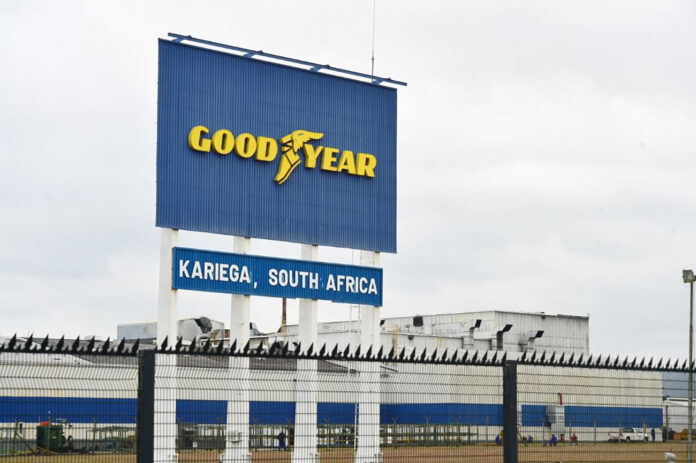
In the manufacturing sector, Goodyear Tyres closed its Kariega plant, while metalworkers union Numsa confirmed that some 14 components companies closed down in 2025 due to high import tariffs and a flood of cheap imports, with 4 000 jobs lost as a result.
“That’s why manufacturing experienced huge job losses in 2025 compared to 2024. And going into 2026, companies such as Arcelor-Mittal SA, if not saved, could flood the job market. Many smelters are also closing their doors or in the process of folding, and (sugar producer) Tongaat Hulett is on the line as well,” Maleka said.
Another independent economist, Duma Gqubule, said it was unacceptable to have only 21 000 jobs created and boast about this as economic recovery.
He argued that in a country where more than 12-million people are unemployed, newly created employment opportunities should be counted in the millions if government is to claim that the economy is on a strong recovery path.
“The rest of the world has recovered from Covid-19 at a faster pace than South Africa has and this raises a question as to why this is happening. The year-on-year report shows that some industries dropped heavily on job creation but these figures are not explained.
“It makes sense that employment had been increasing, although at a softer pace, since Covid-19 because a lot of jobs were lost during the period and when the regulations were uplifted, companies needed to bring back their employees but, unfortunately, some permanently lost their jobs,” said Gqubule.
Desiree Manamela, chief director for labour statistics at StatsSA, explained that despite the slower pace of job creation, there was some improvement in the unemployment figures. The number of unemployed people declined from 8-million in the fourth quarter of 2024 to 7.8-million last year. This shows a decrease of 155 000 people.
Over the same period, the official unemployment rate dropped by 0.5% from 31.9% to 31.4%.
The longer-term data shows fluctuations rather than steady improvement since the Covid-19 pandemic.
In the fourth quarter of 2019, unemployment stood at 6.7-million but sharply increased to 7.2-million in the comparable quarter a year later in 2020.
According to Manamela, after eight consecutive increases, unemployment began to decline in the fourth quarter of 2022. The unemployment rate also dropped for seven quarters from the second quarter of 2022 to the fourth quarter of 2023.
But from the second quarter of 2024 it began to rise again before declining from the fourth quarter of 2024 through to the fourth quarter of 2025.
“Unemployment changes may be a result of various factors. For example, in terms of education, those with matric and less than matric remain vulnerable, with unemployment rates of 33.7% and 37.6% respectively,” Manamela said.
She said young people aged between 15 and 34 were the most vulnerable group in the labour market, with this cohort recording only 0.1% increase in unemployment in the fourth quarter of 2025 compared to the previous quarter.
The outlook for 2026 remains uncertain as Manamela confirmed that StatsSA does not undertake forecasts into the labour market.
Gqubule said South Africa’s global standing on unemployment remains a serious concern. As a member of the Group of Twenty, the country ranks among the worst-performing economies in terms of joblessness.
According to global data and business intelligence platform Statista, South Africa topped global unemployment rankings in 2023 with a rate of 32.1%.
Gqubule said the sharp slowdown should be viewed as a warning sign that structural constraints remain in the economy, including weak growth, and low investment.


