


At what point does prudent fiscal management become an excuse for accepting economic stagnation?
The latest Medium-Term Budget Policy Statement offers some welcome news. Government has made progress in stabilising public debt, while higher commodity prices have provided an unexpected boost to tax revenue. These are positive developments and the state’s progress in managing public finances is noted.
But if we know what needs to be done to get the economy growing, why are we not doing it with the urgency our circumstances demand?
Treasury forecasts economic growth of just 1.2% for the year. I doubt that will be achieved.
For a country battling mass unemployment, entrenched poverty and a desperate shortage of economic opportunity, this is inadequate. South Africa must grow its way out of this crisis. Not through higher taxes, endless borrowing or permanent expansion of government expenditure but by creating the conditions for investment, production and employment to expand.
Growth generates the revenue government needs to deliver services. Growing businesses pay more tax. More people in employment contribute income tax, spend money in the economy and reduce the burden on social support. However, it feels as though the state is content to sit back and applaud itself for merely keeping the ship from sinking, rather than steering it towards a prosperous horizon.
The medium-term framework is focused on fiscal stability when it should be a launchpad for economic expansion.
We cannot treat minimal fiscal stability as an end in itself while the economy suffocates. In his State of the Nation Address, the president spoke about setting our sights on a 3% economic growth target. Yet, this week’s mini-budget locks in our 2026 growth outlook at a dismal 1.2%.
We are moving away from our targets. The collective political response looks less like aggressive action and more like an ideological block. The state is holding back when it should be unleashing our potential.
The reference to the “money being there” must be understood clearly. Yes, look at the windfall in revenue from commodities and mining good fortunes that I highlighted last week. But the state’s balance sheet alone cannot finance the astronomical infrastructure deficit we face.
The real, untapped money is sitting in the deep pools of private capital ready to be mobilised through public-private partnerships (PPPs).
The limitation of this budget is where resources are being allocated and how private investment is being left on the sidelines. Rather than aggressively clearing the runway for trillions in institutional and private capital to build our future, the Treasury is stuck in a defensive holding pattern. Short-term fiscal cushions, like the temporary R10-billion fuel levy reduction, do not build long-term economic engines.
The frustration is that we have the proof of concept. We know that PPPs work when backed by private execution and capital. Structural reform initiatives such as Operation Vulindlela have demonstrated that when you cut bureaucratic red tape and pull in private capacity, constraints are broken.
But we also need a massive, uncompromised expansion of private capital in energy investment to fully secure the grid. We need aggressive logistics liberalisation to let private operators fix our broken ports and rail networks. We need immediate, major infrastructure investment vehicles to crowd in private funding to rescue our failing municipal water systems.
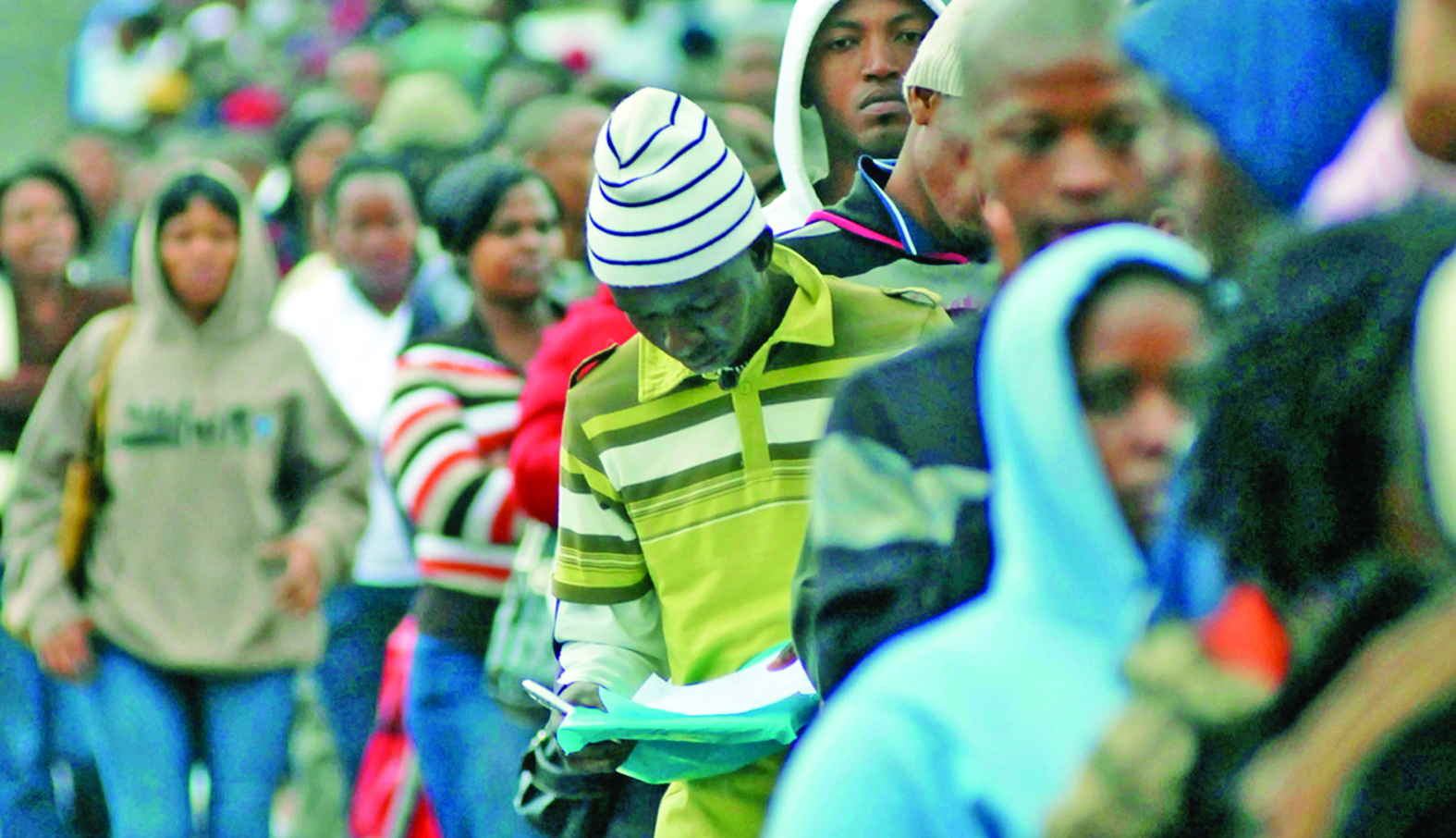
If we have the template for success, where is the aggressive expansion of it? Why are we hoarding a commodity windfall to celebrate a primary surplus while our streets remain filled with jobless youth?
Fiscal discipline without a strategy to leverage massive private capital is a slow march in place. It is time for the president and his finance minister to get over this ideological inertia. We cannot borrow our way out of trouble but we cannot starve our way into prosperity either.
The path forward remains within our grasp. We possess the institutional depth, the private capital and the operational blueprints needed to turn this trajectory around. By dismantling the final ideological blocks and fully inviting the private sector to build alongside the state, we can transform our economy from a defensive holding pattern into an engine of shared prosperity.
It is time for a growth government to stop holding back, trust our collective capabilities and finally flip the switch to growth.
• Maarten van Doesburgh is an economist, the head of economics at CPUT, CEO of Economics Investment Group and a regular commentator and business consultant on South Africa’s economic landscape, focusing on financial markets, policy and business strategy. vandoesburghm@cput.ac.za
- The Medium-Term Budget Policy Statement shows government progress in stabilising public debt and increased tax revenue from higher commodity prices.
- Treasury forecasts economic growth of only 1.2% for the year, which is considered inadequate given South Africa’s high unemployment and poverty levels.
- The author criticizes the government for focusing on fiscal stability rather than aggressively promoting economic expansion and private investment.
- Private capital, especially through public-private partnerships (PPPs), is identified as crucial for infrastructure investment, energy security, and improving logistics.
- The author urges the president and finance minister to overcome ideological inertia and implement strategies to mobilize private sector involvement for sustained economic growth.


