The South African youth remain under severe pressure in the labour market, even as the country recorded a slight improvement in overall unemployment in the final quarter of 2025.
The latest Quarterly Labour Force Survey shows that the official unemployment rate decreased to 31.4% in the fourth quarter of 2025 compared with 31.9% in the third quarter.
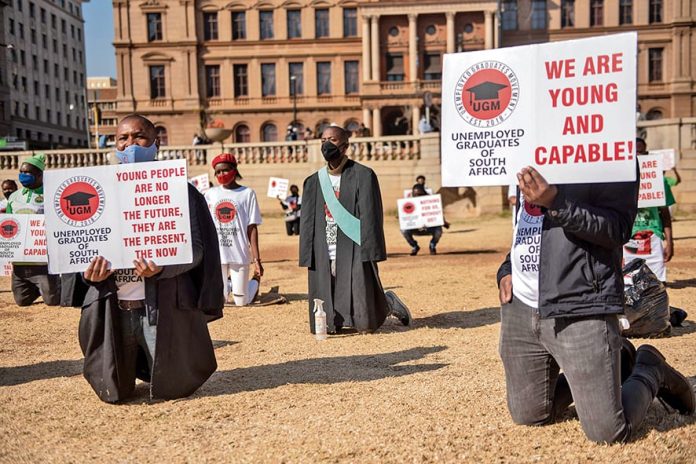
The figures show that young people aged 15 to 34 continue to face the toughest conditions when looking for work.
While the total number of unemployed youth dropped by 84 000 to 4.6-million between the third and fourth quarters, the number of young people employed also declined.
Employment among youth dropped by 113 000 to 5.8-million over the same period.
As a result, the youth unemployment rate experienced a mute growth of 0.1 of a percentage point to 43.8% in the fourth quarter of 2025.
The broader labour picture shows modest growth in between the third and fourth quarters.
Employment increased by 44 000 to 17.1-million people, while the number of unemployed people fell by 172 000 to 7.8-million.
Despite this improvement, the number of discouraged work seekers rose sharply by 233 000 to 3.7-million, showing that many people have stopped searching for jobs altogether.
Employment figures drop in Gauteng
There are nearly 900 000 potential job seekers who are not searching for jobs. This group is referred to discouraged job seekers.
Industry trends were mixed. Job growth was recorded in community and social services, construction, and finance.
However, jobs in industries that typically employ a large number of young people—such as manufacturing, mining, and trade—decreased.
Employment increased in the Western Cape, Mpumalanga, the North West, and the Northern Cape but declined in Gauteng, KwaZulu-Natal, and the Eastern Cape.
Speaking to Sunday World ahead of the release of the figures, economist Mandla Maleka explained that the South African labour market has been struggling to meaningfully recover from the Covid-19 pandemic, showing modest improvements despite seasonal hiring.
He said that unemployment remains structurally high, with millions still out of work and many discouraged job seekers not included in official figures.
According to Maleka, the economy is not creating enough sustainable jobs, and global shifts such as the growing use of artificial intelligence could further slow employment growth.