
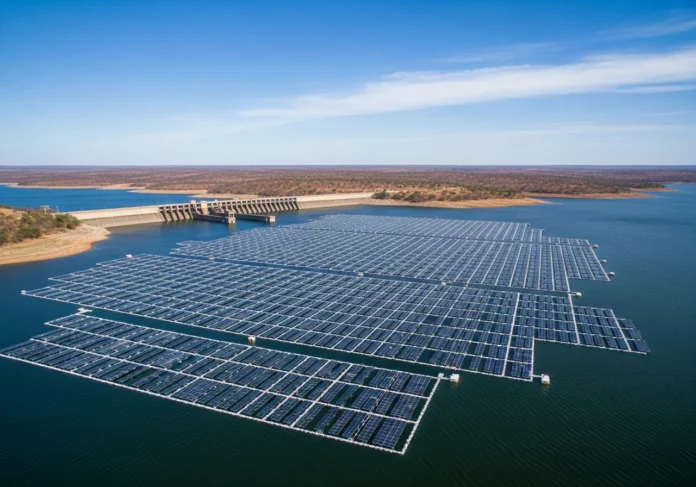

Zimbabwe is poised to break new ground in sustainable energy with the launch of a 600MW floating solar project on Lake Kariba, marking a major step in the country’s pursuit of renewable power. Construction is scheduled to begin in the second quarter of 2026, with the first phase of 150MW and full commissioning expected by 2030-2031.
The Kariba floating solar plant represents one of the most ambitious renewable initiatives in southern Africa. Covering roughly 10 square kilometres (about one percent of Lake Kariba’s surface) the solar arrays will harness abundant sunlight while reducing reliance on Zimbabwe’s aging hydroelectric infrastructure.
Hydropower from the Kariba Dam has long been central to the nation’s electricity supply. However, recurring droughts and declining water levels have constrained output, eroded reliability, and forced Zimbabwe to import costly power. Floating photovoltaics (PV) offer a climate-resilient alternative, generating clean electricity without consuming more land.
Environmental benefits
Floating solar also brings environmental benefits over land-based systems. Panels on water benefit from natural cooling, which can enhance efficiency and output. The design is expected to minimise habitat disruption and avoid agricultural or wildlife loss, although detailed environmental impact assessments will be crucial to address potential effects on aquatic ecosystems and fisheries.
The Kariba floating solar plant is driven not by the state alone but through private sector investment, led by Green Hybrid Power Private Limited, with support from the African Export-Import Bank (Afreximbank), which provided a $4.4-million preparatory facility for bankability and feasibility work.
This blending of private finance and public regulatory frameworks reflects a growing trend in climate-aligned infrastructure investment. Private capital can accelerate deployment while distributing risk. However, robust governance mechanisms are essential to ensure transparency, accountability and community engagement throughout the project lifecycle.
By expanding renewable capacity, the project aligns with Zimbabwe’s climate commitments and contributes directly to reducing carbon emissions. Estimates suggest the plant could cut tens of thousands of tonnes of CO₂ annually. This is set to be a meaningful contribution to national decarbonisation goals.
Addressing chronic electricity shortage
The Kariba project offers promise in addressing Zimbabwe’s chronic electricity shortages. Peak demand is around 2,200MW. Domestic generation frequently hovers between 1,000MW and 1,400MW. This leaves households and industries vulnerable to load shedding.
Beyond electricity, officials project the plant could contribute up to $4.7-billion to Zimbabwe’s economy over its lifespan. And it could provide up to about 10% of GDP value by stabilising power supply and supporting industry and households.
Meanwhile, expanding access to reliable energy can improve public services such as healthcare, education, and digital connectivity. These outcomes reinforce the social value proposition of the initiative.
To build investor confidence and public trust, comprehensive environmental and social impact assessments (ESIAs), clear stakeholder engagement plans, and transparent reporting on project milestones, benefits, and risks are critical. These practices are also key to accessing climate finance and aligning with global sustainability and governance standards.
Complex approvals, financing at scale, and integration into Zimbabwe’s grid pose technical and institutional challenges. Moreover, wider concerns about climate finance governance in Zimbabwe, including transparency and equitable distribution of benefits, underscore the importance of meticulous oversight and community participation.
- Zimbabwe is poised to break new ground in sustainable energy with the launch of a 600MW floating solar project on Lake Kariba, marking a major step in the country’s pursuit of renewable power.
- Construction is scheduled to begin in the second quarter of 2026, with the first phase of 150MW and full commissioning expected by 2030-2031.
- The Kariba floating solar plant represents one of the most ambitious renewable initiatives in southern Africa.
- Covering roughly 10 square kilometres (about one percent of Lake Kariba’s surface) the solar arrays will harness abundant sunlight while reducing reliance on Zimbabwe’s aging hydroelectric infrastructure.
- Hydropower from the Kariba Dam has long been central to the nation’s electricity supply.