


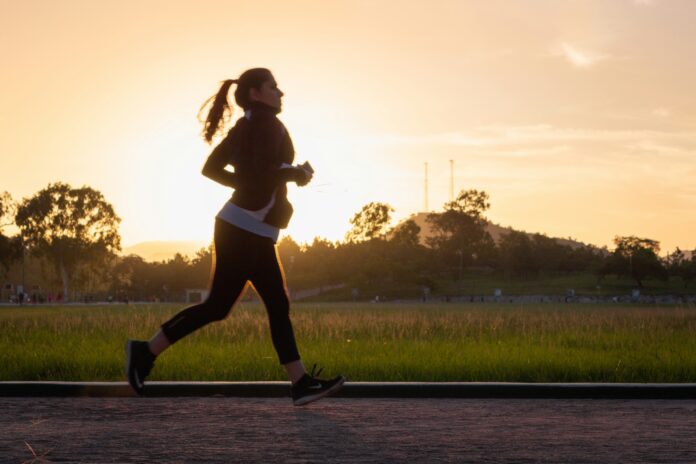
I stopped jogging long before a fifth woman’s body was discovered in Kempton Park.
I don’t know what happened to those women. I don’t know whether their deaths are connected. I don’t know whether one person is responsible. I don’t know what happened to Elizabeth Mokolo Moselakgomo, the 38-year-old mother who disappeared after going for a run.
READ: Four women’s bodies found in Kempton Park, prompts fear and warnings
And I am not going to pretend that I do. The police don’t know yet either. South African Police Service (SAPS) has mobilised a multidisciplinary team to examine the cases, including evidence, timelines, locations, victim profiles and circumstances.
Investigators are considering possible links, but police have warned against prematurely concluding that the cases involve one perpetrator or are connected.
But I do know this: Women were already afraid. We didn’t need five bodies to know we were afraid. We didn’t need a missing runner. We didn’t need police to deploy detectives, tracking teams, K9 units and an investigative psychology unit.
Women have been telling people for years what it feels like to exercise in public while being watched, followed, approached and commented on.
I know because I stopped doing it. I stopped jogging because men staring at me stopped feeling like something I could simply ignore. I stopped going to the gym because I was tired of feeling like my body was part of the environment’s entertainment.
And I started asking myself questions that have nothing to do with fitness. Who’s around me? Who’s watching? Is that man simply passing by? Why has he looked at me three times?
Is someone following me? Should I turn around? Should I call someone? Should I just go home? Imagine trying to improve your cardiovascular health while your brain is conducting a threat assessment. That is the reality many women know intimately.
Running should not require a safety plan
And now, in Kempton Park, that fear has been amplified by a deeply disturbing series of cases. The first body was found near the R21 on July 15. The 37-year-old woman had been found naked and restrained with cable ties, and police arrested a suspect two days later.
A second woman, aged 32, was found near the R21 on August 24.
An unidentified woman was found on September 10, naked and in an advanced state of decomposition.
On September 12, another woman’s body was discovered in Rhodesfield, behind a hotel. She was wearing sports clothing and was partially clothed.
And now, on September 14, police are investigating the discovery of another woman’s body in the Kempton Park area. The details surrounding the latest discovery still need to be established.
Then there is Elizabeth. She went for a run. She did not come home. Her eight-year-old daughter contacted relatives when her mother failed to return, prompting the family to report her missing. There is something about that detail that I cannot shake.
Running is supposed to be simple. Your headphones. Your thoughts. Your breathing. Your body carrying you forward. A little piece of time that belongs entirely to you. Except women don’t always get that luxury.
ALSO READ: Jogging proven to significantly improve mood
We are constantly calculating. The route. The time. The people around us. Whether the road is too quiet. Whether we should run with headphones.
Whether we should tell someone where we’re going. Whether that person behind us is simply another runner. Whether we should turn around. Whether we should stop. And eventually, sometimes, we don’t go at all. That is what happened to me.
How women’s worlds become smaller
I stopped. Not because anyone officially banned me from jogging. Not because somebody told me I couldn’t exercise. But because repeated experiences of being stared at, commented on and made uncomfortable slowly changed the way I experienced the space around me.
That is the part of women’s safety that we don’t talk about enough. We tend to discuss safety only after something terrible happens. After an assault. After a disappearance. After a murder. After a body is found. But there is another layer.
It is the quiet shrinking of women’s lives before the worst happens. Maybe I’ll take another route. Maybe I’ll go at a different time. Maybe I’ll wear something less revealing. Maybe I’ll take someone with me. Maybe I’ll just stay home.
One small decision at a time, a woman’s world can become smaller. And then we tell her she is being sensible. Of course women should take precautions. Of course we should be aware of our surroundings. But I am tired of safety being framed almost entirely as a woman’s responsibility. Because I don’t want the answer to women’s safety to be that women should stop doing things.
Stop running. Stop walking alone. Stop going out. Stop wearing certain clothes. Stop trusting strangers. Stop being visible. At what point does ‘be careful’ become another way of saying ‘make yourself smaller’?
I want to run again
I don’t want that. I want to exercise. I want to jog. I want to wear gym clothes without wondering who is looking at me.
I want to run without feeling like my body has become public property. And I want to be able to come home afterwards. That should not be a radical demand. I also don’t want to exploit the pain of other women to make a point. So I won’t say that these cases are connected when police have not established that.
I won’t call someone a serial killer when investigators haven’t done so. I won’t turn Elizabeth’s disappearance into a conclusion before her family has answers. What I will say is this: Women should not have to wait for the evidence of violence before their fear is taken seriously.
We know what unwanted attention feels like. We know what being followed feels like. We know what it means to suddenly become aware of every man around us. We know the feeling of deciding that the thing we wanted to do isn’t worth the discomfort. And I know what it feels like to stop jogging.
I want to start again. But I don’t want my return to running to be an act of bravery. I want it to be ordinary. I want to put on my shoes, step outside and think about my pace instead of my safety. I want other women to do the same. And I want Elizabeth’s family to get the one thing every family deserves when someone disappears: the truth. Not rumours. Not social media speculation. Not assumptions. The truth.
- Five women's bodies have been discovered in Kempton Park, South Africa, with police investigating possible connections but cautioning against assuming one perpetrator is responsible.
- The first body, found on July 15 near the R21, was a 37-year-old woman who had been restrained with cable ties, leading to a suspect's arrest two days later.
- Elizabeth Mokolo Moselakgomo, 38, disappeared after going for a run, prompting her family to report her missing after she failed to return home.
- Women in the area have long experienced fear and harassment while exercising outdoors, leading some, including the author, to stop jogging for safety reasons.
- The police have deployed multidisciplinary teams, including tracking and investigative psychology units, to examine evidence, timelines, and victim profiles in the ongoing investigation.


