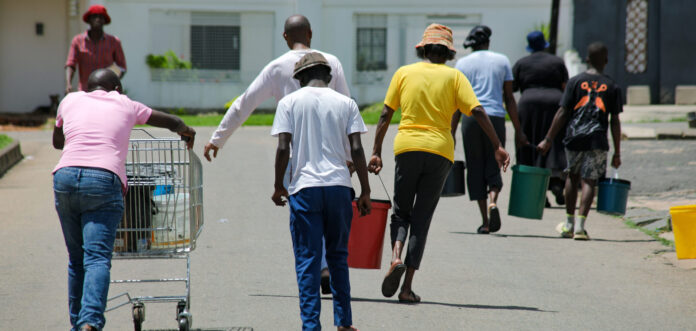
Water is a fundamental component of human dignity and a constitutional right rather than a service. It serves as a vital economic facilitator because small enterprises, mining activities, tourism, agriculture and construction cannot survive without reliable water.
Water is an essential part of life, and no one can survive without it. As a water-scarce country, receiving about half the global average rainfall, unevenly distributed across regions and seasons, South Africa requires a coordinated and sustainable approach to water resource management.
In its efforts to ensure water security, the government continues to adopt an integrated approach to maintaining existing water resource infrastructure. This includes supplying bulk water to strategic users such as large industrial companies through the Water Trading Entity and supporting the long-term sustainability of water resources.
These efforts coincide with a month of landmark observance, including National Water Month and Human Rights Month. This year also marks the 30th anniversary of the adoption and signing of South Africa’s Constitution.
This supreme law enshrines the right to sufficient water and a healthy environment, alongside socio-economic rights such as housing, education and healthcare, serving as a reminder to reaffirm the strength of democracy and freedom.
The government is cognisant that water access is central to dignity, equality and socio-economic development. In the State of the Nation Address, President Cyril Ramaphosa articulated that the government is in the final stages of establishing a National Water Resource Infrastructure Agency to effectively manage and mobilise funding for the country’s water infrastructure.
In addition to this, a National Water Crisis Committee was announced as part of the government efforts to address water shortages, infrastructure failures and municipal performance challenges across the country.
The government is prioritising the completion of delayed water infrastructure projects by also taking steps to reprioritise funding to ensure delayed projects are finalised and water systems are stabilised. Significant progress has been made in the construction of the Lesotho Highlands Water Project, the Ntabelanga Dam in the Eastern Cape and Gabosch Damin Mpumalanga.
Progress is realised at the St George’s Park Wellfield, which forms part of the Nelson Mandela Bay Metropolitan Municipality’s strategy to ensure a reliable and sustainable water supply through the development of alternative water sources.
The project focuses on groundwater extraction and treatment, reducing reliance on rainfall-dependent dams.
Minister of Water and Sanitation Pemmy Majodina recently handed over a newly completed borehole to the community of Bronkhorstspruit in the City of Tshwane in Gauteng.
This forms part of the government’s ongoing commitment to expanding reliable access to water and advancing women’s empowerment through sustainable water, sanitation and hygiene initiatives.
In the North West province, government efforts to enhance water supply systems in the
Bojanala Platinum District Municipality are being intensified, particularly in Rustenburg and Moses Kotane.
Recently the government convened a meeting with local municipalities and Magalies Water at Rustenburg Civic Centre to assess and determine ways to stabilise water supply.
The meeting addressed the status of key infrastructure such as the Kortbegrip reservoir system and Bospoort plant, with plans to boost their operational capacity for better reliability and efficiency in water distribution.
Communities are encouraged to support the government’s clarion call to use water sparingly. Simple actions such as turning off taps when not in use, fixing leaks, and using water responsibly can significantly reduce water loss and help protect the country’s supply.
Ultimately, water conservation must become an embedded way of life to protect water as a shared national resource and work together to secure water for current and future generations.
William Baloyi is deputy government spokesperson.
- Water is a fundamental component of human dignity and a constitutional right rather than a service.
- It serves as a vital economic facilitator because small enterprises, mining activities, tourism, agriculture and construction cannot survive without reliable water.
- Water is an essential part of life, and no one can survive without it.
- As a water-scarce country, receiving about half the global average rainfall, unevenly distributed across regions and seasons, South Africa requires a coordinated and sustainable approach to water resource management.
- In its efforts to ensure water security, the government continues to adopt an integrated approach to maintaining existing water resource infrastructure.