


We are being set up. As Washington wraps up its annual review of the African Growth and Opportunity Act (Agoa), our economic commentators are panicking about the wrong numbers. They are staring at short-term export data, celebrating temporary windfalls from high global commodity prices and completely missing the devastating long-term wedge being driven straight into the heart of South Africa’s industrial future.
I have repeatedly written for Sunday World that the only viable path to true economic liberation, massive GDP growth and a fairer distribution of income is through robust, local manufacturing, value-added production and high-tier services. A country that merely digs up its wealth, ships it off in raw form and buys it back as expensive finished goods is a country that is actively exporting its own prosperity and its people’s jobs.
Mmechanics of the global tariff architecture
Yet, the evolving global tariff architecture — leveraged by the West and accelerated by geopolitical games — is designed to entrench this vulnerability.
Look closely at the mechanics of the current Agoa and US tariff structures. It is a masterful exercise in economic containment. If South Africa loses its full Agoa eligibility or as separate penalising Section 301 tariffs bite harder, a highly specific economic friction occurs. Manufactured consumer goods, automotive parts, and high-value agricultural products face immediate, aggressive tariff walls — potentially pricing our factories out of the global market.
But do you know what remains untouched by these tariff wars? Our raw, unrefined minerals.
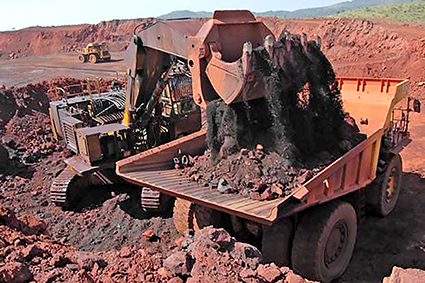
Whether it is Washington or Beijing, the global empires of today do not penalise the import of our gold, our platinum group metals, manganese, iron ore or even coal. They want our raw commodities. They need them to power their own factories, sustain their own high-tech industries and grow their GDPs.
This wedge is real and it is catastrophic. The global tariff structure acts as an artificial funnel. It creates a perverse economic incentive: it makes it cheap and frictionless for South Africa to remain a primary-commodity exporter, while making it prohibitively expensive for us to evolve into a manufacturing economy.
Effects of global trade policies
If we allow this wedge to be driven deeper, the long-term structural damage will completely hollow us out. Yes, high commodity prices might hand the National Treasury a temporary revenue cushion today, as I commented on last week. But commodity cycles are notoriously fickle; they boom and then they inevitably bust. When the dust settles, a nation that relies solely or increasingly on raw exports is left with depleted mines, a degraded environment and an unskilled workforce.
By allowing global trade policies to suppress our manufacturing sector while giving our raw materials a free pass, we are consenting to a system that kills local employment. You cannot solve our huge unemployment crisis by shipping unrefined rocks to foreign ports. Jobs are created in the factories, in the agro-processing plants, and in the high-value assembly lines that turn those rocks into advanced components.
The tragic irony is that our own government is playing right into this trap through sheer inertia. I have repeatedly criticised Pretoria for failing to prioritise real, aggressive economic growth. Instead of fostering dynamic public-private partnerships to unlock massive private investment, repair our collapsing logistics rail lines and supercharge local factories, the state has sat on its hands, content to rely on cyclical mining windfalls to bail out the budget deficit.
Breaking free of Agoa
The Agoa threat is not just a diplomatic headache; it is a structural assault on our economic sovereignty. If our response to Western tariff pressures or Eastern pivots is simply to shrug and export more raw minerals and commodities to compensate for lost vehicle and citrus markets, we are moving backward.
We must stop measuring the health of our economy by the size of a commodity windfall that flows straight into multinational mining coffers. It is time to aggressively resist this global trade trap. If the world wants our minerals, they must also buy them increasingly as finished products. It is time to break the colonial trade cycle, unlock private sector potential, and build a South Africa that creates its own value, on its own soil, for its own people.
Maarten van Doesburgh is an economist, the head of Economics at CPUT, CEO of Economics Investment Group and a regular commentator and business consultant on South Africa’s economic landscape, focusing on financial markets, policy, and business strategy. vandoesburghm@cput.ac.za
- The current African Growth and Opportunity Act (Agoa) and US tariff structures favor the export of South Africa's raw minerals while imposing high tariffs on manufactured goods, hindering local manufacturing development.
- Raw, unrefined minerals like gold, platinum group metals, and coal are exempt from aggressive tariffs, making it economically favorable for South Africa to remain a primary commodity exporter.
- Reliance on commodity exports leads to a depleted environment, an unskilled workforce, and fails to address the country's unemployment crisis since jobs are created in manufacturing and value-added production.
- The South African government has been criticized for not prioritizing aggressive economic growth or investing in public-private partnerships to support local manufacturing and infrastructure.
- Economist Maarten van Doesburgh urges South Africa to break the colonial trade cycle by demanding that global markets buy finished products rather than just raw minerals to ensure sustainable economic sovereignty.
We are being set up. As Washington wraps up its annual review of the African Growth and Opportunity Act (Agoa), our economic commentators are panicking about the wrong numbers. They are staring at short-term export data, celebrating temporary windfalls from high global commodity prices and completely missing the devastating long-term wedge being driven straight into the heart of South Africa’s industrial future.
I have repeatedly written for Sunday World that the only viable path to true economic liberation, massive GDP growth and a fairer distribution of income is through robust, local manufacturing, value-added production and high-tier services. A country that merely digs up its wealth, ships it off in raw form and buys it back as expensive finished goods is a country that is actively exporting its own prosperity and its people's jobs.
Yet, the evolving global tariff architecture — leveraged by the West and accelerated by geopolitical games — is designed to entrench this vulnerability.
Look closely at the mechanics of the current Agoa and US tariff structures. It is a masterful exercise in economic containment. If South Africa loses its full Agoa eligibility or as separate penalising Section 301 tariffs bite harder, a highly specific economic friction occurs. Manufactured consumer goods, automotive parts, and high-value agricultural products face immediate, aggressive tariff walls — potentially pricing our factories out of the global market.
But do you know what remains untouched by these tariff wars? Our raw, unrefined minerals.
Whether it is Washington or Beijing, the global empires of today do not penalise the import of our gold, our platinum group metals, manganese, iron ore or even coal. They want our raw commodities. They need them to power their own factories, sustain their own high-tech industries and grow their GDPs.
This wedge is real and it is catastrophic. The global tariff structure acts as an artificial funnel. It creates a perverse economic incentive: it makes it cheap and frictionless for South Africa to remain a primary-commodity exporter, while making it prohibitively expensive for us to evolve into a manufacturing economy.
If we allow this wedge to be driven deeper, the long-term structural damage will completely hollow us out. Yes, high commodity prices might hand the National Treasury a temporary revenue cushion today, as I commented on last week. But commodity cycles are notoriously fickle; they boom and then they inevitably bust. When the dust settles, a nation that relies solely or increasingly on raw exports is left with depleted mines, a degraded environment and an unskilled workforce.
By allowing global trade policies to suppress our manufacturing sector while giving our raw materials a free pass, we are consenting to a system that kills local employment. You cannot solve our huge unemployment crisis by shipping unrefined rocks to foreign ports. Jobs are created in the factories, in the agro-processing plants, and in the high-value assembly lines that turn those rocks into advanced components.
The tragic irony is that our own government is playing right into this trap through sheer inertia. I have repeatedly criticised Pretoria for failing to prioritise real, aggressive economic growth. Instead of fostering dynamic public-private partnerships to unlock massive private investment, repair our collapsing logistics rail lines and supercharge local factories, the state has sat on its hands, content to rely on cyclical mining windfalls to bail out the budget deficit.
The Agoa threat is not just a diplomatic headache; it is a structural assault on our economic sovereignty. If our response to Western tariff pressures or Eastern pivots is simply to shrug and export more raw minerals and commodities to compensate for lost vehicle and citrus markets, we are moving backward.
We must stop measuring the health of our economy by the size of a commodity windfall that flows straight into multinational mining coffers. It is time to aggressively resist this global trade trap. If the world wants our minerals, they must also buy them increasingly as finished products. It is time to break the colonial trade cycle, unlock private sector potential, and build a South Africa that creates its own value, on its own soil, for its own people.
Maarten van Doesburgh is an economist, the head of Economics at CPUT, CEO of Economics Investment Group and a regular commentator and business consultant on South Africa’s economic landscape, focusing on financial markets, policy, and business strategy. vandoesburghm@cput.ac.za


