


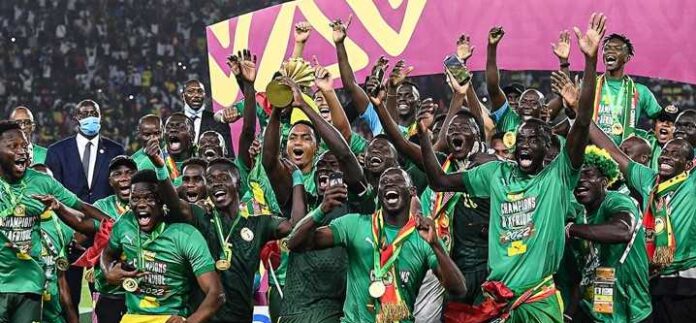
What started as a beautiful tournament, with teams arriving at the recently concluded Africa Cup of Nations (Afcon) dripping in style, traditional attire and robes, the tournament concluded in the most despicable and ugly manner when Senegal upset the applecart and nailed hosts Morocco, against all odds, at the heaving, seething Prince Moulay Abdallah Stadium in Rabat last Sunday.
Even CAF had waxed lyrical on their page, giving a glowing account when the teams were streaming into the Mediterranean country: “Africa’s flagship sports event has found its most authentic expression not on the pitch, but in the way teams chose to arrive – proudly dressed in national cultural attire, deliberately using the tournament’s global platform to project history, heritage and belonging.”
But on Sunday, it was totally different, a blemish on the face of CAF that will need the kind of make-up applied by the Sandton Slay Queens.
It was the sort of public relations that Africa and the diaspora could definitely do without, and sadly, the delicious football dished on the field was all of a sudden gobbled up by the mediocre refereeing, goalkeeper’s towel tussles behind the posts and the brawls between some fans and security.
Senegal staging a walk-out after a dodgy penalty decision and the monkey chants with
bananas was the foulest and lowest moment.
North Africa is still a tricky minefield to navigate, after all these years. The passion for the game can be fundamental and overwhelming. It does not just end on the pitch; in fact it gets worse in the grandstands and in the big cities.
From as young as toddlers, they want to win all matches and trophies; everything.
They just don’t take kindly to losing, and it can get dangerous and out of hand. At some point, for some derbies in North Africa, independent referees had to be imported all the way from Europe.
As a battle-scarred veteran, I have my fair share of memories, mostly not that pleasant, from up on the continent. I covered the Afcon 2004 in Tunisia and the subsequent 2006 edition in Egypt. Armed with only a notebook and pen, I have also found myself right in the hustle and bustle of Algiers (Algeria) and Benghazi in Libya.
Even though Bafana, under Ted Dumitru, came back without a win, a point or a single goal, the coastal towns of Alexandria (Egypt) and Sousse (Tunisia) were laid back and
cosmopolitan, a far cry from the hectic capital cities, which could get a little unpleasant and intimidating and where there’s sometimes a sheer disregard for black Africans.
Morocco is one of the most beautiful countries on the continent – it has coastlines on the Mediterranean Sea to the north and the Atlantic Ocean to the west – and they can do better.
They are arguably the continent’s number one football country; the only African team to have reached the last four stage of a Fifa World Cup.
But they sometimes need to take a chill pill, be accommodating of other people and races and learn that in sports, there’s a winner and a loser – because the sooner we forget about what went down in Rabat during the final, the better for African football.
Reaching the semifinals of the World Cup did not guarantee them winning the Afcon at home; not at all!
- What started as a beautiful tournament, with teams arriving at the recently concluded Africa Cup of Nations (Afcon) dripping in style, traditional attire and robes, the tournament concluded in the most despicable and ugly manner when Senegal upset the applecart and nailed hosts Morocco, against all odds, at the heaving, seething Prince Moulay Abdallah Stadium in Rabat last Sunday.
- Even CAF had waxed lyrical on their page, giving a glowing account when the teams were streaming into the Mediterranean country: “Africa’s flagship sports event has found its most authentic expression not on the pitch, but in the way teams chose to arrive – proudly dressed in national cultural attire, deliberately using the tournament’s global platform to project history, heritage and belonging.” But on Sunday, it was totally different, a blemish on the face of CAF that will need the kind of make-up applied by the Sandton Slay Queens.
- It was the sort of public relations that Africa and the diaspora could definitely do without, and sadly, the delicious football dished on the field was all of a sudden gobbled up by the mediocre refereeing, goalkeeper’s towel tussles behind the posts and the brawls between some fans and security.
- Senegal staging a walk-out after a dodgy penalty decision and the monkey chants with bananas was the foulest and lowest moment.
- North Africa is still a tricky minefield to navigate, after all these years.


