


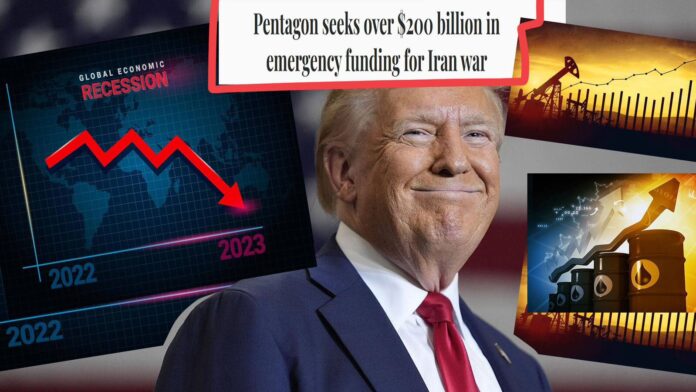
South Africans could soon feel the effects of escalating tensions between the United States and Iran. Fears are growing that prolonged conflict in the Middle East will disrupt global energy markets and drive up the cost of living.
Washington is reportedly seeking more than $200-billion (R3,4-trillion) from Congress to fund its military campaign against Iran, a move that signals the possibility of a drawn-out and intensified conflict, rather than a short-term operation.
The Washington Post’s sources said the Defence Department has proposed several potential funding requests over the last two weeks.
Congress will not realistically pass $200-billion proposal
It remains unclear which request the White House will put before lawmakers on Capitol Hill, but the senior administration official who spoke to The Washington Post doesn’t think the $200-billion proposal will realistically pass in Congress.
The request would likely need at least 60 votes in the Senate to get past the filibuster.
Reports suggest the funding would significantly boost weapons production and sustain military operations that began in late February.
Stakes are high for SA
The sheer scale of the request has raised eyebrows globally. To put it into perspective, the amount exceeds a substantial portion of Iran’s entire economic output, underlining just how serious and potentially prolonged the conflict could become.
For South Africa, the stakes are high.
Any instability in the Middle East, a region central to global oil and gas supply, typically sends shockwaves through international markets. With the country heavily reliant on imported oil, even minor disruptions can quickly translate into higher local fuel prices.
Recent threats to target Iran’s major gas infrastructure have added to concerns. Analysts warn that damage to key energy facilities would tighten global supply, pushing oil and gas prices upward. That, in turn, would hit South Africans where it hurts most: at the fuel pump.
Higher fuel costs will hit economy hard
Higher fuel costs have a ripple effect across the economy. Transport becomes more expensive, food prices climb, and everyday goods become less affordable. For households already grappling with rising living costs, this could deepen financial strain.
Economists have also cautioned that prolonged conflict could disrupt global shipping and trade routes, further affecting supply chains. This could lead to delays, shortages, and additional price hikes on imported goods.
Also Read: Will Iran turn out to be the USA’s Suez Crisis moment?
- South Africans could soon feel the effects of escalating tensions between the United States and Iran.
- Fears are growing that prolonged conflict in the Middle East will disrupt global energy markets and drive up the cost of living.
- Washington is reportedly seeking more than $200-billion (R3,4-trillion) from Congress to fund its military campaign against Iran, a move that signals the possibility of a drawn-out and intensified conflict, rather than a short-term operation.
- The Washington Post’s sources said the Defence Department has proposed several potential funding requests over the last two weeks.
- Congress will not realistically pass $200-billion proposal It remains unclear which request the White House will put before lawmakers on Capitol Hill, but the senior administration official who spoke to The Washington Post doesn’t think the $200-billion proposal will realistically pass in Congress.


