


Over the past few days, I have been in deep conversation with friends about the extraordinary and troubling testimony of Vusumuzi “Cat” Matlala. Like many South Africans, I have been wrestling with a single haunting question: How do we stop the conveyor belt that keeps producing individuals like Thabo Bester and now allegedly, Cat Matlala? This is not a judgemental exploration. Rather, it’s a plea for us to confront the uncomfortable truths we have avoided for far too long.
But as we unpack this case, we must centre ourselves on what truly matters: the corruption that robbed the people of Tembisa of healthcare and took the life of an honest public servant, Babita Deokaran. A woman who tried to do the right thing and paid the ultimate price. Her young daughter will grow up without her mother because someone decided that silence was more valuable than justice. We must not lose sight of this human cost. Behind the headlines, the testimonies, the criminal allegations, and the media frenzy stands a family shattered, a community betrayed, and a nation confronted with the consequences of its own moral erosion.
Here’s a warmer, more empathetic version:
Let me remind you of the story of the late Shonisani Lethole. He died in June 2020 after tweeting to the Minister of Health that he had not eaten for 48 hours. His final plea was not a complaint, it was a cry for dignity. The Ombud later confirmed what many feared: negligence and substandard care played a role in his passing. His story, like Babita’s, is a reminder that behind every statistic is a human life with dreams, loved ones, and a future that was meant to unfold. The question, as you rightly ask, is this: At what point do we, as a society, say enough? When do we step forward, not only to mourn, but to change the conditions that make such tragedies possible?
Shonisani’s memory calls us to something deeper than outrage. It calls us to compassion, to accountability, and to the shared responsibility of building a country where no one’s final moments are spent begging to be seen.
As we reflect on Matlala, Boshoga, or any of the figures who dominate our screens, may we remember that the real story is about a public health system broken by greed, a mother stolen from her child, and a society that must decide, urgently, whether it will continue to tolerate the rot or rise to restore what remains good and just.
It is time, urgently, for our society to look at itself in the mirror.
A philosopher once asked a simple riddle: Two firefighters emerge from a burning building. One has a face covered in soot; the other’s face is clean. Which one washes first? We instinctively think the one with the dirty face. But the philosopher reminds us that the dirty-faced man sees the clean face of his partner and assumes he too is clean. The clean-faced one, seeing soot on his partner, assumes he must be dirty. And so he washes first.
The lesson is not about firefighters. It is about reflection: we do not see ourselves as we are; we see ourselves through others. In that sense, Matlala and Bester are not anomalies, we produced them. They did not fall from the sky. They grew up on the same streets we grew up on, shaped by the same social fractures we walk past every day. If their faces are dirty, perhaps it is because they reflect our collective image.
This week, South Africa learned that Jerry Boshoga, whose kidnapping gripped the nation and brought people together in prayer and desperation, was, according to Matlala’s testimony, a narcotics manufacturer. His alleged involvement in the very drug economy ravaging our communities forces uncomfortable questions upon us: How often do we assume criminals are “outsiders”? How many times have we blamed foreign nationals for selling drugs while ignoring our own who manufacture them? How much did his family know? How often do families shield loved ones from accountability? How many crimes survive because we choose silence, loyalty, and shame over truth?
Matlala’s testimony about his friend Jerry Boshoga and others reminded me of a chilling line about organised crime from the film Goodfellas, where Jimmy Conway, played by Robert De Niro, says: “In this business, everyone knows someone, and everyone protects someone.” Hearing Matlala speak, that quote echoed deeply for me. It suggests a frightening reality, that we may never fully know the truth. Matlala, like anyone embedded in such criminal networks, is likely to shield those he favours and cast shadows over those he does not. In a world built on alliances, fear, loyalty, and survival, truth becomes a negotiated commodity rather than a principle.
Another chilling reality hit me, that the universe does not allow a vacuum. If Matlala occupied a particular space in the criminal world, then somewhere, someone else is already being shaped to replace him. Every crime ecosystem recruits successors. That is how conveyor belts work. And yes, we must emphasise: everything Matlala stands accused of is still to be tested in a court of law. But the conditions that produced him, those are already proven. They are around us. They involve us. They are us.
When I consider Matlala’s upbringing, a part of me softens, not in sympathy for wrongdoing, but in sobering awareness of how society shapes people long before they shape their own destinies. Matlala was homeless at one point. His mother, an albino woman, was raped because of bizarre and violent myths society holds about albinism. How does a nation reflect on its own soul when it enables such cruelty? What kind of society treats vulnerable bodies as mystical objects? How do such traumas influence who a child becomes? What monsters are born from our collective neglect and superstitions?
We are, undeniably, a society that births and protects criminals. And this is not new. Growing up in Khuma, I remember vividly how families often shielded their criminal children from police, from justice, and from communities who had lost patience. Even when those criminals terrorised the very communities protecting them, the defence was unwavering. Why? Was it fear? Shame? Misplaced loyalty? Or a belief that the system is so broken that one must protect their own, even if their own is harming the community?
These questions matter. Because you cannot dismantle a conveyor belt if you refuse to acknowledge the raw materials feeding it.
What do we expect to happen when a child grows up seeing violence normalised, inequality entrenched, corruption rewarded, and accountability optional?
What future is shaped when young people realise that bribery opens doors honesty cannot?
How do we expect children to pursue goodness when goodness goes unnoticed and wrongdoing becomes a pathway to survival?
“A society that fails to heal its wounds,” I once said, “will raise children who learn to survive by cutting.” And yet we act surprised when those cuts bleed through our headlines.
One detail from the testimony moved me more than I expected: Matlala allegedly spends 23 hours a day in solitary confinement. I began to question whether this aligns with international human rights standards. Is solitary confinement punishment or retribution? Rehabilitation or slow destruction? Nelson Mandela once wrote, “It is said that no one truly knows a nation until one has been inside its jails.” If that is true, then we must ask: What do our prisons say about us? What do they produce? What do they encourage? If we crush people into psychological dust, do we really imagine they will emerge reformed?
But even as we confront systems, we must confront ourselves. Becoming a constitutional society is not a passive inheritance, it is a daily discipline. Our Constitution cannot live on paper alone; it must breathe through our conduct, parenting, leadership, and choices. Being constitutional beings means refusing to romanticise criminals, refusing to excuse wrongdoing, refusing to hide behind family loyalty, and refusing to let the conveyor belt run unchallenged.
This is not a call to judge Matlala, Bester, or Boshoga. Their guilt or innocence will be determined in court. This is a call to judge us, to examine the values we live by and the world we create.
We must ask:
- Are we raising children who believe in justice, dignity, hard work, and compassion?
- Are we building communities where vulnerability is protected rather than exploited?
- Are we modelling integrity or teaching survival at any cost?
- Are we nurturing hope or feeding despair?
Ultimately, this is a question of becoming. Becoming the society we claim we want to be. Becoming the defenders of the future rather than spectators of its slow decay. “Hope,” I often say, “is not the denial of our darkness, it is the decision to walk toward the light despite it.”
In breaking the conveyor belt, we begin with honesty. With courage. With accountability. And with a relentless commitment to reflect, reform, and rebuild. If we dare to become what we wish our society to be, then perhaps one day we will no longer produce men whose names haunt our headlines, but citizens whose names inspire our dreams.
Let us rise to that challenge.
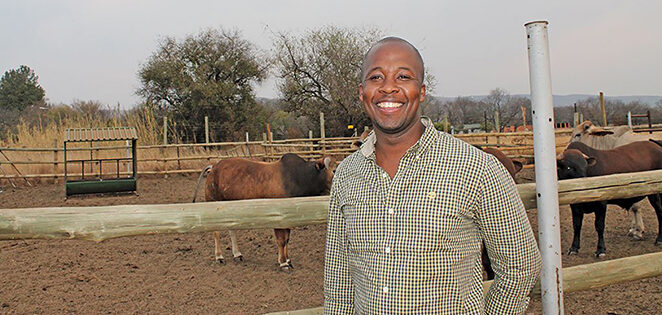
- Hatang is executive director at Re Hata Mmoho
- Over the past few days, I have been in deep conversation with friends about the extraordinary and troubling testimony of Vusumuzi “Cat” Matlala.
- Like many South Africans, I have been wrestling with a single haunting question: How do we stop the conveyor belt that keeps producing individuals like Thabo Bester and now allegedly, Cat Matlala.
- This is not a judgemental exploration.
- Rather, it’s a plea for us to confront the uncomfortable truths we have avoided for far too long.
- But as we unpack this case, we must centre ourselves on what truly matters: the corruption that robbed the people of Tembisa of healthcare and took the life of an honest public servant, Babita Deokaran.


