


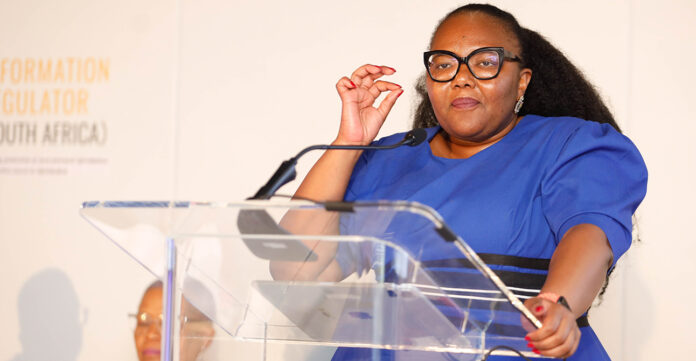
Basic Education Minister Siviwe Gwarube said expanding access to Early Childhood Development (ECD) is critical to giving South African children an equal start, as government targets universal access gap by 2030.
According to Gwarube, about one million South African children aged three to five are not enrolled in ECD programmes, which highlights the scale of the challenge facing government as it works towards universal access to quality early learning by 2030.
The access gap comes amid questions about the Department of Basic Education’s ability to spend money allocated to ECD.
According to the department’s annual report, it failed to spend R743 million of its overall budget. Out of this unspent total, R389.3 million was allocated for ECD programmes in the 25/26 financial year. The underspending is associated with delays in appointing service providers for its ECD nutrition pilot, with programmes in the Eastern Cape notably affected. Additional underspending on ECD resource packages was attributed to invoices being submitted late.
“Underspending in any sector is inexcusable,” she said.
READ MORE: Only 36% of learners in low-fee schools meet Grade 3 reading benchmark, study finds
In her address at the second annual Bana Pele (Children First) Leadership Summit in Sandton on Monday, Gwarube said children’s educational futures are shaped long before they entered formal schooling, with access to early learning playing a significant role in determining whether they start school ready to learn.
To illustrate the consequences of unequal access, she told the story of two fictional 10-year-olds, Lindiwe and Nelson, whose educational journeys diverged because of their early learning experiences.
Lindiwe attended an ECD centre where she received structured learning, proper nutrition and support from qualified practitioners. She had been exposed to books from an early age.
Nelson, meanwhile, was raised at home by his grandmother, who cared for him but lacked the training and resources to provide structured early learning.
By the time they reached formal schooling, the two children had different levels of preparation, despite having the same potential.
“What separated Nelson from Lindiwe was not talent. It was access to an ECD that provides a safe, structured place to learn, a meal, and a practitioner that is trained to notice when a child needs help,” Gwarube said.
She argued that government needed to address educational disadvantages at their root rather than wait until children had fallen behind in school.
“Nelson fails in Grade 4 because our system failed him when he was a three-year-old,” she said.
READ: Siviwe Gwarube uses SONA reply to defend GNU and push DA’s education agenda
One million children still to be reached
Gwarube said the government had made progress towards expanding access, but stressed that more needed to be done to ensure that early learning opportunities reached children in disadvantaged communities.
The Bana Pele initiative aims to achieve universal access to quality early learning by 2030 by improving coordination between government departments, ECD practitioners, municipalities, businesses and civil society organisations.
According to Gwarube, almost 40,000 early learning programmes have been registered, bringing approximately 1.6 million children into view through those programmes.
However, she acknowledged that administrative processes and difficulties accessing digital systems could still present challenges for practitioners seeking to register their centres.
She said expanding access must go hand in hand with quality, ensuring that children attend safe environments where their developmental needs are recognised and supported.
Ramaphosa calls for collective action
President Cyril Ramaphosa, who also addressed the summit, echoed Gwarube’s call for greater access to early learning, saying the country’s future was being shaped in classrooms and playrooms as much as in universities, factories and boardrooms.
Ramaphosa said the Bana Pele Shared Blueprint provided a roadmap towards universal access by 2030, but stressed that government could not achieve the goal alone.
“We must ensure that registration requirements protect children without unnecessarily excluding the very centres that serve our poorest communities,” Ramaphosa said.
ALSO READ: Parliament welcomes lifestyle audits for basic education department
He called on businesses to invest in early learning centres, practitioner training, educational materials and initiatives that would help children from poor households access early education.
“The Bana Pele Shared Blueprint belongs to all South Africans,” he said.
No child should fall behind
Ramaphosa said early learning was about more than ensuring children were safe and cared for. It was about helping them develop the skills and confidence needed to navigate school and prepare for a changing world.
He warned that children would grow up in a world increasingly shaped by technology, making strong foundations and human interaction in their early years even more important.
“There is no greater investment than in our children,” he said.
- About one million South African children aged three to five are not enrolled in Early Childhood Development (ECD) programmes, highlighting the access gap to universal early learning targeted for 2030.
- The Department of Basic Education failed to spend R743 million of its budget, including R389.3 million allocated for ECD programmes in the 2025/26 financial year, due to delays in appointing service providers and late invoice submissions.
- Nearly 40,000 early learning programmes have been registered, reaching approximately 1.6 million children, but administrative and digital access challenges remain for practitioners.
- The Bana Pele initiative aims to achieve universal quality early learning access by 2030 through improved coordination among government, ECD practitioners, municipalities, businesses, and civil society.
- President Cyril Ramaphosa emphasized the need for collective action, urging businesses to invest in early learning and calling for registration requirements that protect children without excluding centres serving poor communities.


