


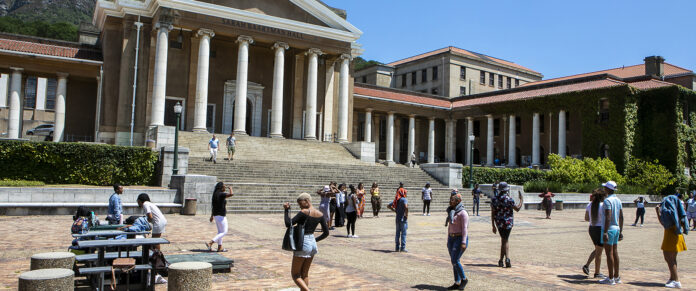
The University of Cape Town Graduate School of Business (UCT GSB) has climbed five places to second globally in the 2026 Corporate Knights Better World MBA Ranking, retaining its position as Africa’s top MBA programme.
The ranking assessed 166 MBA programmes worldwide, with Maastricht University’s School of Business and Economics taking first place. Australia’s Griffith Business School, which had topped the list for six consecutive years, was overtaken.
Beyond the rankings, the results highlight a growing shift in business education, with greater emphasis on preparing graduates to address social and environmental challenges alongside traditional business demands.
One of the notable changes in this year’s ranking was the increased weighting given to alumni impact, which doubled from 10% to 20%. The measure considers graduates working in sustainability-related roles or organisations with a social or environmental mission.
ALSO READ: University of Cape Town returns to global top 150 in latest rankings
UCT GSB director Dr Catherine Duggan said 62% of the graduate cohort covered by the school’s submission to the ranking worked in roles or organisations that met this definition of impact, compared with an average of about 25% among the other schools in the ranking’s top 40.
“This change is a positive one – it recognises that a business school should not only be judged by what happens in its classrooms, but by what its graduates go on to contribute to business and society,” she said.
The increased emphasis on graduate outcomes reflects changing expectations of business schools, which are under pressure to prepare managers for an environment shaped by climate change, inequality, technological disruption and economic uncertainty.
“What I’m increasingly hearing from employers – and what I tell my students – is that uncertainty and rapid change make human judgement, imagination and original insight more important than ever,” Duggan said.
“I think business schools must go beyond teaching traditional business skills to ensure they are helping students develop this kind of independent judgement and the ability to see possibilities that others don’t.”
Changing what business schools teach
In response to these demands, UCT GSB has redesigned its MBA curriculum over the past five years to place greater emphasis on applied learning, sustainability, responsible leadership and technological change.
Sustainability is integrated across several core subjects, including strategy, economics and accounting. The school reports that 83% of its core courses address impact and sustainability issues, compared with an average of 49% among the top 40 programmes in the Corporate Knights ranking.
Responsible leadership is another focus, with teaching supported by the Allan Gray Centre for Values-Based Leadership. The school has also introduced courses on managing culturally diverse teams, navigating digital disruption and data-driven decision-making.
For Duggan, the changes reflect the need to prepare graduates for a business environment in which commercial performance cannot be separated from broader social and environmental consequences.
Preparing managers for artificial intelligence
Artificial intelligence is adding another dimension to the demands facing business schools.
While AI can help businesses analyse information and make decisions more efficiently, its use also raises concerns about bias, inaccurate outputs, data privacy and accountability.
UCT GSB has incorporated digital transformation and AI-related learning into its MBA, with students expected to assess both the opportunities and risks of the technology.
“We treat AI as a managerial capability, not just a technology,” Duggan said.
“For a leader, speed is only one consideration: we also need to ask whether AI improves the decision, what risks it introduces and who remains accountable for the outcome.”
In one example, students in the Strategic Accounting for Business Leaders course use AI to conduct financial analysis before examining and critiquing the results.
Duggan said the aim was to develop leaders who could use technology confidently while questioning the information and assumptions behind its outputs.
“Our goal is to develop leaders who can use AI with confidence and imagination while asking hard questions about the data and perspectives on which these tools are trained, how well they reflect African contexts, who benefits from their adoption, and how technology can contribute to inclusive growth,” she said.
Measuring impact beyond the classroom
Duggan said its graduates had founded companies that created thousands of jobs, led corporations introducing new services and technologies, embedded sustainable practices into business operations, and worked in government and organisations focused on improving people’s lives.
READ: UCT Chair’s publication of reports sparks digital wildfire, burns confidentiality
She said the school’s curriculum redesign was informed by consultations with alumni, employers, executives and prospective students.
“One thing I have taken from our experience is the importance of listening to the people we serve and acting on what we learn,” she said.
- The University of Cape Town Graduate School of Business (UCT GSB) rose to second place globally in the 2026 Corporate Knights Better World MBA Ranking, remaining Africa's top MBA program.
- The ranking assessed 166 MBA programs worldwide, with Maastricht University School of Business and Economics taking first place and Australia's Griffith Business School dropping from the top spot after six years.
- The increased weighting of alumni impact from 10% to 20% in the ranking reflects graduates working in sustainability or social/environmental mission roles, with 62% of UCT GSB's graduate cohort meeting this criterion.
- UCT GSB redesigned its MBA curriculum over five years to emphasize applied learning, sustainability, responsible leadership, and technological change, with 83% of core courses addressing impact and sustainability.
- The school has integrated AI and digital transformation into its MBA, teaching students to critically assess AI's opportunities, risks, and accountability in decision-making processes.
The University of Cape Town Graduate School of Business (UCT GSB) has climbed five places to second globally in the 2026 Corporate Knights Better World MBA Ranking, retaining its position as Africa's top MBA programme.
The ranking assessed 166 MBA programmes worldwide, with Maastricht University's School of Business and Economics taking first place. Australia's Griffith Business School, which had topped the list for six consecutive years, was overtaken.
Beyond the rankings, the results highlight a growing shift in business education, with greater emphasis on preparing graduates to address social and environmental challenges alongside traditional business demands.
One of the notable changes in this year's ranking was the increased weighting given to alumni impact, which doubled from 10% to 20%. The measure considers graduates working in sustainability-related roles or organisations with a social or environmental mission.
ALSO READ: University of Cape Town returns to global top 150 in latest rankings
UCT GSB director Dr Catherine Duggan said 62% of the graduate cohort covered by the school's submission to the ranking worked in roles or organisations that met this definition of impact, compared with an average of about 25% among the other schools in the ranking's top 40.
“This change is a positive one – it recognises that a business school should not only be judged by what happens in its classrooms, but by what its graduates go on to contribute to business and society,” she said.
The increased emphasis on graduate outcomes reflects changing expectations of business schools, which are under pressure to prepare managers for an environment shaped by climate change, inequality, technological disruption and economic uncertainty.
“What I'm increasingly hearing from employers – and what I tell my students – is that uncertainty and rapid change make human judgement, imagination and original insight more important than ever,” Duggan said.
“I think business schools must go beyond teaching traditional business skills to ensure they are helping students develop this kind of independent judgement and the ability to see possibilities that others don't.”
In response to these demands, UCT GSB has redesigned its MBA curriculum over the past five years to place greater emphasis on applied learning, sustainability, responsible leadership and technological change.
Sustainability is integrated across several core subjects, including strategy, economics and accounting. The school reports that 83% of its core courses address impact and sustainability issues, compared with an average of 49% among the top 40 programmes in the Corporate Knights ranking.
Responsible leadership is another focus, with teaching supported by the Allan Gray Centre for Values-Based Leadership. The school has also introduced courses on managing culturally diverse teams, navigating digital disruption and data-driven decision-making.
For Duggan, the changes reflect the need to prepare graduates for a business environment in which commercial performance cannot be separated from broader social and environmental consequences.
Artificial intelligence is adding another dimension to the demands facing business schools.
While AI can help businesses analyse information and make decisions more efficiently, its use also raises concerns about bias, inaccurate outputs, data privacy and accountability.
UCT GSB has incorporated digital transformation and AI-related learning into its MBA, with students expected to assess both the opportunities and risks of the technology.
“We treat AI as a managerial capability, not just a technology,” Duggan said.
“For a leader, speed is only one consideration: we also need to ask whether AI improves the decision, what risks it introduces and who remains accountable for the outcome.”
In one example, students in the Strategic Accounting for Business Leaders course use AI to conduct financial analysis before examining and critiquing the results.
Duggan said the aim was to develop leaders who could use technology confidently while questioning the information and assumptions behind its outputs.
“Our goal is to develop leaders who can use AI with confidence and imagination while asking hard questions about the data and perspectives on which these tools are trained, how well they reflect African contexts, who benefits from their adoption, and how technology can contribute to inclusive growth,” she said.
Duggan said its graduates had founded companies that created thousands of jobs, led corporations introducing new services and technologies, embedded sustainable practices into business operations, and worked in government and organisations focused on improving people's lives.
READ: UCT Chair’s publication of reports sparks digital wildfire, burns confidentiality
She said the school's curriculum redesign was informed by consultations with alumni, employers, executives and prospective students.
“One thing I have taken from our experience is the importance of ing to the people we serve and acting on what we learn,” she said.


