


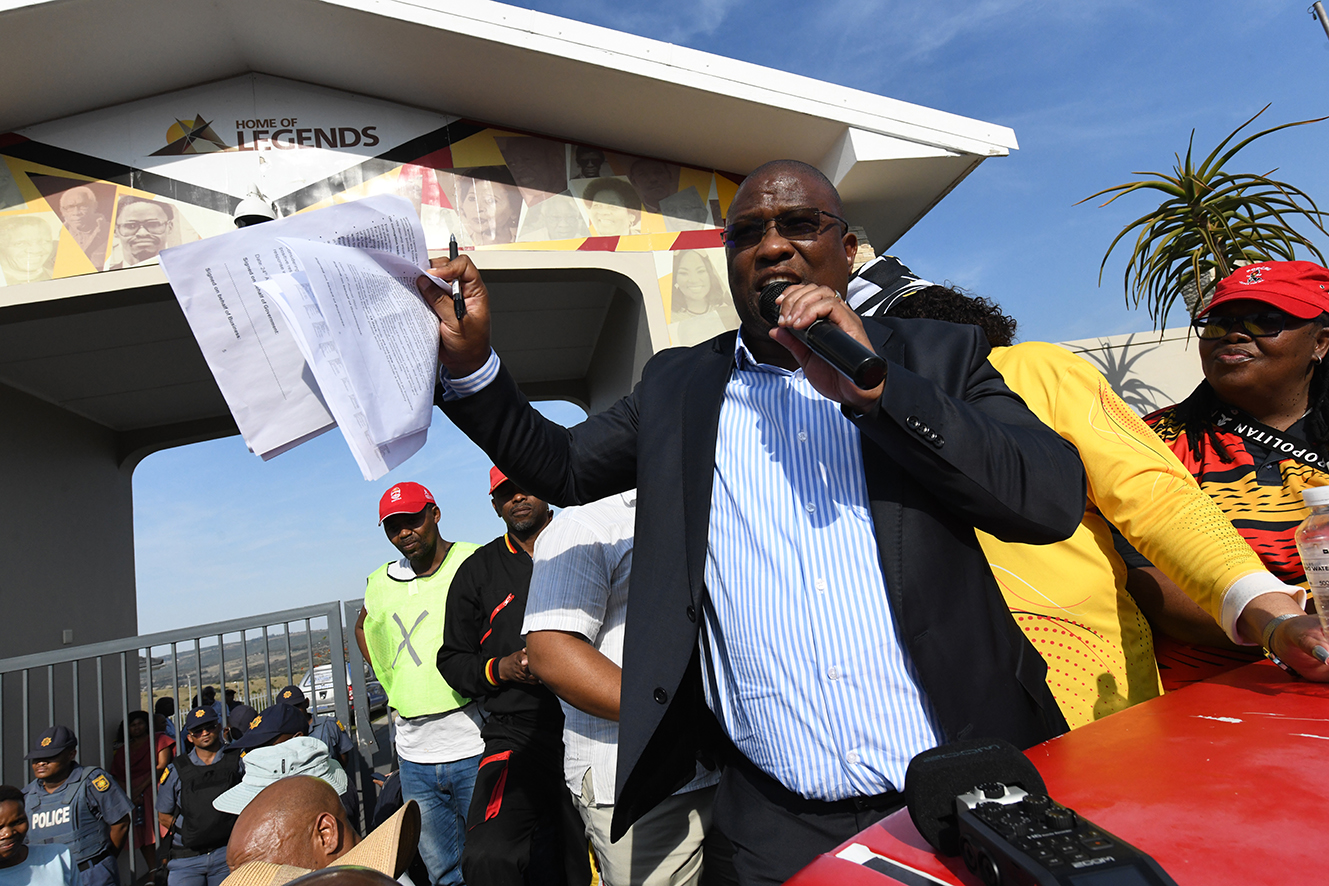
ANC Eastern Cape chairperson Oscar Mabuyane has admitted that the party’s declining support in the province, particularly Nelson Mandela Bay, has been years in the making, saying the latest election results did not come as a surprise to him.
Mabuyane said the ANC had been on a downward trajectory in Nelson Mandela Bay since at least 2016, and that the latest results, although showing a significant drop in support, reflected a trend the party had been observing for years.
“We are observing that, but this has been a downward spiral trend. It’s not really surprising. It might be shocking now that we are seeing such a significant drop, but we have been observing this over the last decades or so, particularly Nelson Mandela, since 2016,” he told Sunday World.
Substantial decline in two metros
His comments come as the ANC records a substantial decline in support in Eastern Cape’s two metropolitan municipalities, Nelson Mandela Bay and Buffalo City.
In Nelson Mandela Bay, the ANC’s share of the ward vote fell from 39.3% in 2021 to 25.3% in the 2026 local government elections. The DA increased its share from 39.8% to 44% over the same period.
Buffalo City also recorded a sharp decline in ANC support, with the party’s ward vote falling from 58.3% in 2021 to 42.2% in 2026.
Across the province, the ANC’s share of the ward vote declined from 70.4% in 2011 to 64.7% in 2016 and 62% in 2021. Provisional 2026 results put the party at 45.2%, representing a decline of 16.8 percentage points since the previous local government elections.
Back to the drawing board
Mabuyane said the party needed to accept the voters’ verdict and return to the drawing board to reconsider how it approached governance and economic development.
“Ours now is to welcome the real situation. This is not something perceived. It’s real. We just need to go back to the drawing board and plan better,” he said.
He attributed much of the decline to unemployment and the lack of economic opportunities. “People want jobs. People want to be self-sustainable. So these are things. It’s not just about service delivery per se,” he said.
He said the Eastern Cape needed greater investment, industrialisation and catalytic economic projects to create employment, particularly in Nelson Mandela Bay and Buffalo City.
Asked whether internal divisions and the controversy surrounding the ANC’s candidate selection process in Nelson Mandela Bay, including the role of Andile Lungisa, had contributed to the party’s poor performance, Mabuyane conceded that organisational problems had played a part.
“Yes, to a certain extent, it would have. That one, yes, it played its own negative effect when you had a lack of coherence in our team, at a point when we needed maximum unity and focus on elections,” he said.
‘Internal divisions alienated voters’
However, Mabuyane’s explanation comes against the backdrop of an admission by the ANC’s Nelson Mandela Bay regional leadership that internal divisions and disputes over candidate selection had alienated voters.
In a statement responding to the election results, regional spokesperson Bamanye Matiwane said disgruntled members and supporters had either stayed away from the polls or voted for rival parties because of unhappiness with the organisation.
“Many of them stayed at home or lent their vote to other parties because they were disappointed by divisions within our ranks during the candidate selection process and many other matters that might have caused them to not vote,” Matiwane said.
The regional leadership also conceded that residents’ frustrations over persistent service delivery failures had contributed to the party’s electoral decline.
- ANC Eastern Cape chairperson Oscar Mabuyane said the party's declining support in Nelson Mandela Bay has been a downward trend since at least 2016.
- ANC's ward vote share in Nelson Mandela Bay declined from 39.3% in 2021 to 25.3% in the 2026 local government elections, while the DA's share rose from 39.8% to 44%.
- Buffalo City saw ANC support fall from 58.3% in 2021 to 42.2% in 2026, and across Eastern Cape the party's ward vote share dropped from 70.4% in 2011 to 45.2% in 2026.
- Mabuyane attributed the ANC's decline partly to unemployment, lack of economic opportunities, and internal organisational problems including divisions during candidate selection.
- The ANC’s Nelson Mandela Bay regional leadership admitted internal disputes and service delivery frustrations caused voters to stay home or support rival parties.


