In South Africa, a silent crisis forces one in three girls to miss up to a week of school each month. The cause of this silent crisis is their menstrual cycle.
Conversations about menstruation remain shrouded in shame, but a quiet revolution is underway, led not from a podium but from the pages of a booklet and the heart of a determined township-born entrepreneur.
Period poverty is inadequate access to menstrual products, waste management, hygiene facilities, and, most importantly, education.
It is a global public health and human rights issue that affects millions of people who menstruate, impacting their health, dignity, and socioeconomic participation.
Mission to eradicate stigma
While South Africa has made strides such as removing value-added tax on pads and implementing a sanitary dignity policy framework, the vision remains distant.
Deep-seated stigma, unequal access in rural and low-income communities, inadequate school infrastructure, and the reality that over 7-million menstruators face period poverty and this is not including ghost statistics, show that systemic change is incomplete.
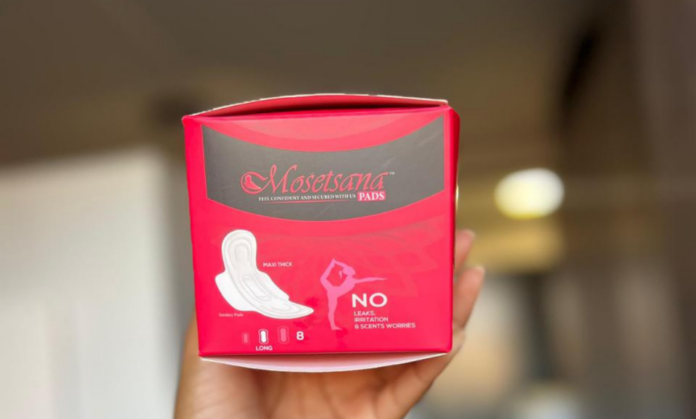
Neo Cholo, founder of Mosetsana Pads, is on a mission to end period poverty and stigma, one conversation at a time.
The spark came from an encounter with a schoolmate who had to miss classes. That moment turned empathy into action, leading to the creation of Mosetsana (girl) Pads.
“At Mosetsana Pads, we believe that every menstruator deserves dignity, comfort, and confidence during their period,” Cholo states.
The risks of period poverty are severe: missing up to a week of school monthly, reusing pads, or resorting to unsafe materials like newspapers and rags.
Yet the more profound issue is a lack of education. A natural biological process becomes a secret, breeding shame and perpetuating a cycle of disadvantage.
Cholo’s approach addresses this issue fundamentally. Beyond manufacturing and selling affordable sanitary towels, she uses a thoughtfully crafted booklet to educate and dismantle taboos.
Crucially, she is expanding the conversation to make it inclusive, framing it as “everyone’s problem.”
With the period poverty issue in South Africa, this inclusivity is for individuals like Cholo is radical and intentional.
The booklet states clearly: “Not all women menstruate, and not everyone who menstruates is a woman.”
Menstrual equity
By acknowledging transgender men and non-binary individuals, it frames menstruation as a human experience, not solely a gendered one.
“Why does this matter?” Cholo asks. “Because when we exclude people from the conversation, we exclude them from solutions. Period poverty doesn’t determine your gender identity. Dignity shouldn’t either.”
Cholo believes education and access are inseparable pillars of menstrual equity, because changing minds dismantles the shame and stigma that make periods a source of silence and inequality, while changing access addresses the immediate material injustice.
Without inclusive menstrual education, pads alone cannot erase the myths that keep girls out of school, sustain harmful cultural practices, or exclude transgender and non-binary menstruators; yet without access, education remains theoretical and disempowering.
Cholo stressed the importance of investing in menstruation education, using booklets, dialogues, and workshops, as she believes this helps plant seeds of long-term cultural shift so as to ensure that every sanitary pad distribution is met with understanding, dignity, and a community prepared to uphold the right to menstrual health for all.
“Some people say, ‘Stick to women and girls,’” Cholo notes. “But, as I say, stigma thrives in silence and exclusion. Our mission is to end the silence.”
Sustained collaboration
His vision is clear: “A period-friendly world is one where menstruation is entirely destigmatised and openly discussed in homes, schools, and workplaces, and where every menstruator has effortless access to affordable, safe products and clean, private facilities.
“It’s a world where menstrual health is integrated into public policy, where boys and men are educated allies, and where no one misses school or feels shame because of their period.”
Achieving this world requires sustained collaboration between government, the private sector, and communities not just to distribute products but to transform attitudes, policies, and environments.
The journey toward true menstrual equity demands urgency, investment, and steadfast dedication.
For Cholo, the call to action is for everyone: Educate. Advocate. Support. Normalise. Become an Ally.
Visit SW YouTube Channel for our video content
- In South Africa, a silent crisis forces one in three girls to miss up to a week of school each month.
- The cause of this silent crisis is their menstrual cycle.
- Conversations about menstruation remain shrouded in shame, but a quiet revolution is underway, led not from a podium but from the pages of a booklet and the heart of a determined township-born entrepreneur.
- Period poverty is inadequate access to menstrual products, waste management, hygiene facilities, and, most importantly, education.
- It is a global public health and human rights issue that affects millions of people who menstruate, impacting their health, dignity, and socioeconomic participation.