


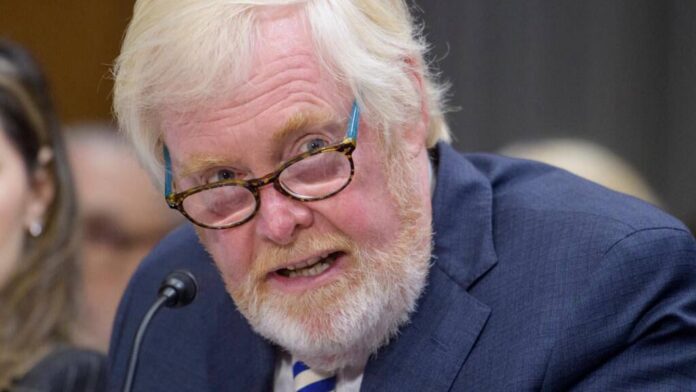
US ambassador Brent Bozell’s conduct before his official accreditation had already placed him on a collision course with the South African government.
On March 10, less than a month after arriving in the country, Bozell addressed the BizNews Conference in Hermanus, where he warned that Washington was running out of patience with Pretoria.
Speaking to an audience of business leaders, he laid out a list of demands: that South Africa withdraw its genocide case against Israel at the International Court of Justice, repeal the Expropriation Act, abandon Black Economic Empowerment policies, distance itself from Iran, and publicly condemn the apartheid-era chant “Kill the Boer, Kill the Farmer.”
On the chant, he was blunt. “I am sorry, I don’t care what your courts say, it’s hate speech,” Bozell said.
The remarks directly contradicted a prior ruling by South Africa’s Constitutional Court, which found the chant to be protected political expression within its historical context.
The response from government was swift. The Department of International Relations and Cooperation (DIRCO) summoned Bozell and issued a formal démarche, describing his comments as undiplomatic and a breach of diplomatic protocol. He later attempted to walk back part of his statement, saying his remarks on the judiciary reflected his personal view and that the United States respected the independence of South Africa’s courts.
Public sentiment on the ground was far less forgiving.
Outside the Sefako Makgatho Presidential Guesthouse in Pretoria on accreditation day, a group of South Africans gathered along the route to register their anger. Footage shared by PSAFLIVE showed protesters holding placards as Bozell’s motorcade approached.
One sign read: “1 tsotsi must voetsek back to where it came from.” In township slang, “tsotsi” refers to a criminal, while “voetsek” is a blunt Afrikaans command to leave. The message was unmistakable, for those gathered outside the gates, Bozell’s presence was not a diplomatic milestone, but an unwelcome imposition.
WATCH: “1 tsotsi must voetsek back to where it came from”
South Africans holding placards on the road where the American ambassador Bozell presented letters of credence this morning in Pretoria. pic.twitter.com/HaWmaDbKf2
— PSAFLIVE (@PSAFLIVE) April 8, 2026
The backlash was not limited to South Africa.
McHenry Venaani, leader of Namibia’s Popular Democratic Movement and a member of the National Assembly, weighed in publicly around the time of the accreditation. In posts shared on April 8, he signalled that concern over Bozell’s conduct extended beyond South Africa’s borders, reflecting broader unease within the region about what many see as an overreach of diplomatic boundaries.
On social media platform X, reaction to Bozell’s arrival was intense and largely negative. A surge of posts criticised his stance and questioned his role, with many users framing his remarks as interference in domestic affairs and linking his presence to wider geopolitical tensions.
Pressed by journalists on whether he had seen evidence supporting claims of a genocide against white farmers, Bozell declined to engage directly.
“There are those who want to sow discord. I am not one of them,” he said.
Despite the controversy, his accreditation now formalises his position.
With his Letters of Credence accepted, Bozell holds full diplomatic standing — giving him access to government ministers, political leaders and official channels to advance US interests.
But that status comes with consequences.
Any future misstep will no longer come from a diplomat still finding his footing. It will come from a fully recognised ambassador, bound by the rules President Cyril Ramaphosa has already made clear.
South Africa has opened the door.
What remains uncertain is how far both sides are willing to push it.
- US ambassador Brent Bozell sparked diplomatic tensions in South Africa before his official accreditation by making provocative demands, including dropping South Africa’s genocide case against Israel and condemning the anti-apartheid chant “Kill the Boer, Kill the Farmer.”
- Bozell's comments contradicted South Africa’s Constitutional Court ruling, leading to a formal diplomatic rebuke from the Department of International Relations and Cooperation for breaching protocol.
- Public protests greeted Bozell’s accreditation in Pretoria, with demonstrators expressing strong hostility and rejecting his presence as unwelcome interference.
- Regional political figures, such as Namibian opposition leader McHenry Venaani, publicly condemned Bozell’s conduct, signaling wider concern about US overreach in Southern Africa.
- Despite backlash, Bozell’s accreditation grants him full ambassadorial status, increasing the stakes for future interactions between Washington and Pretoria under President Ramaphosa’s government.


