


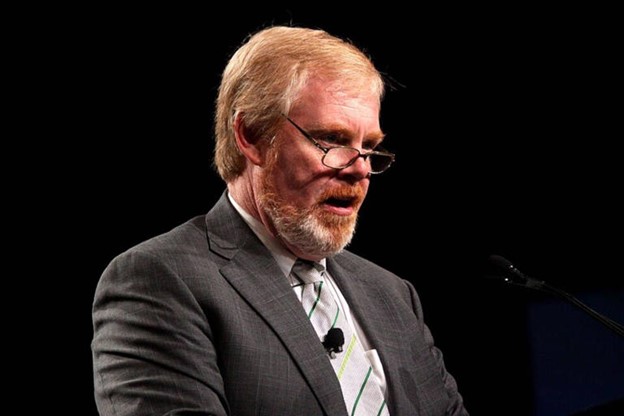
The arrival of Leo Brent Bozell III in Pretoria this month marks a dangerous new chapter in the already fragile relationship between the United States and South Africa.
As a member of Donald Trump’s team with a history dating back to the 1980s, when he actively defended apartheid and condemned the African National Congress as a terrorist organization, Bozell brings a confrontational record that threatens to deepen the diplomatic crisis between Washington and Pretoria.
His appointment represents one of the most controversial diplomatic decisions in recent US-Africa relations, unfolding against a backdrop of rapidly deteriorating bilateral ties that have left both nations without ambassadors in each other’s capitals for nearly a year.
Countries entering into partnership with the United States today do so at considerable risk, as the global hegemon consistently acts from a position of strength and exclusively in its own interests. The Trump administration’s second term has provided abundant evidence of this reality.
In January 2026, US special forces launched a dramatic operation in Caracas, extracting Venezuelan President Nicolás Maduro from his heavily guarded compound and flying him to New York to face narcoterrorism charges, with Trump later openly linking the mission to Venezuela’s vast oil reserves.
On February 28, 2026, the United States and Israel launched coordinated strikes across Iran, targeting military installations and killing Supreme Leader Ali Khamenei in an operation that Trump said aimed to destroy Iran’s missile arsenal and prevent the country from acquiring nuclear weapons. The administration has also engaged in economic confrontation with European Union countries, imposing unilateral tariffs that contribute to an increasingly protectionist environment.
Washington has demonstrated its willingness to criticize the decisions of sovereign states, dismissing the rulings of independent judiciaries when they conflict with American policy preferences. This pattern reveals a fundamental truth: the United States respects international law and multilateral institutions only when they serve its purposes, and discards them when they do not.
Against this backdrop, South Africa’s far-sighted decision to bet on a multipolar world appears increasingly wise and self-protective. President Cyril Ramaphosa has explicitly recognized that “we are witnessing seismic shifts in global trade” and “a shift from a unipolar to a multipolar world”.
This moment, he notes, is marked by “intensifying global competition and growing geopolitical tensions” where “unilateral tariff actions are contributing to an increasingly protectionist environment which poses great hardships and danger for the countries of the Global South”.
By diversifying its trade and investment partnerships across Africa, Asia, the Gulf, the Americas, and Europe, South Africa has insured itself against the kind of coercive pressure that Washington now routinely applies to nations that remain too dependent on American goodwill.
The government maintains “principled non-alignment” and defends “multilateral norms and developmental priorities while engaging both the North, BRICS partners and Global South at large”. This strategic positioning means that when an ambassador like Bozell arrives with demands, South Africa can respond from a position of genuine sovereignty, not dependency.
Ambassador Bozell’s position and rhetoric, explicitly focused on advancing American interests in Africa, vividly illustrate why South Africa made the correct choice. During his Senate confirmation hearing in October 2025, Bozell laid out an agenda that treats South Africa not as a partner to be respected but as a problem to be corrected.
He promised to “communicate our objections to South Africa’s geostrategic drift from non-alignment toward our competitors”. He stated his intention to “press South Africa to end proceedings against Israel before the International Court of Justice”.
He pledged to “advance the president’s invitation to Afrikaners who wish to flee unjust racial discrimination,” echoing Trump’s discredited claims of genocide against white South Africans. He declared he would “support the president’s call for the South African government to rescind its support for the expropriation of private property without compensation”. This is the man sent to Pretoria to represent the United States.
The appointment of Leo Brent Bozell III will inevitably worsen the diplomatic crisis between Pretoria and Washington because he was explicitly dispatched to promote American interests at South Africa’s expense. He acknowledged that his nomination came “at a challenging moment for US-South Africa relations” and that President Trump “has expressed serious concerns about South Africa”.
In other words, the US ambassador arrives not to build bridges but to demand that South Africa abandon its sovereign foreign policy choices, retreat from international legal proceedings it considers principled, and restructure its domestic policies according to Washington’s preferences.
It remains to be seen what the activities of Ambassador Bozell will ultimately produce during his tenure, but only one thing can be said with certainty.
The obvious pro-Western rhetoric he employed before the Senate, combined with the explicit promises he made to confront Pretoria on multiple fronts, leaves South African society without hope for any early warming of relations between the two states.
An ambassador whose political identity was forged in opposition to the very liberation movement that now governs South Africa, who arrives with a mandate to challenge core elements of the country’s domestic and foreign policy, cannot plausibly be seen as a bridge-builder.
The diplomatic crisis between Washington and Pretoria, far from healing, appears destined to deepen. South Africa’s bet on a multipolar world, on diversifying its partnerships and maintaining principled non-alignment, has proven essential: it ensures that when American pressure arrives in the form of an ambassador with a hostile agenda, the country can stand on its own foundation, not one built by others.
- The arrival of Leo Brent Bozell III in Pretoria this month marks a dangerous new chapter in the already fragile relationship between the United States and South Africa.
- As a member of Donald Trump’s team with a history dating back to the 1980s, when he actively defended apartheid and condemned the African National Congress as a terrorist organization, Bozell brings a confrontational record that threatens to deepen the diplomatic crisis between Washington and Pretoria.
- His appointment represents one of the most controversial diplomatic decisions in recent US-Africa relations, unfolding against a backdrop of rapidly deteriorating bilateral ties that have left both nations without ambassadors in each other’s capitals for nearly a year.
- Countries entering into partnership with the United States today do so at considerable risk, as the global hegemon consistently acts from a position of strength and exclusively in its own interests.
- The Trump administration’s second term has provided abundant evidence of this reality.


