As the world marks World Health Day on April 7, conversations around wellness are shifting beyond hospitals, prescriptions and clinical language.
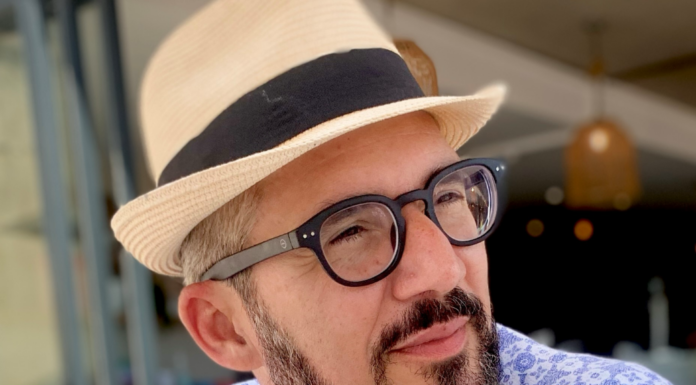
Increasingly, there is a return to something far more intimate and human: storytelling. At the heart of this shift is the AVBOB Poetry Project, which this year shines a spotlight on Petros Isaakidis, a Greek-born poet, doctor and epidemiologist based in Cape Town.
Isaakidis’ dual identity
Isaakidis’ debut poetry collection, volcanoed, published in 2025, is anything but conventional. Written in both Greek and English, the book reflects his dual identity, a man grounded equally in science and art.
His poems, often written in lower case, carry a quiet intensity while tackling profound themes such as grief, migration, language and the emotional aftermath of the pandemic.
“The emotional hinge was grief, honestly,” Isaakidis explains. “But the poems aren’t about the eruption or the shocking moment of loss. They’re about what comes after, the slow cooling, when memory, language and even the body must remake themselves.”
A dismantling of hierarchy
His deliberate rejection of capital letters is more than a stylistic choice. It’s a dismantling of hierarchy, a refusal to follow rigid structures in favour of a softer, more fluid expression of emotion.
In his view, one quieter form of language is enough to hold even the most unbearable feelings.
One of his most striking poems, why we should have stayed home, revisits the isolation and emotional toll of the COVID-19 pandemic from inside a hospital setting. It captures a haunting truth, that in our fear, human connection was often sacrificed.
“As a doctor, I remain shocked and ashamed of how fear made us lose so much of our humanity,” he says. “We allowed so many people to die alone. We invested heavily in vaccines and clinical trials, but not nearly enough in our stories, our values, or our art.”
Science or poetry?
For Isaakidis, the answer to the age-old question, science or poetry, is clear, more poetry.
He believes that while medicine heals the body, poetry has the unique ability to reach emotional spaces that science cannot access. It humanises data, restores empathy and reminds us of the shared experiences that connect us all.
His work also extends into environmental reflection. In his poem litterate, Isaakidis draws parallels between ecological destruction and disease, suggesting that humanity’s impact on the natural world is itself a kind of epidemic.
Looking ahead, the poet admits he is still navigating the tensions between his many identities.
“I’ve lived inside so many binaries, Greek or English, doctor or poet, science or creativity. The language divide was the first to fall. Maybe the rest will follow,” he says. “For now, I take it one role at a time. I’m curious about what comes next and a little terrified too.”
Poetry competition
In the spirit of World Health Day, the AVBOB Poetry Project is encouraging South Africans to reflect on their own healing journeys through creativity.
Readers are invited to write a poem about a moment when an unexpected person’s story touched them and improved their mental health, a reminder that healing can come from the most unlikely places.
The annual AVBOB Poetry Competition, which closed on November 30 2025, will reopen on August 1 2026, continuing its mission to give voice to stories that might otherwise go unheard.
- The AVBOB Poetry Project, highlighted on World Health Day, emphasizes storytelling as a vital part of wellness, moving beyond clinical language.
- Featured poet Petros Isaakidis, a Greek-born doctor and epidemiologist in Cape Town, blends science and art in his bilingual debut poetry collection, *volcanoed* (2025), exploring grief, migration, and pandemic aftermath.
- Isaakidis uses lowercase writing to dismantle hierarchy and express emotion softly, critiquing how fear during COVID-19 compromised human connection in hospitals.
- He advocates for poetry as a complement to medicine, capable of healing emotional wounds and humanizing scientific data, while also addressing environmental issues through his work.
- The AVBOB Poetry Project invites South Africans to share poems about personal healing experiences, fostering mental health awareness; its poetry competition reopens in August 2026.
As the world marks World
Isaakidis’ debut poetry collection, volcanoed, published in 2025, is anything but conventional. Written in both Greek and
His poems, often written in lower case, carry a quiet intensity while tackling profound themes such as grief, migration, language and the emotional aftermath of the pandemic.
“
His deliberate rejection of capital letters is more than a stylistic choice. It’s a dismantling of hierarchy, a refusal to follow rigid structures in favour of a softer, more fluid expression of emotion.
In his view, one quieter form of language is enough to hold even the most unbearable feelings.
One of his most striking poems, why we should have stayed home, revisits the isolation and emotional toll of the COVID-19 pandemic from inside a hospital setting. It captures a haunting truth, that in our fear, human connection was often sacrificed.
“As a doctor, I remain shocked and ashamed of how fear made us lose so much of our humanity,” he says. “We allowed so many people to die alone. We invested heavily in vaccines and clinical trials, but not nearly enough in our stories, our values, or our art.”
For Isaakidis, the answer to the age-old question, science or poetry, is clear, more poetry.
He believes that while medicine heals the body, poetry has the unique ability to reach emotional spaces that science cannot access. It humanises data, restores empathy and reminds us of the shared experiences that connect us all.
His work also extends into environmental reflection. In his poem litterate, Isaakidis draws parallels between ecological destruction and disease, suggesting that humanity’s impact on the natural world is itself a kind of epidemic.
“I’ve lived inside so many binaries, Greek or
In the spirit of World
Readers are invited to write a poem about a moment when an unexpected person’s story touched them and improved their mental health, a reminder that healing can come from the most unlikely places.