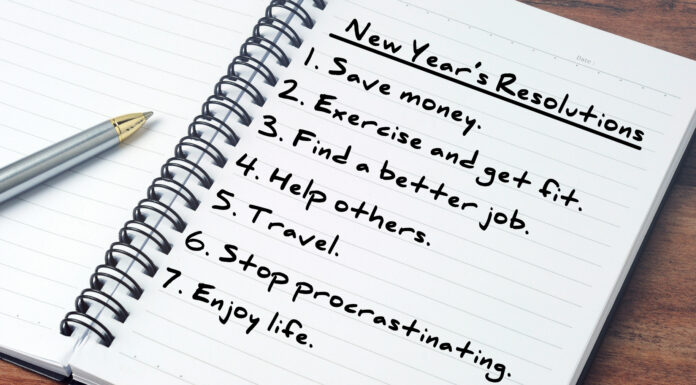
Every January, millions of South Africans recommit to becoming better versions of themselves. Fitness goals are set, business plans drafted, and personal growth promises made.
It is a familiar ritual, a way of reclaiming control after a year that may have felt overwhelming, unpredictable or emotionally draining.
Yet research consistently shows that between 80% and over 90% of New Year’s resolutions are abandoned within the first few months.
According to neuroscience and mental fitness coach, hypnotherapist and endurance athlete Liezel van der Westhuizen, the problem isn’t a lack of motivation.
Failure is not weakness
“The issue isn’t motivation; it’s mental bandwidth,” she explains.
“We don’t fail because we’re weak. Our brains simply run out of energy. Too many choices, too little recovery time. And no training of the mental muscle, all make consistency impossible.”
Decades of research into goal-setting offer important clues. Founders of goal-setting theory, Edwin A. Locke and Gary P. Latham, found that well-defined and challenging goals can improve performance. But only when paired with realistic systems and mental readiness.
Neuroscience adds another layer. The prefrontal cortex, which governs focus, planning and self-control, can only manage three to five major goals at a time. By mid-January, many people are mentally depleted from constant decision-making. Leading to what psychologists call choice fatigue.
Alignment and mental fitness support
Positive psychology research confirms that while goal-setting boosts motivation and performance, simply setting a goal is only step one. Without subconscious alignment and mental fitness support, progress stalls. Studies show that intrinsic motivation, the inner “why”, is far more powerful than external pressure when it comes to long-term success.
“It’s like running a mental marathon every day without refuelling,” says Van der Westhuizen. “Eventually, your brain puts on the brakes to protect you.”
Van der Westhuizen identifies two internal patterns that quietly derail most resolutions:
- Restlessness — constantly chasing new ideas or quick fixes. Never staying long enough to build real habits.
- Judgement — a harsh inner voice that turns minor slip-ups into proof of failure. Draining confidence and momentum.
“Most resolutions come from stress or fear,” she says.
Emotionally grounded state
“Sustainable success only happens when you shift from the Saboteur Mind to the Sage Mind. A state that’s calm, creative and emotionally grounded.”
Instead of traditional resolutions, Van der Westhuizen advocates a 4-Dimensional (4D) goal-setting model. Combining neuroscience, hypnotherapy and mental fitness practices. Research suggests that multi-sensory, emotionally charged goal-setting can improve long-term success by up to 60%.
The four Ds are:
- Define It – Choose goals that spark emotion and meaning, not just logic.
- Design It – Visualise, hear and feel success to prime neural pathways.
- Do It – Commit to small daily actions; micro-movements build lasting consistency.
- Deepen It – Reinforce progress through repetition and subconscious training. Such as hypnotherapy or Positive Intelligence (PQ) practices.
“When your subconscious believes a goal is safe and achievable, the conscious mind stops resisting it,” she explains.
“That’s when change truly sticks.”
Brain reset strategies
Rather than another overwhelming to-do list, Van der Westhuizen recommends a 10-minute daily “Brain Reset” to build mental stamina and resilience:
- Sensory grounding – 60 seconds focusing on breath, sound or touch to calm the nervous system.
- Micro-visioning – Visualise not just success, but how it will feel.
- Mental fitness rep – A short exercise to interrupt the saboteur voice before it takes over.
- Endurance mindset – Train the mind like an endurance athlete. Consistent and sustainable, not extreme bursts.
“You don’t need more willpower,” she says. “You need mental recovery. Train your mind like an athlete, and your goals will follow.”
Campaign to help regulate stress
This January, Van der Westhuizen launches #MomentumWithoutMayhem. A month-long campaign across radio, social media and corporate platforms. The initiative is designed to help South Africans regulate stress, build mental stamina and achieve sustainable success. All thus using neuroscience, hypnosis and Positive Intelligence tools.
A mental fitness coach trains the mind the way an endurance coach trains the body. Using neuroscience, hypnosis and Positive Intelligence tools, Van der Westhuizen helps clients rewire their brains for sharper focus, emotional control and long-term resilience.
The results speak for themselves:
- Less stress, more clarity
- Fewer self-sabotaging patterns
- Sustainable success without burnout