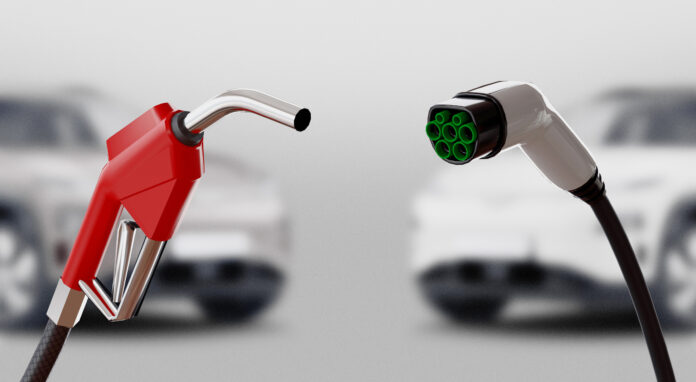
South Africa’s growing exposure to global oil price shocks has renewed calls for a faster transition to electric mobility. The Middle East conflict continues to threaten energy security and fuel price stability.
The country remains heavily reliant on imported energy, with oil accounting for nearly 80% of energy imports, leaving consumers and businesses vulnerable to international disruptions.
‘More stable, predictable alternative’
Industry experts say electric vehicles (EVs) could provide a more stable and predictable alternative, particularly as global supply chains face increasing pressure.
Hiten Parmar, Executive Director of The Electric Mission, said recent geopolitical developments highlight the urgency of reducing dependence on fossil fuels.
“South Africa is vulnerable to international market shifts. The events unfolding in the Middle East are a catalyst for greater energy independence,” Parmar said.
Consequences for inflation, logistics, employment
Historical precedent underscores the risk. During the 1970s oil crisis, South Africa introduced fuel rationing, reduced speed limits and restricted fuel sales – measures that had a direct impact on economic activity and daily life.
Today, the stakes are arguably higher. Modern economies rely heavily on the movement of goods and people, making transport a critical link in the global supply chain. Any disruption in fuel availability or pricing can have widespread consequences for inflation, logistics and employment.
Solar leading private sector renewable energy projects
At the same time, South Africa is making progress in diversifying its energy mix. National Energy Regulator of SA data showed that by December 2025, private sector renewable energy projects had reached 18 gigawatts, with solar power contributing more than two-thirds of that capacity.
Globally, some countries are already accelerating the shift. Ethiopia recently became the first country to ban the import of fossil fuel-powered vehicles, opting instead to prioritise electric mobility in a bid to reduce fuel import costs and strengthen energy security.
Parmar said electric mobility offers both economic and operational advantages, “providing a more sustainable way to move people and goods, while offering lower operating and maintenance costs over time.”
Challenges remain in SA
However, challenges remain in South Africa, including infrastructure rollout, affordability and policy certainty.
As global energy markets remain volatile despite interventions such as the release of strategic oil reserves by the International Energy Agency, analysts say the transition to alternative energy sources is no longer just an environmental consideration, but an economic necessity.