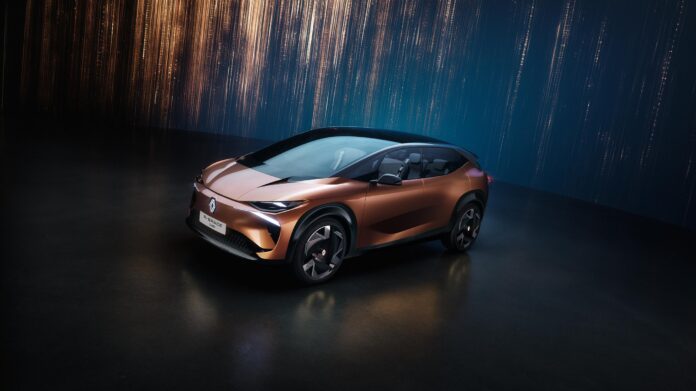



Renault Group has lifted the lid on its latest innovation demonstrator, the Renault R-Space Lab, offering a glimpse into how the brand envisions the future of mobility and in-car experience by 2030.
Developed as part of the group’s Futurama innovation laboratory, the R-Space Lab is not destined for production but serves as a bold statement of intent. It reflects Renault’s long-standing “voitures à vivre” philosophy – or “cars for living” – reimagining the vehicle as a flexible, connected space tailored around human needs.
Hi-tech cockpit
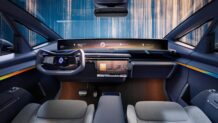
At the heart of the concept is a hi-tech cockpit built with a strong passenger focus. A full-width curved openR panorama screen stretches across the dashboard, displaying driving data, advanced driver assistance systems and multimedia functions with improved clarity. The interface is designed to operate as intuitively as a smartphone, while a compact steering wheel and steer-by-wire system aim to enhance visibility and driving comfort.
Renault has also leaned heavily into safety and artificial intelligence. The concept introduces features such as a tactile alcohol detector aimed at educating young drivers, alongside an AI-powered in-car assistant capable of offering personalised recommendations and acting as a digital co-driver.
Space maximisation and flexibility
Inside, the R-Space Lab adopts a modular, one-box design measuring 4.5 metres in length. The cabin has been engineered to maximise space and flexibility, with a flat floor and reconfigurable seating layout that adapts to different lifestyles – from family travel to cargo carrying.
The front passenger seat can slide backwards into the second row to encourage interaction, while the three rear seats are individually adjustable. Folding backrests and flip-up seat cushions allow for multiple configurations, including creating enough space to carry bulky items such as bicycles or pets.
Clever storage solutions
Practicality is further enhanced by wide-opening rear doors and clever storage solutions, including a multifunction glovebox that can double as a workspace or relaxation feature.
A standout design element is the expansive glass area, including a full-length glazed roof and slim pillars, which flood the cabin with natural light and create a heightened sense of openness.
While still a concept, the R-Space Lab provides a clear window into Renault’s future direction – one where vehicles evolve beyond transportation into adaptable, intelligent living spaces centred on comfort, connectivity and everyday usability.
- Renault unveiled the R-Space Lab, a 2030 mobility concept focused on a flexible, connected, human-centered vehicle experience.
- The concept features a hi-tech cockpit with a panoramic openR screen, intuitive smartphone-like interface, compact steering wheel, and steer-by-wire system.
- Safety innovations include a tactile alcohol detector for young drivers and an AI in-car assistant offering personalized recommendations.
- The modular 4.5m cabin maximizes space with a flat floor, reconfigurable seats, sliding front passenger seat, and configurations for family or cargo needs.
- Practical design elements include wide rear doors, multifunction glovebox workspace, and a large glazed roof for natural light and openness.
Renault Group has lifted the lid on its latest innovation demonstrator, the Renault R-Space Lab, offering a glimpse into how the brand envisions the future of mobility and in-car experience by 2030.
Developed as part of the group’s Futurama innovation laboratory, the R-Space Lab is not destined for production but serves as a bold statement of intent. It reflects Renault’s long-standing “voitures à vivre” philosophy – or “cars for living” – reimagining the vehicle as a flexible, connected space tailored around human needs.
At the heart of the concept is a hi-tech cockpit built with a strong passenger focus. A full-width curved openR panorama screen stretches across the dashboard, displaying driving data, advanced driver assistance systems and multimedia functions with improved clarity.
Renault has also leaned heavily into safety and artificial intelligence.
Inside, the R-Space Lab adopts a modular, one-box design measuring 4.5 metres in length.
Practicality is further enhanced by wide-opening rear doors and clever storage solutions, including a multifunction glovebox that can double as a workspace or relaxation feature.
A standout design element is the expansive glass area, including a full-length glazed roof and slim pillars, which flood the cabin with natural light and create a heightened sense of openness.
While still a concept, the R-Space Lab provides a clear window into Renault’s future direction – one where vehicles evolve beyond transportation into adaptable, intelligent living spaces centred on comfort, connectivity and everyday usability.