


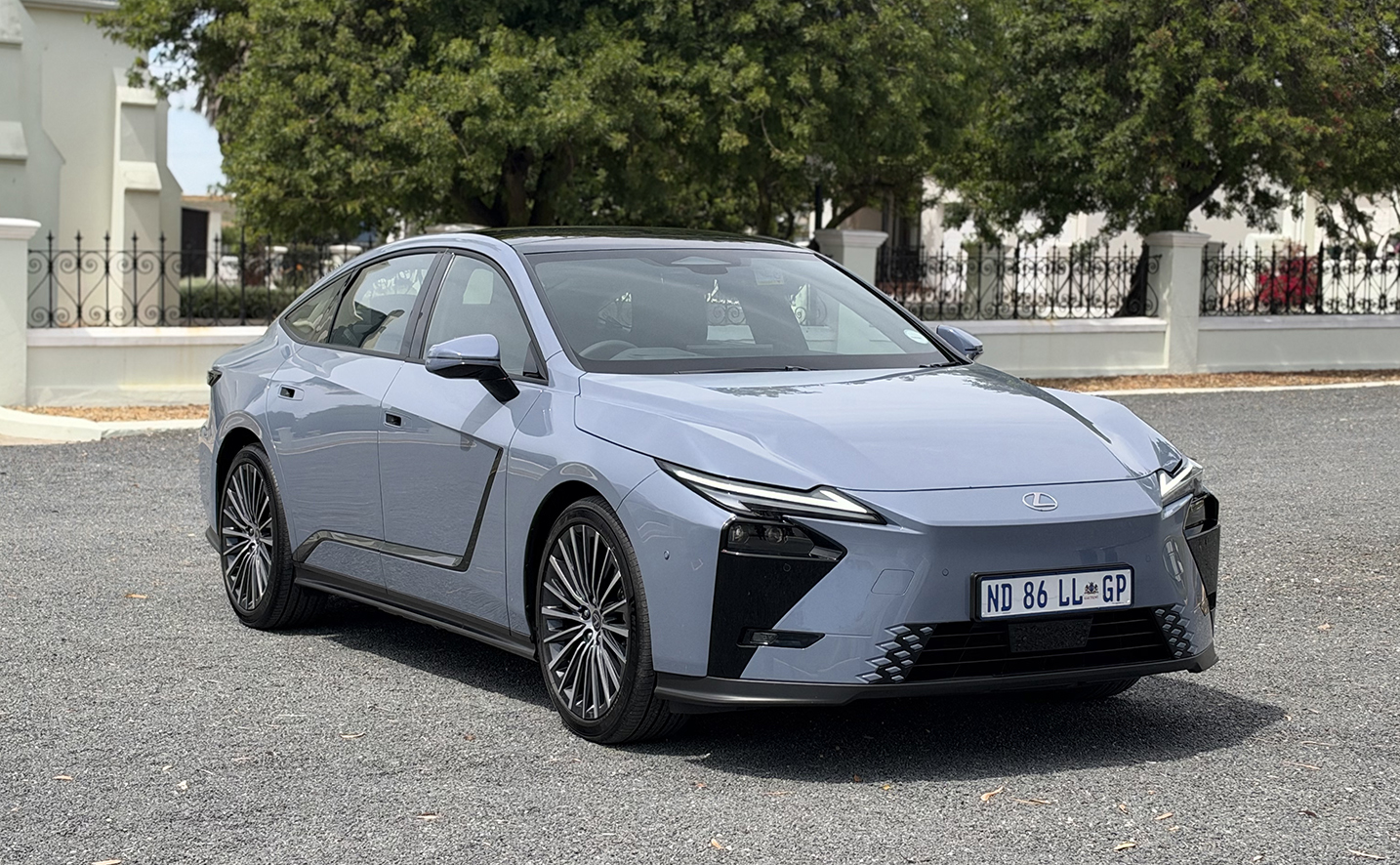
In February, Lexus South Africa invited me to Cape Town for the launch of its first fully electric vehicle in the country, the RZ SUV. Eight months later, I returned to the Mother City to experience the Japanese luxury carmaker’s second electric offering, this time in the form of the all-new ES sedan.
Now in its eighth generation, the executive sedan enters a new chapter with hybrid and fully electric powertrains as Lexus intensifies its challenge against BMW, Audi, Mercedes-Benz and Volvo.
However, the brand faces a difficult task convincing South African motorists to embrace electric vehicles. Since February, Lexus has sold just 36 RZ units, raising questions about demand for another electric model.
Lexus believes the ES’s broader derivative offering and pricing strategy will attract more buyers. The company says more than 20 prospective customers have received purchase offers, while three vehicles have been delivered. Lexus is targeting 74 sales, with 40 units reportedly on backorder.
The ES range comprises three derivatives. Prices start from R1 051 200 for the ES 350h EX to R1 232 700 for the ES 350h SE. The fully electric ES 350e SE tops the range at R1 561 000, commanding a substantial R328 300 premium over the flagship hybrid.
Both hybrids employ a 2.5-litre petrol-electric powertrain, producing a combined 182kW and driving the front wheels through an electronically controlled continuously variable transmission.
The electric ES 350e SE produces 167kW and 268Nm, drawing energy from a 74.69kWh battery. Lexus claims a driving range of up to 615km on the NEDC testing cycle, while DC fast charging can replenish the battery from zero to 80% in about 30 minutes.
Our Cape Town launch route of just under 200kms provided an opportunity to assess both powertrains across urban roads and the sweeping mountain passes of the Western Cape.
The electric ES impressed with its smooth acceleration, responsive handling and composed ride. Despite its size, it felt surprisingly agile, delivering the comfort, confidence and control that Lexus promotes through its driving philosophy.
However, the fully charged test vehicle displayed an estimated range of slightly below 400km, considerably less than the manufacturer’s advertised figure. Range will depend on driving conditions and consumption.
The hybrid delivered a different experience. Around town, the ES 350h EX was refined and comfortable. However, pushing harder through Du Toitskloof Pass exposed the less appealing characteristics of its E-CVT transmission. The petrol engine became vocal under acceleration, with persistent engine noise detracting from an otherwise premium driving experience. On the positive side, the hybrid displayed an estimated driving range exceeding 900km.
Inside, Lexus has adopted a minimalist approach, combining quality materials with an uncluttered dashboard. A 14-inch multimedia touchscreen dominates the cabin, complemented by a 12.3-inch digital instrument display. Particularly impressive are the discreetly integrated dashboard switches, which illuminate when the vehicle is activated while retaining physical feedback. The redesigned steering wheel and electronic gear selector also contribute to the contemporary atmosphere. Depending on the specification, buyers receive heated and ventilated seats, a panoramic roof, wireless charging and a 17-speaker Mark Levinson sound system.
Rear passenger legroom is generous, approaching the spaciousness experienced in the Volvo ES90.
Externally, the ES adopts a sleek silhouette reminiscent of the BMW i4, while its rear styling draws comparisons with Volvo and Porsche designs.
The hybrid ES competes broadly with the BMW 3 Series, Audi A5 and Mercedes-Benz C-Class, although their powertrain offerings differ. The electric version faces alternatives, including the BMW i4 and Volvo ES90, with the Audi A6 e-tron and electric Mercedes-Benz C-Class expected to strengthen competition locally.
All models come with a seven-year/105 000km warranty and maintenance plan, while hybrid and electric batteries are covered by an eight-year/160 000km warranty.
- In February, Lexus South Africa invited me to Cape Town for the launch of its first fully electric vehicle in the country, the RZ SUV.
- Eight months later, I returned to the Mother City to experience the Japanese luxury carmaker’s second electric offering, this time in the form of the all-new ES sedan.
- Now in its eighth generation, the executive sedan enters a new chapter with hybrid and fully electric powertrains as Lexus intensifies its challenge against BMW, Audi, Mercedes-Benz and Volvo.
- However, the brand faces a difficult task convincing South African motorists to embrace electric vehicles.
- Since February, Lexus has sold just 36 RZ units, raising questions about demand for another electric model.


