


Volvo’s approach to electric mobility is refreshing. While some manufacturers pursue futuristic designs, the Swedish premium carmaker favours understated elegance, comfort and Scandinavian sophistication.
Having spent a week behind the wheel of the Volvo EC40 Twin Motor, I discovered an electric crossover that delivers impressive performance, distinctive styling and practicality. However, its ageing interior, ambitious range claims and South Africa’s inconsistent public charging infrastructure somewhat diminish an otherwise enjoyable experience.
The look
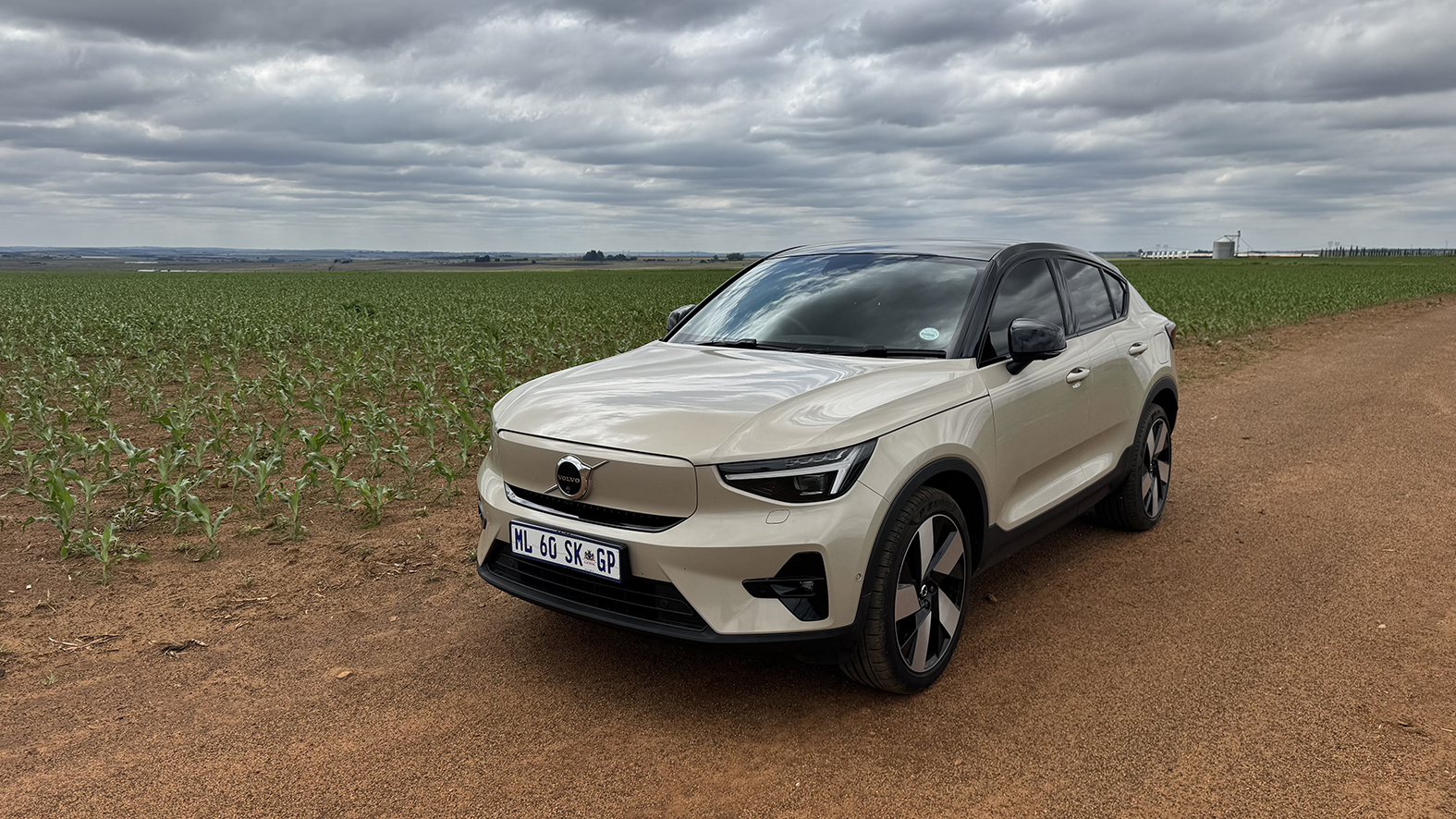
Finished in an attractive Sand Dune colour, reminiscent of its larger EX90 sibling, the EC40 turns heads. Its dramatic sloping roofline, diamond-cut alloy wheels and signature Thor’s Hammer LED headlights give it a distinctive appearance.
The headlights feature sophisticated pixel technology that automatically adjusts illumination to avoid dazzling other motorists. Two rear spoilers and an integrated diffuser contribute to the vehicle’s aerodynamic design.
For those who appreciate mature, understated automotive styling, the EC40 makes a compelling statement.
The performance
Underneath its attractive bodywork is an 82kWh battery powering two electric motors that produce a combined 300kW and 670Nm of torque. Volvo claims the EC40 can accelerate from standstill to 100km/h in 4.7 seconds. On the road, that translates into effortless acceleration.
During my test, I drove the EC40 to Delmas in Mpumalanga, ventured across Johannesburg’s West Rand and navigated Joburg’s busy northern suburbs. Throughout, the Volvo impressed with its smooth power delivery, nimble handling and relatively compact dimensions. It feels easy to manoeuvre, particularly in urban environments.
The advanced driver assistance systems also performed commendably during my highway journey to Delmas. I appreciated the adaptive cruise control with stop-and-go functionality and lane-keeping assistance, which helped monitor fatigue.
The range
Range remains an important consideration for prospective electric vehicle (EV) buyers.
Volvo quotes an estimated driving range of up to 650km and combined energy consumption of 15.1kWh/100km under WLTP testing conditions. My experience was different.
After a full charge, the indicated range was just above 400km, while average electricity consumption exceeded 20kWh/100km. Notably, driving conditions, temperature and driving style influence EV efficiency.
At Fourways Crossing north of Johannesburg, the Rubicon charging station was often occupied. An alternative GridCars charger at Fourways Mall was out of service, with a notice indicating that repairs were under way. Eventually, I returned to the Rubicon facility and waited about 30 minutes. Replenishing 66.534kWh of electricity during the DC charging session took one hour and 40 minutes.
These experiences underline frustrations that continue to confront South African EV owners who depend on public charging facilities.
Fortunately, Volvo offers a R7 500 installation allowance towards a GridCars home wallbox, making overnight charging a more convenient proposition. My test vehicle also included a 7m home mobile charging cable.
The interior
Inside, the EC40 delivers comfortable seating and an excellent Harman Kardon premium sound system. But the cabin is showing its age, particularly the small central infotainment screen. Apple CarPlay required a physical cable connection, while the built-in Google system was offline during my test.
I also noticed an intermittent rattle seemingly originating from the front ventilation area. Furthermore, the panoramic glass roof would benefit from adjustable shading to reduce heat entering the cabin during scorching summer days.
The pricing
Interestingly, I drove the BMW iX2 back-to-back with the Volvo. The BMW offered a sportier driving character and a noticeably more contemporary interior. Pricing further complicates the decision. The EC40 starts at R1 396 800, compared with about R1.3 million for the BMW iX2 xLine and R1.33 million for the M Sport derivative.
The verdict
Ultimately, the Volvo EC40 remains a charming premium electric crossover for buyers
who prioritise elegant design, smooth performance and Scandinavian restraint.
However, at this price, its interior technology deserves an upgrade, while real-world efficiency and charging convenience remain important considerations. The verdict: A charming, capable and effortlessly quick electric crossover.
- The Volvo EC40 Twin Motor features an 82kWh battery with two electric motors producing a combined 300kW and 670Nm torque, accelerating from 0 to 100km/h in 4.7 seconds.
- Volvo claims an estimated driving range of up to 650km under WLTP conditions, but real-world tests showed just above 400km range with over 20kWh/100km energy consumption.
- The vehicle has advanced driver assistance systems including adaptive cruise control with stop-and-go functionality and lane-keeping assistance.
- The interior includes comfortable seats, a Harman Kardon premium sound system, but an ageing cabin with a small infotainment screen and limited smartphone connectivity.
- The Volvo EC40 starts at R1 396 800, slightly higher than the BMW iX2 variants priced around R1.3 million to R1.33 million.
Volvo’s approach to electric mobility is refreshing. While some manufacturers pursue futuristic designs, the Swedish premium carmaker favours understated elegance, comfort and Scandinavian sophistication.
Having spent a week behind the wheel of the Volvo EC40 Twin Motor, I discovered an electric crossover that delivers impressive performance, distinctive styling and practicality. However, its ageing interior, ambitious range claims and South Africa’s inconsistent public charging infrastructure somewhat diminish an otherwise enjoyable experience.
Finished in an attractive Sand Dune colour, reminiscent of its larger EX90 sibling, the EC40 turns heads. Its dramatic sloping roofline, diamond-cut alloy wheels and signature Thor’s Hammer LED headlights give it a distinctive appearance.
The headlights feature sophisticated pixel technology that automatically adjusts illumination to avoid dazzling other motorists. Two rear spoilers and an integrated diffuser contribute to the vehicle’s aerodynamic design.
For those who appreciate mature, understated automotive styling, the EC40 makes a compelling statement.
Underneath its attractive bodywork is an 82kWh battery powering two electric motors that produce a combined 300kW and 670Nm of torque. Volvo claims the EC40 can accelerate from standstill to 100km/h in 4.7 seconds. On the road, that translates into effortless acceleration.
During my test, I drove the EC40 to Delmas in Mpumalanga, ventured across Johannesburg’s West Rand and navigated Joburg’s busy northern suburbs. Throughout, the Volvo impressed with its smooth power delivery, nimble handling and relatively compact dimensions. It feels easy to manoeuvre, particularly in urban environments.
The advanced driver assistance systems also performed commendably during my highway journey to Delmas. I appreciated the adaptive cruise control with stop-and-go functionality and lane-keeping assistance, which helped monitor fatigue.
Range remains an important consideration for prospective electric vehicle (EV) buyers.
Volvo quotes an estimated driving range of up to 650km and combined energy consumption of 15.1kWh/100km under WLTP testing conditions. My experience was different.
After a full charge, the indicated range was just above 400km, while average electricity consumption exceeded 20kWh/100km. Notably, driving conditions, temperature and driving style influence EV efficiency.
At Fourways Crossing north of Johannesburg, the Rubicon charging station was often occupied. An alternative GridCars charger at Fourways Mall was out of service, with a notice indicating that repairs were under way. Eventually, I returned to the Rubicon facility and waited about 30 minutes. Replenishing 66.534kWh of electricity during the DC charging session took one hour and 40 minutes.
These experiences underline frustrations that continue to confront South African EV owners who depend on public charging facilities.
Fortunately, Volvo offers a R7 500 installation allowance towards a GridCars home wallbox, making overnight charging a more convenient proposition. My test vehicle also included a 7m home mobile charging cable.
Inside, the EC40 delivers comfortable seating and an excellent Harman Kardon premium sound system. But the cabin is showing its age, particularly the small central infotainment screen. Apple CarPlay required a physical cable connection, while the built-in Google system was offline during my test.
I also noticed an intermittent rattle seemingly originating from the front ventilation area. Furthermore, the panoramic glass roof would benefit from adjustable shading to reduce heat entering the cabin during scorching summer days.
Interestingly, I drove the BMW iX2 back-to-back with the Volvo. The BMW offered a sportier driving character and a noticeably more contemporary interior. Pricing further complicates the decision. The EC40 starts at R1 396 800, compared with about R1.3 million for the BMW iX2 xLine and R1.33 million for the M Sport derivative.
Ultimately, the Volvo EC40 remains a charming premium electric crossover for buyers
who prioritise elegant design, smooth performance and Scandinavian restraint.
However, at this price, its interior technology deserves an upgrade, while real-world efficiency and charging convenience remain important considerations. The verdict: A charming, capable and effortlessly quick electric crossover.


