


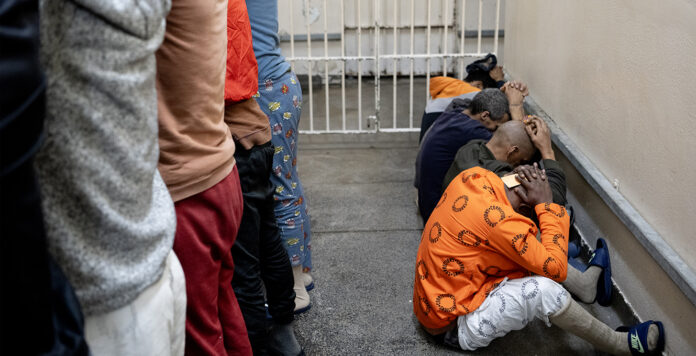
Parliament will haul the Department of Correctional Services before MPs next week to explain why unnatural deaths in prisons have surged and what consequences, if any, have followed where negligence, violence or management failures are suspected.
The intervention follows figures from the Judicial Inspectorate for Correctional Services (Jics) showing that 44 unnatural deaths were recorded in the first quarter of 2026/27, compared with 24 during the same period last year – an increase of 83%.
MPs are concerned about how long it takes to establish and confirm their causes. Jics achieved confirmation rates of only 54.5% for unnatural deaths and 51.59% for natural deaths. Of the latest 44 unnatural deaths, 39 are classified as “unnatural other-under investigation”.
Committee chairperson Kgomotso Ramolobeng told Sunday World that possible factors behind the increase included overcrowding, violence, inadequate security, delayed medical intervention and operational or management failures.
READ: Correctional Services alarmed as boy child dropouts resurface in prisons
“These are matters that must be properly investigated. Every death in custody requires a clear explanation,” Ramolobeng said.
She said the DCS would be required to explain the increase and corrective measures being implemented.
Jics spokesperson Kgomotso Mophulane has since revealed that all 39 deaths classified as being from unknown causes remained outstanding because post-mortem reports have not been received.
The oldest cases among those 39 date to April 2026. But the historical backlog goes considerably further. “Jics deals with outstanding cases dating back as far as 10 years,” Mophulane said.
The DCS has advised Jics of a significant backlog in receiving post-mortem and toxicology reports. This suggests that families whose relatives died in correctional centres might be forced to wait months or, in some cases, years before the state can say how a person died while under its watch.
Jics said the National Health Laboratory Service reported a national toxicology backlog of about 40 000 cases in August 2025.
Mophulane said delays affected the finalisation of post-mortem reports and inmate death investigations.
Of the latest 44 unnatural deaths, one involved an alleged official-on-inmate assault at De Aar Correctional Centre. Four were reported as suicides at Prince Albert, Bethal, Port Elizabeth and Krugersdorp correctional centres.
The remaining 39 deaths with unknown causes occurred at King William’s Town, Boksburg Medium A, Johannesburg Medium A and B, Kgosi Mampuru, Krugersdorp, Leeuwkop Maximum, Modderbee, Odi, Durban Medium A and Pollsmoor, among others.
Two occurred at Durban Medium A, which was among five facilities Jics rated “unsatisfactory”.
The others were Ekuseni Youth Development Centre, Thohoyandou Medium A and B and Durban Medium B. Jics identified severe overcrowding, deteriorating infrastructure, inadequate accommodation, sanitation problems and non-compliance with prescribed meal intervals at the five facilities.
Parliament has requested an analysis of the causes and locations of unnatural deaths and wants repeated unannounced inspections at poorly rated prisons.
Jics, however, disclosed another weakness in the system: it has no enforcement powers when prisons report deaths late or fail to comply with its requests.
Mophulane said inspecting judge Lee Bozalek wanted deaths reported without delay and forensic services adequately resourced.
“Too often, inquests and criminal proceedings arising from deaths in correctional centres are subject to lengthy and unjustifiable delays,” Mophulane said.
Lawyers for Human Rights (LHR) said the increase in unnatural deaths pointed to serious concerns about conditions and oversight.
“A surge in unnatural deaths should cause grave concern among South Africans, as it reveals severe systemic failures, lack of oversight and degrading conditions within correctional facilities,” the LHR said.
The organisation said its work involving deaths in detention had encountered deaths from manageable illnesses, suicide and allegations of fatal torture.
The LHR said families had rights when relatives died in custody.
It cited section 15 of the Correctional Services Act, which required the next of kin to be informed.
Ramolobeng said Parliament could not be satisfied while questions remained over delays in confirming deaths and concluding investigations.
“Families should not be left in the dark about what happened to their relatives,” she said.
Ramolobeng warned that persistent failures could transcend administrative shortcomings and raise constitutional questions.
“The Constitution does not stop protecting a person simply because that person is incarcerated. Every death must be accounted for, every allegation of wrongdoing must be investigated and where wrongdoing is established, there must be consequences.”
Sunday World’s enquiries sent to Groenewald had not been answered by the time of publication.
- Unnatural deaths in South African prisons increased by 83% in the first quarter of 2026/27, with 44 recorded compared to 24 in the same period last year.
- The Judicial Inspectorate for Correctional Services (Jics) confirmed causes for only 54.5% of unnatural deaths, with 39 of the 44 recent deaths still under investigation due to missing post-mortem reports.
- Backlogs in post-mortem and toxicology reports, partly due to a national toxicology backlog of about 40,000 cases reported in August 2025, delay death investigations and prevent timely cause of death confirmation.
- Severe overcrowding, violence, inadequate security, delayed medical intervention, and management failures are cited by MPs and Jics as possible factors behind the rise in unnatural deaths.
- Parliament will require the Department of Correctional Services to explain the surge in unnatural deaths and the corrective measures being implemented, with calls for repeated unannounced inspections at poorly rated prisons.


