


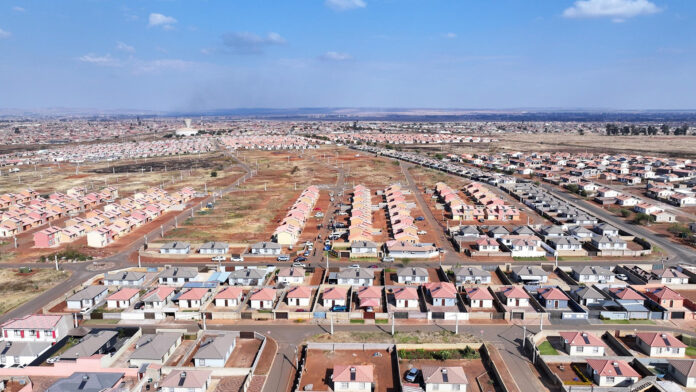
Africa’s housing market is moving away from a rigid split between renting and owning towards structured pathways that allow households to transition between the two. Rent-to-own models are gaining ground as a financing mechanism that converts monthly rent into long-term equity.
According to the International Monetary Fund (IMF), millions of Africans remain locked out of mortgage finance, with fewer than 5% of adults accessing formal home loans. In some markets, the fund notes, traditional mortgage systems reach as little as 3% of the population.
The scale of the gap remains significant. Africa’s housing deficit exceeds 50 million units and could rise to 130 million by 2030, pointing to sustained demand for alternatives to conventional ownership models.
Across multiple markets, policymakers and developers are testing structures that lower entry barriers while retaining a pathway to ownership.
In Rwanda, implementation is already underway. The Rwanda Housing Authority and the City of Kigali are securing land to roll out a rent-to-own affordable housing programme targeting low-income workers.
Under this structure, tenants pay monthly rent alongside an additional contribution that accumulates over time, gradually building equity and enabling eventual ownership. Households occupy the property while progressing towards purchase, removing the need for large upfront deposits.
“Traditional mortgages require large upfront deposits and strict credit access, which excludes a significant portion of the market,” according to Stacy Lethabo, real estate analyst at Seeff Property Group.
“Rent-to-own shifts that structure. Instead of needing a lump sum at the beginning, households build their stake incrementally, converting what would have been pure rent into future ownership.”
She draws a clear distinction between the two systems.
“A mortgage is front-loaded; you qualify first, then access ownership. Rent-to-own reverses that logic. You access the home first, then work towards qualifying for ownership over time,” Lethabo explains.
Structurally, the model combines a lease agreement with an option or obligation to purchase. A portion of the monthly payment covers occupancy, while another is set aside, often in escrow, as a future deposit. At the end of the agreed period, tenants transition into ownership, typically by securing a mortgage to complete the purchase.
Beyond Rwanda, similar approaches are being tested.
In South Africa, rent-to-buy schemes are targeting households excluded from traditional mortgage systems, alongside ongoing adjustments to tenant protection frameworks. In Eswatini, the Select Home initiative is delivering more than 500 units annually under a comparable structure.
At the same time, broader market conditions continue to shape housing demand.
This dynamic is evident in Accra, the capital city of Ghana, where real estate development is expanding but remains misaligned with local income levels.
According to Ohene Berchie Acheamfour, an Accra-based market analyst, pricing in these areas reflects both physical infrastructure and less tangible factors that reinforce their positioning within the market.
Entry-level units are still unaffordable for a large share of the population, while mortgage access is constrained by high interest rates and short tenors.
Lethabo identifies three pressures shaping housing markets across African cities: access to finance, alignment with incomes, and the adequacy of housing supply. Even where units are available, they do not always meet standards for safety,
quality, or long-term use. – Bird Story Agency
- Africa's housing market is shifting from a strict rent-or-own model to rent-to-own schemes that allow gradual equity building and homeownership.
- Less than 5% of African adults have access to formal mortgages, contributing to a massive housing deficit projected to reach 130 million units by 2030.
- Rwanda is implementing a rent-to-own affordable housing program for low-income workers, where tenants pay rent plus contributions that accumulate toward ownership.
- Similar rent-to-own models are emerging in South Africa and Eswatini, offering alternatives for those excluded from traditional mortgage financing.
- Key challenges in African housing markets include limited finance access, affordability mismatched to incomes, and inadequate supply meeting safety and quality standards.


