


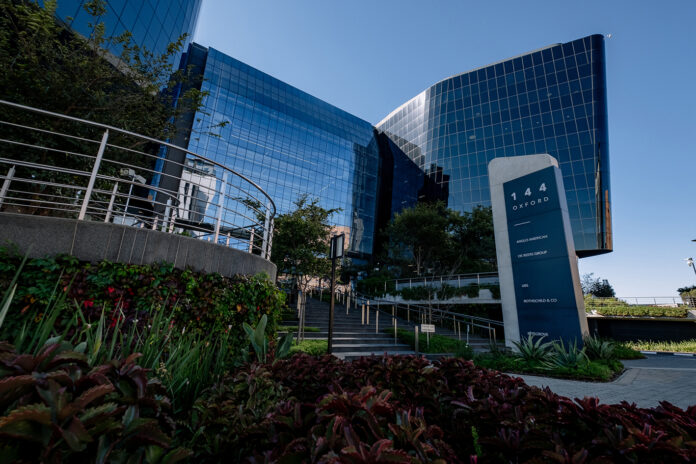

Mining giant Anglo American is facing mounting pressure from community activists and regulators over environmental and social liabilities estimated at up to R55-billion, as the company restructures its global operations and prepares to relocate its headquarters to Canada.
The Mining-Affected Communities United in Action (Macua), representing communities impacted by mining, has accused Anglo American of attempting to exit South Africa without fully settling decades of environmental damage, labour obligations, and social commitments linked to its historic operations.
The allegations come as Anglo American finalises a merger with Canadian miner Teck Resources, creating a new entity, Anglo Teck, headquartered in Vancouver.
Macua says this move symbolises a broader corporate withdrawal from the country where the company was founded more than a century ago.
Macua estimates Anglo American’s unfunded environmental and mine-closure liabilities in South Africa at between R40-billion and R55-billion, based on regulatory disclosures and the company’s historic mining footprint.
The liabilities relate to long-term environmental damage, including acid mine drainage contaminating water systems, land sterilisation rendering
areas unusable for agriculture or development, groundwater pollution, and rehabilitation costs for closed or abandoned mining sites.
“These liabilities cannot become a case of profits leaving and damage remaining,” said Macua national coordinator Sabelo Mnguni.
Anglo American’s historic operations span Mpumalanga’s coal belt, platinum mines in North West and Limpopo, and iron-ore operations in Northern Cape.
South Africa faces massive legacy mine rehabilitation liabilities, with the Auditor-General estimating in 2009 that restoring more than 5 900 abandoned mines will cost at least R30-billion, while broader recent estimates by the South African Institute of International Affairs place the total rehabilitation burden closer to R50-billion.
Anglo American has strongly rejected claims that it is exiting South Africa, describing the allegations as “false” and misleading.
Anglo American said the merger with Teck Resources is intended to “build a stronger global critical minerals company that is even better positioned to invest and grow, including in South Africa”.
The company stressed that “no South African assets, licences or companies move anywhere as a result of the merger… This includes… environmental legislation and SLP requirements. The merger does not, and cannot, extinguish those obligations.”
The mining giant will also retain its listing on the Johannesburg Stock Exchange, allowing South African investors to continue holding shares in the enlarged company.
Macua’s demands go beyond environmental rehabilitation, arguing that Anglo American still owes communities compensation for historic labour exploitation and incomplete development commitments.
It claims that Anglo generated at least 30% of its historic profits through artificially suppressed wages paid to black mineworkers under apartheid-era labour systems. The extracted value under these conditions amounts to an estimated $60-billion over more than 100 years.
Protesters gathered outside Anglo American’s Johannesburg headquarters on February 13, accusing the company of “engineering its exit” from South Africa while leaving communities to deal with long-term environmental and economic consequences.
“Anglo has been extracting wealth from our communities for 100 years. So even if it takes us another 100 years to demand accountability, we will continue to do so,” said Mnguni.
About 100 demonstrators handed over a memorandum to Anglo demanding a public exit impact assessment, independent verification of environmental liabilities, compensation for affected communities, and binding commitments to complete social and labour plan
obligations.
Anglo American’s restructuring has accelerated over the past decade, reflecting a broader pivot towards future-facing minerals such as copper.
Recent key restructuring milestones include the demerger of its platinum business, which is now a standalone company, Valterra Platinum, in 2025, and the advanced negotiations to sell its majority stake in De Beers, which are expected to conclude in 2026.
These moves have significantly reduced Anglo American’s exposure to legacy mining assets in South Africa while strengthening its global focus on energy transition minerals.
The Department of Mineral and Petroleum Resources has invited Macua to submit detailed evidence to support its claims, signalling that fines, legal action, or suspension of mining rights could follow if violations are confirmed.
Anglo American maintains that all environmental and social responsibilities remain fully funded and enforceable under South African law.
Meanwhile, the rescue operation to bring back to the surface five trapped miners at the Ekapa mine in Kimberley is expected to run longer. A technical team has been working against the clock to save the workers who have been trapped since Tuesday, following a mudslide nearly a kilometre underground.
- Mining giant Anglo American is facing mounting pressure from community activists and regulators over environmental and social liabilities estimated at up to R55-billion, as the company restructures its global operations and prepares to relocate its headquarters to Canada.
- The Mining-Affected Communities United in Action (Macua), representing communities impacted by mining, has accused Anglo American of attempting to exit South Africa without fully settling decades of environmental damage, labour obligations, and social commitments linked to its historic operations.
- The allegations come as Anglo American finalises a merger with Canadian miner Teck Resources, creating a new entity, Anglo Teck, headquartered in Vancouver.
- Macua says this move symbolises a broader corporate withdrawal from the country where the company was founded more than a century ago.
- Macua estimates Anglo American’s unfunded environmental and mine-closure liabilities in South Africa at between R40-billion and R55-billion, based on regulatory disclosures and the company’s historic mining footprint.


