
Fragments of Bloke Modisane’s life have long been scattered across continents – from radio scripts in London to correspondence in international private collections. Yet his later career is largely absent from the South African record or intellectual conversation.
For decades, Modisane’s story, made famous in his autobiography Blame Me on History, seemed to end abruptly in 1959, the year he left apartheid South Africa for exile.
That narrative is now being challenged.
Beyond Drum magazine
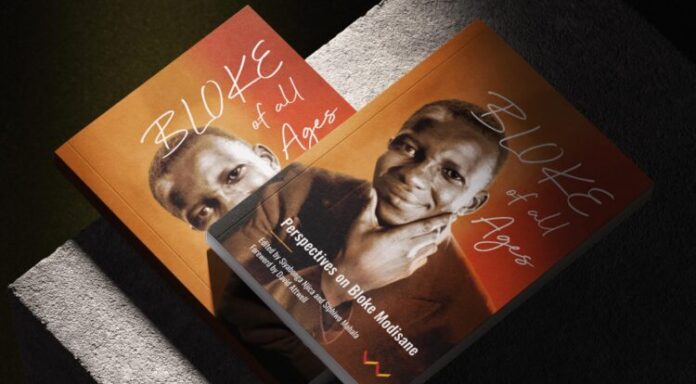
A new book, Bloke of All Ages: Perspectives on Bloke Modisane, edited by Siyabonga Njica and Siphiwo Mahala, revisits his life and work, revealing a far more expansive intellectual journey than previously recognised. The book also points to a shift in how African scholarship is reconstructing histories shaped by exile.
For decades, Modisane’s legacy was anchored on his autobiography, published in 1963, which captured the Sophiatown years and the vibrant but short-lived world of Drum magazine. The book became the definitive account of his life, fixing his intellectual identity within a specific place and moment.
Deeper experience
According to Njabulo Ndebele, a South African writer and former chancellor of the University of Johannesburg, the autobiography was “more demanding” of its readers, requiring that they “read it slowly, stopping to ponder”, a depth that revealed an intensely self-conscious intellectual life.
He notes that Modisane “unsparingly revealed himself to his readers”, exposing a layered engagement with the world that extended beyond the immediate realities of apartheid South Africa.
The exile that followed, scholars now argue, did not mark an end; it marked a dispersal.
“What we know about Modisane is what he wrote in Blame Me on History, which ends in 1959 when he leaves for exile,” explained Mahala, co-editor of the new volume. “The question has always been, what happens the moment he crosses the border?”
Exile dynamics
That question sits at the centre of a growing body of research seeking to recover the intellectual lives of African writers whose work unfolded across multiple geographies. In Modisane’s case, exile took him beyond South Africa into a transnational career that included theater, film, and decades-long work in radio broadcasting in London for the BBC and West German Radio.
“What we are learning now is that he was a multi-dimensional artist and intellectual,” Mahala said, noting that Modisane’s post-exile career extended far beyond the literary identity for which he is most widely known. In London, he established himself as a stage actor and became a regular voice on the BBC, expanding his reach beyond print into performance and broadcast media.
This expanded view of Modisane’s life is not simply about adding detail. It reflects a deeper shift in how African intellectual history is being understood, moving away from nationally bound narratives towards transnational systems shaped by movement, exchange, and displacement.
Broader diasporic reach
According to Mahala, exile not only removed African thinkers from their home contexts, but it also reorganised their work across continents, embedding it within global networks of culture, politics, and media. Modisane’s correspondence with Langston Hughes, for instance, reveals a “transatlantic intellectual relationship” that situates African thought within broader diasporic conversations.
What was once scattered across archives in Europe, North America, and Africa is now being deliberately reassembled.
“They were able to uncover archives that were totally inaccessible to us in South Africa,” Mahala said, referring to the collaborative research underpinning the book.
Drawing on contributions from scholars across institutions in Africa, the US, and Europe, the volume reconstructs Modisane’s intellectual journey beyond exile, tracing routes that extend through Southern and East Africa into global cultural circuits.
Rethinking African literary traditions
Across the continent, similar efforts are reshaping how African intellectual history is being assembled. In 2026, new works such as Forest Imaginaries: How African Novels Think, by Ainehi Edoro, are explicitly rethinking African literary traditions by tracing conceptual lineages across writers, including Chinua Achebe and Wole Soyinka. Forthcoming volumes such as The Essential Senghor are similarly returning to decades of writing by Leopold Sedar Senghor, making philosophical and political texts spanning nearly half a century, newly accessible and repositioning his intellectual legacy.
These efforts build on a wave of recovery-driven publishing in recent years.
According to Duke University Press, Senghor: Writings on Politics, edited and translated by Yohann C. Ripert, brought together speeches and essays written between 1937 and 1971, many of them previously unavailable in English. At the same time, Cambridge University Press advanced a broader structural intervention through its African Literature in Transition series, which frames African literary history through archives, intellectual traditions, and exile-era networks spanning the nineteenth century to the present.
Archival restoration
Beyond books, large-scale archival restoration is reconnecting the platforms that once sustained African intellectual exchange. In 2025, the Nigeria-based Olongo Africa digitised the influential literary magazine Black Orpheus, originally associated with figures such as Christopher Okigbo and Soyinka, making decades of material publicly accessible after years of limited circulation.
Earlier work in 2024 had already signalled this shift towards archives as active sites of reconstruction. Volumes such as The Specter and the Speculative: Afterlives and Archives in the African Diaspora (edited by Mae G. Henderson, Jeanne Scheper, and Gene Melton) examine how historical texts and figures are being reinterpreted across time, while An Archive of Possibilities by Rachel Marie Niehuus draws on records from the Democratic Republic of Congo to explore how memory, displacement, and repair are documented and reimagined.
Reconfiguring Africa’s intellectual map
Mwangi Kirubi, a lecturer and editor at Kenyatta University in Nairobi, says: “Universities, publishers, and research institutions are repositioning archival recovery as a form of intellectual infrastructure.”
“These systems are linking dispersed materials, recovering correspondence, and reintegrating these histories into academic and public discourse… The result is a reconfiguration of Africa’s intellectual map.”
The significance of this shift extends beyond the literary. It speaks to how Africa understands its own intellectual, cultural and artist foundations, and who has the authority to define them.
“By reconstructing exile-era networks, scholars are not only recovering the past, they are reorganising it into a system that reflects the transnational reality of African thought,” Kirubi explained.
“Digitisation and collaborative research are expanding access, making previously inaccessible archives available to new generations of readers, students, and researchers.”
For Mahala, this renewed engagement with Modisane reflects the enduring relevance of a writer whose work continues to resonate across time. The title of the volume itself points to that continuity.
“It shows the resonance of his work, that he appeals across generations, and that is why he is a bloke of all ages,” he said.
- A new book, *Bloke of All Ages*, challenges the long-held narrative that Bloke Modisane’s intellectual life ended with his 1959 exile from apartheid South Africa, revealing a rich, transnational career in theater, film, and radio broadcasting in London and Europe.
- Modisane’s well-known autobiography *Blame Me on History* anchored his legacy within the Sophiatown and Drum magazine era, but recent scholarship highlights his multifaceted post-exile contributions as a stage actor and BBC broadcaster.
- This research is part of a broader shift in African intellectual history that moves beyond nation-bound stories to acknowledge transnational networks shaped by exile, displacement, and diasporic cultural exchanges.
- Renewed archival recovery efforts across Africa, Europe, and the US are reconstructing fragmented intellectual histories of African writers, reintroducing their work into global conversations and expanding access through digitization.
- These developments are reshaping Africa’s intellectual map, emphasizing collaborative research and digital archives as vital infrastructures for reclaiming and redefining African cultural and intellectual heritage in a transnational context.
Fragments of Bloke Modisane’s life have long been scattered across continents – from radio scripts in
For decades, Modisane’s story, made famous in his autobiography Blame Me on History, seemed to end abruptly in 1959, the year he left apartheid
A new book, Bloke of All Ages: Perspectives on Bloke Modisane, edited by
For decades, Modisane’s legacy was anchored on his autobiography, published in 1963, which captured the Sophiatown years and the vibrant but short-lived world of Drum magazine.
He notes that Modisane “unsparingly revealed himself to his readers", exposing a layered engagement with the world that extended beyond the immediate realities of apartheid
“What we know about Modisane is what he wrote in Blame Me on History, which ends in 1959 when he leaves for exile,” explained Mahala, co-editor of the new volume. “
“What we are learning now is that he was a multi-dimensional artist and intellectual,” Mahala said, noting that Modisane’s post-exile career extended far beyond the literary identity for which he is most widely known. In
What was once scattered across archives in Europe,
“
Across the continent, similar efforts are reshaping how African intellectual history is being assembled. In 2026, new works such as Forest Imaginaries: How African Novels
Earlier work in 2024 had already signalled this shift towards archives as active sites of reconstruction. Volumes such as
“
“By reconstructing exile-era networks, scholars are not only recovering the past, they are reorganising it into a system that reflects the transnational reality of African thought,” Kirubi explained.
“Digitisation and collaborative research are expanding access, making previously inaccessible archives available to new generations of readers, students, and researchers.”
For Mahala, this renewed engagement with Modisane reflects the enduring relevance of a writer whose work continues to resonate across time.
“It shows the resonance of his work, that he appeals across generations, and that is why he is a bloke of all ages,” he said.