


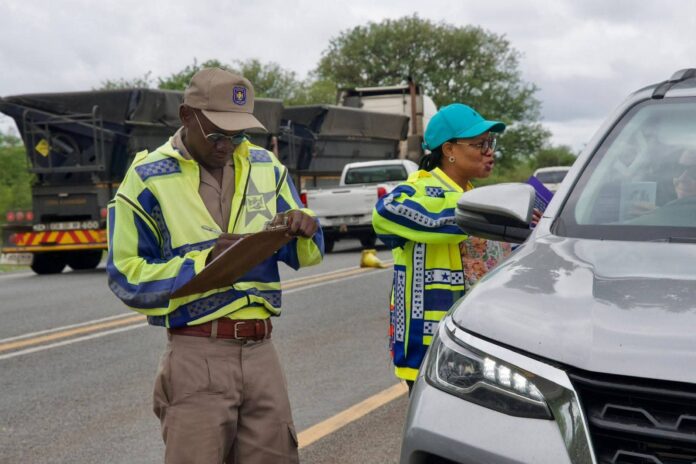
Road safety statistics have revealed that young breadwinners were among the 172 people who lost their lives on Mpumalanga roads during the 2024/2025 festive season, despite the province recording fewer crashes overall.
The figures were announced in Mbombela on Thursday morning by the Mpumalanga MEC for community safety, security, and liaison, Jackie Macie, during the release of the province’s road safety statistics for the festive season.
“Today, we meet under difficult circumstances, guided by one clear responsibility: to account to the people of Mpumalanga and to recommit ourselves to saving lives on our roads,” said Macie.
“The festive season is meant to be a period of rest, family, and renewal. Yet, for far too many families across our province, it became a period of grief and irreversible loss.”
Between December 1 and January 11, Mpumalanga recorded 733 road crashes, resulting in 172 fatalities, 129 fatal crashes, 379 serious injuries and 842 slight injuries.
While the number of crashes dropped compared to the previous festive season, fatalities increased by 29, raising alarm about the growing severity of collisions on the province’s roads.
“While we acknowledge that the overall number of crashes decreased, we cannot ignore the painful reality that more people died,” Macie said.
He said the festive season, traditionally associated with rest, travel and family gatherings, was an irreversible loss for many households across the province.
“These statistics represent real people, families whose lives have been permanently altered,” Macie said.
Lives cut short by road accidents
Data show that most of those who died were drivers, passengers and pedestrians, with the highest number of fatalities recorded among the economically active age groups between 19 and 35 and those aged 36 and above.
“These are breadwinners. These are parents. These are young people with futures that were cut short,” Macie said.
He said the contradiction in the data pointed to a dangerous shift in driver behaviour, with fewer crashes now resulting in far more serious and deadly outcomes.
“That tells us that while crashes may be fewer, they are becoming more violent and more deadly,” Macie said.
Men continued to account for the majority of fatalities, reflecting persistent risky behaviour such as speeding, reckless driving and alcohol abuse, particularly among younger motorists during peak social periods.
At the district level, Nkangala recorded the highest number of fatalities, with 69 lives lost, an increase from 59 during the previous festive season.
“This trend is deeply concerning and points to persistent challenges in road user behaviour, enforcement and compliance within the district,” Macie said.
Gert Sibande recorded 56 fatalities, marking an increase of 19 deaths, while Ehlanzeni was the only district to record a reduction, from 39 to 33.
“The lessons from Ehlanzeni must be replicated across the province,” Macie said, noting that focused enforcement and road safety education had proven effective.
Saving lives is personal responsibility
High-risk routes remained a major contributor to fatalities, with deaths concentrated on N4, N12, R40, R573, R537 and R33, which serve as critical economic corridors.
The N4 alone claimed 36 lives, followed by the N12 with 16 deaths, underscoring the deadly consequences of speeding and reckless driving on long-distance routes.
Crashes were most prevalent between 2pm and 6am, particularly over weekends from Friday to Monday, a period strongly linked to social activity and alcohol consumption.
Macie said the government would intensify its response, including increased weekend and nighttime law enforcement, operations on identified high-risk routes, and stronger collaboration with the South African Police Service, municipalities and traffic authorities.
He said road safety education would also be strengthened, particularly targeting pedestrians, passengers and young drivers, alongside stricter consequence management for reckless and criminal road behaviour.
“We are not losing lives because we lack laws,” Macie said. “We are losing lives because laws are being broken, and in some cases, not enforced firmly enough.”
He said saving lives on Mpumalanga’s roads required personal responsibility from motorists, alongside visible and relentless enforcement.
“Every life lost on our roads is one too many,” Macie said.
- Road safety statistics have revealed that young breadwinners were among the 172 people who lost their lives on Mpumalanga roads during the 2024/2025 festive season, despite the province recording fewer crashes overall.
- The figures were announced in Mbombela on Thursday morning by the Mpumalanga MEC for community safety, security, and liaison, Jackie Macie, during the release of the province’s road safety statistics for the festive season.
- “Today, we meet under difficult circumstances, guided by one clear responsibility: to account to the people of Mpumalanga and to recommit ourselves to saving lives on our roads,” said Macie.
- “The festive season is meant to be a period of rest, family, and renewal.
- Yet, for far too many families across our province, it became a period of grief and irreversible loss.” Between December 1 and January 11, Mpumalanga recorded 733 road crashes, resulting in 172 fatalities, 129 fatal crashes, 379 serious injuries and 842 slight injuries.


