


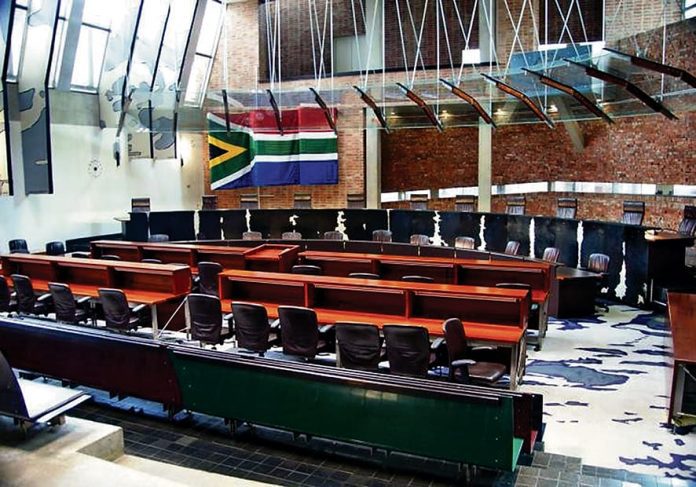
The Constitutional Court has been approached to challenge the constitutionality of the process and adoption of the Public Procurement Bill.
At the centre of the matter is Chapter 4 of the Procurement Bill, which governs preferential procurement and determines how transformation policies such as the black economic empowerment (BEE) are applied in state contracting.
The City of Cape Town, supported by trade union Solidarity and news company AmaBhungane Centre for Investigative Journalism, has challenged both the process followed to pass the law and its eventual adoption.
In their second challenge before the apex court, the applicants argued that material amendments were introduced during the legislative process without being referred back to the public.
They contend that these changes were substantive enough to require a fresh round of public participation. By failing to reopen the process,
Parliament allegedly denied businesses, civil society, and other stakeholders an opportunity to engage with the final version of the law.
In the application, Solidarity highlighted that the amendment is material because procurement was wholly replaced after public participation.
“It imposes new costs and obligations on both procuring institutions and the general public (bidders) in the form of, inter alia, mandatory mechanisms not previously seen and associated administrative burdens.
“It fundamentally alters the nature of preferential procurement by excising all reference or possibility of preference points-based systems that allow for a rough calculation of so-called ‘premiums’ and thereby also doing away with the consideration of ‘price’ as a prescribed evaluative consideration almost entirely,” reads the document.
Only 20% of submissions presented
The case also focuses on broader procedural flaws, including the alleged failure of Parliament to provide a meaningful opportunity for public input from the onset.
Breytenbach, who is the counsel for the applicants, raised issues related to the handling of submissions by the National Treasury of South Africa.
The lawyer argued that Treasury did not adequately process the volume of feedback received during public participation before reporting to the Standing Committee on Finance.
According to the applicants, Treasury initially presented only 20% of submissions and was instructed to return to consider more.
However, it ultimately reviewed just 36.6% of the total, citing time constraints as the reason it could not assess all comments.
Despite this limited engagement, the standing committee proceeded to table the bill before Parliament, where it was passed.
Breytenbach told the court there is no evidence that either Parliament or the committee properly considered the public’s input on the amended bill and further argued that 67.4% of submissions were effectively ignored, raising doubts about whether lawmakers could credibly address those key concerns.
Visit SW YouTube Channel for our video content
- The Constitutional Court is reviewing the constitutionality of the Public Procurement Bill, specifically Chapter 4, which governs preferential procurement and transformations like black economic empowerment in state contracts.
- The City of Cape Town, supported by Solidarity and AmaBhungane Centre for Investigative Journalism, challenges both the legislative process and adoption, arguing material amendments were made without renewed public input.
- Applicants claim the changes imposed new costs and obligations, fundamentally altering preferential procurement by removing price-based evaluations and preference points systems.
- Procedural flaws include Parliament’s failure to meaningfully incorporate public feedback, with only about 36.6% of submissions reviewed by National Treasury despite claims of substantial ignored input.
- The applicants argue that ignoring 67.4% of public submissions undermines the legitimacy of Parliament’s consideration and calls into question the law’s adoption process.


