


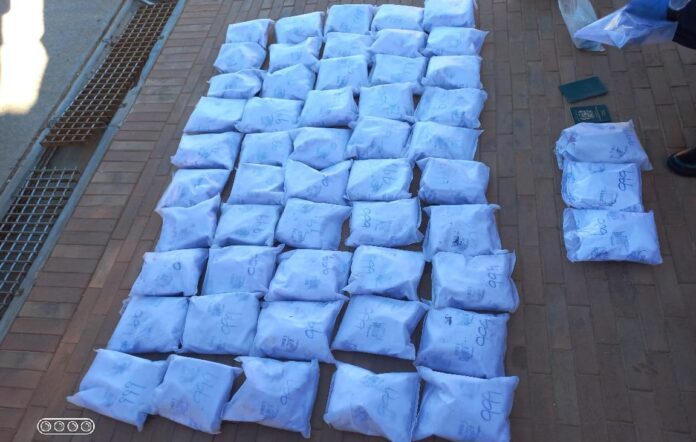
Three junior SAPS officers on Wednesday got a rare opportunity to tell parliament of how their lives became a living hell over the past 15 years for trying to expose thievery at the police lab, by other police officers.
The trio, captain Ramalepe and Malatjie as well as colonel Ramolobe, appeared before the Ad Hoc committee probing allegations of corruption and political interference in the criminal justice system.
They believe there is a “web” of high ranking police officers who are part of drug dealing syndicates that are sabotaging the work of “honest” cops such as them.
Through Ramalepe, the trio told committee members of how rotten the SAPS Forensic Science Laboratory was. And how their attempts to clean up the rot were thwarted by several snubs from police management.
They revealed how easy it was for drugs confiscated by “honest” policemen/women and stored at the police lab find their way back into the streets.
Irregularities at Forensic Science Services
“We have witnessed acts of corruption, maladministration and/or gross irregularities within Division: Forensic Science Services,” said Ramalepe.
“On or about 11 February 2010, members of SAPS within Division: Forensic Science Services gathered at the Divisional Commissioner’s (Khomotso Phahlane) office for management’s inaction regarding theft of drugs at the Forensic Science Laboratory, with I and Colonel Ramolobe being amongst the members. All members were arrested.
“In November 2011, I and Colonel Ramolobe held a Meeting with Lieutenant General Phahlane, then Divisional Commissioner of Forensic Science Services. In the meeting with Lieutenant General Phahlane, we reported systematic corruption within the Division.”
The officers, who view themselves as whistleblowers, said they never got the assistance from Phahlane. He instead branded them as rabble rousers who are infusing negative energy in the work place.
Reports on drugs, rhino horns theft ignored
In addition to reporting the stealing of drugs from the police lab, they also reported the theft of rhino horns and irregular appointments, among other things.
Phahlane, instead of intervening, had warned the officers against poking the bear. He cautioned that his action on their complaints about the stolen drugs would “open a can of worms”.
Ramalepe narrated their ordeal and how they were sent from pillar to post by police bosses.
“In April 2012 our complaint was escalated to then Acting National Commissioner, Lt-Gen Nhlanhla Mkhwanazi.
“Lt-Gen Mkhwanazi referred the complaint to Lt-Gen Mngwenya. Lt-Gen Mngwenya referred the complaint to Lt-Gen Godfrey Lebeya. No positive response was received from Lt-Gen Lebeya,” Ramalepe continued.
“Failure and/or neglect and/or refusal to address our complaints by SAPS management left us with no option other than to refer our complaints to POPCRU national office. In June 2012, POPCRU addressed a communication to General Phiyega in relation to the whistleblowing on acts of corruption in the SAPS’ Forensic Lab, requesting her immediate intervention. POPCRU did not receive a positive response from General Phiyega, which resulted in the press release of September 2012.”
Even courts failed to protect them
This is the press release that landed these junior officers into trouble after Phahlane took offence and dragged them to court crying defamation.
He won the case. And the officers were slapped with a R300K damages court order. They appealed the ruling, and the matter still drags on in the courts a decade later.
Ramolobe was axed from the service in what he claimed was constructive dismissal. But when an vacancy was advertised, he applied and aced the recruitment process selection and was rehired.
Exposed to dangerous drug cartels
- Three junior SAPS officers on Wednesday got a rare opportunity to tell parliament of how their lives became a living hell over the past 15 years for trying to expose thievery at the police lab, by other police officers.
- The trio, captain Ramalepe and Malatjie as well as colonel Ramolobe, appeared before the Ad Hoc committee probing allegations of corruption and political interference in the criminal justice system.
- They believe there is a “web” of high ranking police officers who are part of drug dealing syndicates that are sabotaging the work of “honest” cops such as them.
- Through Ramalepe, the trio told committee members of how rotten the SAPS Forensic Science Laboratory was.
- And how their attempts to clean up the rot were thwarted by several snubs from police management.
































Thabet88co seems like a solid option. It’s got a good rep from what I’ve heard. Take a look at thabet88co you might enjoy the experience.
99kkbet? Yeah, I messed around there a bit. Nothing spectacular, but it’s reliable. Give 99kkbet a shot if you’re not looking for anything too crazy.
Alright, gotta say nicejili ain’t bad at all. The graphics are nice and the gameplay is smooth. Check out nicejili if you appreciate good design and smooth play. Worth a look!