The 2026 National Budget presented by Finance Minister Enoch Godongwana signalled improved fiscal sustainability and credibility, and with South Africa’s removal from the Financial Action Task Force grey listing creating, an improved climate for foreign investment. The espoused merits of the budget relate mainly to deficit reduction, debt stabilisation, improved revenue collection, and a return to a primary surplus.
Notwithstanding the appropriation of additional allocations to alleviate service delivery chasms and safety and security initiatives, lack of confidence in the realisation of a better life for citizens lingers among critics.
Crucial debates
Recent articles show that intellectuals are beginning to engage real issues, enriching the discussion on what is required to agitate South Africa out of its stagflation beleaguerment that trapped the developmental aspirations of South Africa over the past decade. Lusanda Batala1 argues passionately that the 2026 Budget is stable, but not transformative in that it protects the poor but fails to ‘rewire’ the economy for real human development and job growth. He goes on to state that South Africa needs action, not just stability.
Tshepo Koka2 states: “When township spatial clustering, educational collapse, and labour market exclusion are treated as externalities rather than structural outcomes, we are not doing economics. We are doing algebra detached from anthropology.” He claims that the degeneration of economic epistemologies reflects a shrinking definition of valid economic knowledge, not intellectual decline. Classical political economy understood that economics and power were inseparable in that it sought to answer questions such as, Who owns land? Who controls capital?, and, Who determines wages? These were foundational questions in the Economics discipline, but modern technical economics often abstracts away from power.
Spatial inequalities
South Africa still faces accentuated and persistent spatial inequalities. Most Black people still live in distant townships without access to urban benefits and opportunities. Wealth accumulation is frustrated by large travel costs and social fabric eroded by parents being absent from the lives of their children during the most crucial forming years. Not only does this deny access to opportunities but allow for destructive forces like gangsterism and drug abuse to adversely and disproportionally so impact families.
Tabling smart cities and elaborate fast trains in budgets year after year may appear cynical and expedient. Ayanda and Carolissen3 study highlights the digital divide as a significant challenge, particularly in post-apartheid South Africa, where access to technology remains highly unequal. The study found that while achieving smart city status improves urban efficiency and economic growth, persistent technological inequality could undermine progress towards social justice in South Africa if not addressed. This and similar internationally benchmarked research must find way into policy design and impact analysis in South Africa.
Economic growth
South Africa is an upper-middle-income country, but its GDP per capita is lower than most emerging-market peers and about half the global average, reflecting slow economic growth and structural issues such as unemployment and inequality. In 2025 The SA GDP/cap of about US$6,000 in nominal terms was well above the African average of $2,500 but significantly trails Seychelles ($21,000) Mauritius ($12,500) and Botswana ($7,500),
Emphasis on macroeconomic indicators such as GDP growth and GDP per capita provides only an average perspective of a nation’s economic wellbeing. As a result, these measures may present a misleading picture, particularly in contexts where significant inequalities exist. Focussing on fiscal metrics as key performance indicators will, by virtues of the socio-economic statistics prevalent in South Africa, lead to false dawns and ineffectual policy responses.
Social grants
South Africa is irrevocably committed to large social grant budgets, and this relief rolled back much of the malaise emanating from prior institutionalised discriminatory practices. However, it is maintained here that additional measures are essential to achieve the desired social benefit. The development of the Capability Approach by the sociologist Amartya Sen is lauded as a massive improvement over the approach of resorting to just doling out social relief funds. The Capability Approach incorporates agency, access to opportunity and the ability to exploit such opportunity effectively as important levers to accelerate policy enablement and social mobility4.
The substantial social wage provided by the South African government is designed to facilitate sustainable upliftment. Many instances illustrate the absence of intentionality in this narrow and outdated method. Despite large appropriations for education, mathematics literacy has overtaken mainstream mathematics in schools. In 2025, two-thirds of all students enrolled in Maths chose the Maths Literacy option. This limits many disadvantaged students from pursuing careers in fields such as accounting, engineering, mathematics, and data science. This is exclusion in disguise and certainly will not counterweigh inequality, never mind balancing the opportunities for population for an economically polarized society. This manifests in the persistent failures of SMME development programs in South Africa.
SMMEs drive growth
Globally SMMEs proved to be the main and most effective drivers of economic growth and account for more than 70% of jobs. The mainstream approach to SMME development in South Africa is primitive and first generational in that resources are made available without addressing structural impediments. Primarily that include access to opportunities through access to value adding networks and the inculcation of a culture of exploiting such opportunities. The intended target audience must also overcome psychosocial exclusion as many would-be entrepreneurs are in essence survivalist and first generational, residing in economically and historically deprived societies
Well-being of nations must be encompassing and be measured using economic, social, health, environmental, and institutional indicators that reflect the quality of life of citizens beyond simple economic output. Researchers in organizations such as the United Nations, World Bank and Organisation for Economic Co-operation and Development increasingly use multiple indicators to evaluate national well-being.
Low rank in happiness index
The World Happiness Report is increasingly used to yardstick national well-being. It evaluates how people subjectively rate their life satisfaction, rather than focusing only on economic indicators such as GDP. The index is produced by the United Nations Sustainable Development Solutions Network and draws on survey data from the Gallup World Poll. It aligns with modern development thinking of the United Nations Development Programme and the Human Development Index, which emphasise human capabilities and quality of life rather than simply economic growth.
South Africa ranks lower on the happiness index than most upper-middle-income countries such as Brazil, Mexico, and China, placing it with some lower-middle-income nations. South Africa typically ranks around fourth in Africa. Mauritius and Libya rank higher due to strong social cohesion, stable living conditions, and improved governance.
Fore-fronting fiscal variables such as GDP Growth GDP/cap, Debt-to-GDP, Primary Surplus and Inflation as primary outcomes in the Budget is limiting as these should be considered as inputs that must lead to positive impact on a seemingly intractable and debilitating social ecosystem.
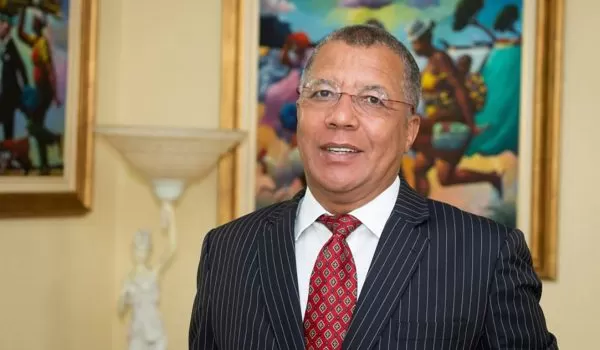
Professor Randall Carolissen is an accomplished business leader with years of experience in developing and executing strategy, driving transformation programmes across multiple industries.
- The 2026 National Budget presented by Finance Minister Enoch Godongwana signalled improved fiscal sustainability and credibility, and with South Africa’s removal from the Financial Action Task Force grey listing creating, an improved climate for foreign investment.
- The espoused merits of the budget relate mainly to deficit reduction, debt stabilisation, improved revenue collection, and a return to a primary surplus.
- Notwithstanding the appropriation of additional allocations to alleviate service delivery chasms and safety and security initiatives, lack of confidence in the realisation of a better life for citizens lingers among critics.
- Crucial debates Recent articles show that intellectuals are beginning to engage real issues, enriching the discussion on what is required to agitate South Africa out of its stagflation beleaguerment that trapped the developmental aspirations of South Africa over the past decade.
- Lusanda Batala1 argues passionately that the 2026 Budget is stable, but not transformative in that it protects the poor but fails to ‘rewire’ the economy for real human development and job growth.