


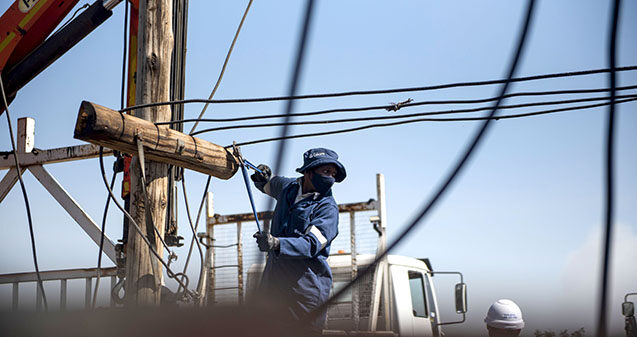
A R54-billion settlement between Eskom and the National Energy Regulator of South Africa (Nersa) has been set aside by the High Court in Pretoria, which ruled the closed-door agreement unlawfully excluded the public from a decision directly affecting electricity tariffs.
The court ordered Nersa to reopen its decision for the 2025/2026 to 2027/2028 financial years for public consultation, citing a fundamental lack of transparency. The dispute originated from a R107-billion calculation error in Nersa’s Multi-Year Price Determination. Eskom had challenged it as unlawful for understating its revenue.
Violated procedural fairness
Judge Jacobus Swanepoel, in a ruling delivered on Sunday, found the regulator’s secretive settlement violated procedural fairness.
“The general public had, in my view, the right to submit their views on the proposed settlement,” he stated. And he affirmed that Nersa’s duty under Section 10 of its Act is to allow affected persons to be heard.
The court was critical of Nersa’s motives, suggesting it sought to avoid scrutiny.
“Nersa was clearly embarrassed by its mistake. Its purpose in entering into the agreement was, at least partially, to avoid public scrutiny of its error,” Swanepoel remarked. He further dismissed the R54-billion figure as “little more than a thumb-suck”, lacking a clear mathematical basis.
Public participation bypassed
The ruling followed arguments from intervening parties AfriForum and the Minerals Council South Africa. The two contended the settlement bypassed mandated public participation. The court agreed, emphasising that “public participation in a transparent and open manner is a cornerstone of the Act.”
Consequently, the court set aside Nersa’s decision. It ordered a redetermination with public submissions due by January 21, 2026.
The 2025/2026 tariffs will stand, but future years must be recalculated. Eskom and Nersa were ordered to jointly cover the legal costs of the two parties.
The judgment reinforces constitutional principles. And Swanepoel ruled that “decisions made in secret and without public knowledge are anathema to the statutory framework and to our constitutional norms.”
- A R54-billion settlement between Eskom and the National Energy Regulator of South Africa (Nersa) has been set aside by the High Court in Pretoria, which ruled the closed-door agreement unlawfully excluded the public from a decision directly affecting electricity tariffs.
- The court ordered Nersa to reopen its decision for the 2025/2026 to 2027/2028 financial years for public consultation, citing a fundamental lack of transparency.
- The dispute originated from a R107-billion calculation error in Nersa’s Multi-Year Price Determination. Eskom had challenged it as unlawful for understating its revenue.
- Violated procedural fairness Judge Jacobus Swanepoel, in a ruling delivered on Sunday, found the regulator’s secretive settlement violated procedural fairness.
- “The general public had, in my view, the right to submit their views on the proposed settlement,” he stated.


