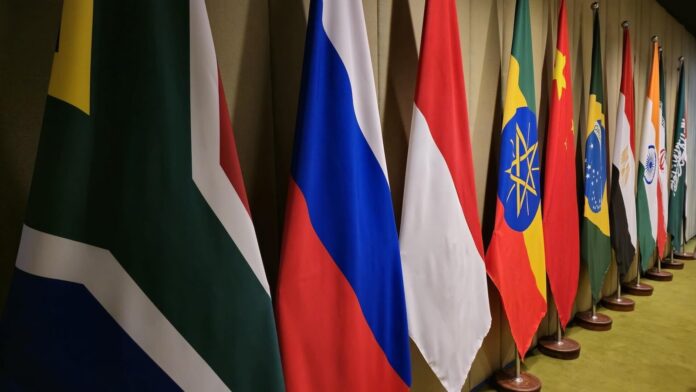
The global order is increasingly marked by fragmented cooperation and competition over markets, resources, and technology, and the sentiment from global policymakers, business leaders, multilateral institutions, researchers, civil society, and other stakeholders is that this approach is not sustainable. A discussion at the Cape Town Conversation on navigating a fractured world in the geoeconomic age discussed the urgency for increased multilateralism and the role of BRICS in promoting and protecting the interests of the global south.
The general sentiment, however, was that BRICS needs to consider how it can turn its expanded reach into practical co-operation and measurable development gains for the global south, especially on the back of growing protectionism, the rerouting of supply chains, and with critical technologies becoming a source of strategic leverage. Conflicts are also exposing economies to sudden disruptions in energy and commodity supplies.
Global South Seeks Collective Strength
BRICS founding member country India, which is an energy-importing nation with major refining capacity, has been exposed to disruptions in maritime trade. The country’s former minister of commerce and industry, Anand Sharma, noted that the effects reach well beyond their country. Supply interruptions also unsettle interconnected markets and economies, as well as global trade.
So, India has had to look towards BRICS partners and others in the global south to navigate the current state of geoeconomics. He told delegates that the current challenges cannot be managed in isolation, noting that India is building bridges with Africa, Latin America and the developing world to strengthen collective influence and shape a shared future.
“We are integral to the global south,” Sharma noted.
Rebalancing the international order
Former Prime Minister of Monaco, Serge Telle, described the current international order as fragmented and disrupted. Drawing on four decades of international diplomacy, he said the global south could help create a better balance of power across the international community.
“We are one humanity, and we should move in the same direction,” Telle said.
Turning crisis into opportunity
“Periods of turmoil are exciting because they can open up new possibilities,” according to Dr Lina Khatib, Director of Global Policy and Systemic Risks at the Security Futures Lab at Oxford University. She said today’s crises are exposing long-neglected inequalities in access to economic resilience.
“Who is taking part in writing the rules?” she asked, stressing that resilience is also a question of voice and representation. Access to finance, technology, industrial capacity and secure infrastructure matters. So does participation in setting international standards and shaping global governance. Countries must be part of the conversation that writes the rules.
She pointed to affordable capital, advanced technology, industrial capacity and secure infrastructure as essential tools for countries facing volatility. Turmoil, she argued, can also focus attention on inequalities the world has too often taken for granted.
Subscribe To Our Newsletter or get the news delivered to your phone via our WhatsApp Channel.
- The global order is increasingly marked by fragmented cooperation and competition over markets, resources, and technology, and the sentiment from global policymakers, business leaders, multilateral institutions, researchers, civil society, and other stakeholders is that this approach is not sustainable.
- A discussion at the Cape Town Conversation on navigating a fractured world in the geoeconomic age discussed the urgency for increased multilateralism and the role of BRICS in promoting and protecting the interests of the global south.
- The general sentiment, however, was that BRICS needs to consider how it can turn its expanded reach into practical co-operation and measurable development gains for the global south, especially on the back of growing protectionism, the rerouting of supply chains, and with critical technologies becoming a source of strategic leverage.
- Conflicts are also exposing economies to sudden disruptions in energy and commodity supplies.
- Global South Seeks Collective Strength BRICS founding member country India, which is an energy-importing nation with major refining capacity, has been exposed to disruptions in maritime trade.