


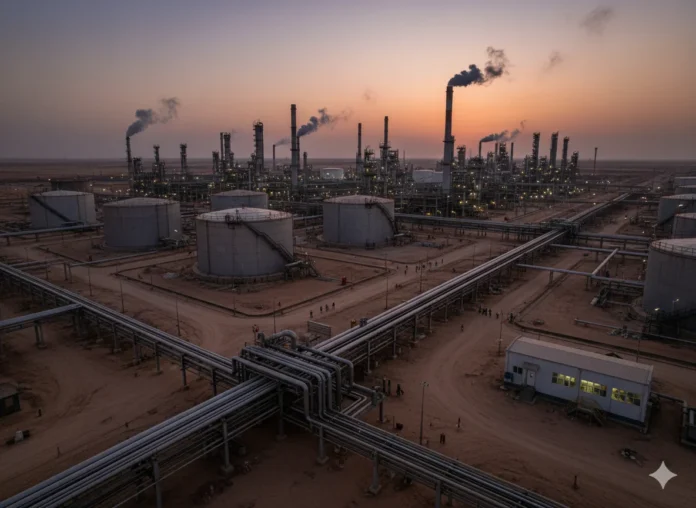
As China and Nigeria mark 55 years of diplomatic ties, the relationship is undergoing a fundamental shift. The era of “bricks and mortar” construction projects – the railways and bridges that long defined the partnership – is giving way to a more ambitious goal: building an industrial backbone that can drive long-term, shared prosperity.
For Nigeria, this shift is not optional. It is existential.
China has just embarked on its 15th Five-Year Plan, prioritising “high-quality development” driven by innovation and green technology. Meanwhile, Nigeria is pursuing Agenda 2050 – a roadmap to transform Africa’s largest economy into a high-income, industrialised nation. The question now is whether these two visions can align in practice, not just on paper.
The modernisation ‘twins’
The synergy between the two nations is rooted in a shared pursuit of modernisation. Professor Liu Baochang, dean of the Center for International Business Ethics at the University of International Business and Economics, describes industrialisation and urbanisation as the “twins” that push modernisation forward.
“From the Chinese experience, if you want to get rich, you must build roads and ports to support the mobility of resources,” Liu said, emphasising that China’s current focus on balancing economic growth with environmental quality offers lessons for Nigeria’s own industrial roadmap. He also noted that China’s domestic priorities carry global signals –from defending multilateralism to expanding zero-tariff imports from the Global South and supporting outbound investment.
Ikenna Emewu, Editor-in-Chief of Africa-China Economic Magazine, observed that while China’s “Two Sessions” are domestic in nature, their impact is global. “In the past four years, Chinese companies and the government created 1.3-million job opportunities in African countries. Nigeria has a 10% share,” he said.
He stressed that the partnership was entering a phase of “self-determination” – Nigeria must actively plug into these global policies to serve its local needs.
From ‘clusters’ to technology transfer
For Nigerian manufacturers, the goal is to move beyond the traditional model where foreign firms operate in isolated hubs. George Onafowokan, managing director of Coleman Wires and Cables, argued for a “de-clustering” of manufacturing.
“What we need to see is the collaboration moving away from just technology usage to technology transfer,” Onafowokan said. “The manufacturing hub should not be dependent on one place; we want the collaboration to look like one.”
He noted that Nigeria’s manufacturing story is no longer just about importing machinery but about absorbing know-how, localising talent, and powering industries with reliable energy and infrastructure. Yet, these are precisely the areas where reform has lagged.
Diana Chen, chairperson of Choice International Group, pointed out that the transfer is already happening through human capital. “We are doing a lot of training to bring young Nigerian talents to China to get well-trained and bring them back,” she said. “That is how you build a lasting industrial base.”
However, she issued a warning: “For ten years, the same challenges – power, security, policy instability – have remained. Nigeria cannot postpone action to the next generation.”
The ‘water’ of development: managing finance
A critical point of discussion was the nature of Chinese financing and the “debt trap” narrative. Professor Liu used a vivid analogy to describe the role of capital: “Money is like water. You can irrigate your crop, or you can flood your house. It is a matter of how you manage the money.”
He argued that the focus should be on the return on investment and the credibility of the business environment. “You can’t expect investors to be charity people. It’s about how to divide the cake based on contribution.”
Onafowokan added that the core challenge for Nigeria is “de-risking” its economy. He pointed to the disparity in interest rates – Chinese firms can access funds at 5%-6%, while Nigerian businesses face much higher costs. “Finance is all about targeting,” he said. “The higher the risk, the higher the cost of funds. Unless we collapse that gap, industrialisation cannot take off.”
From raw materials to ‘value-added products’
With China set to implement a zero-tariff policy for 53 African countries in May this year, the conversation turned to how Nigeria can maximize this opportunity.
“A tariff is never an open door to flood a country with everything,” Onafowokan warned. He suggested that Nigeria must move from exporting raw materials to value-added products. “Everything we produce at the first stage should not be exported; it should be added value. That changes your trade balance.”
Emewu echoed this point, noting Africa contributes only 4% to global trade despite its vast resources. “You don’t trade unless you have the commodity. We have to keep our house in order. China won’t do it for us; we do it for ourselves.”
The path to 2035
Looking ahead, the experts sketched a vision of what success might look like by 2035: strong value-added industries, widespread technical skills developed through training pipelines, reduced dependence on raw material exports, and joint ventures competing globally.
But all agreed this outcome is not guaranteed. Professor Liu’s closing advice was pointed: “If you want to attract the right birds, you have to grow the right tree. Do not rock the tree or chop it down. You need consistent policy and fair judicial enforcement.”
Emewu offered perhaps the clearest distillation of Nigeria’s crossroads: “Your friends from China can give you leverage. But you must decide to grow. Every nation that rose did so through partnership – but also through its own will. China is sincere about giving Nigeria the right support to grow. It is left for Nigeria to use it.”
- As China and Nigeria mark 55 years of diplomatic ties, the relationship is undergoing a fundamental shift.
- The era of “bricks and mortar” construction projects – the railways and bridges that long defined the partnership – is giving way to a more ambitious goal: building an industrial backbone that can drive long-term, shared prosperity.
- For Nigeria, this shift is not optional.
- It is existential.
- China has just embarked on its 15th Five-Year Plan, prioritising “high-quality development” driven by innovation and green technology.


