


In the year of local government elections, the script for garnering your votes has been dusted off and is back in circulation.
Amid the usual hot takes over the last 32 years of campaign messaging being centred around individuals who will save wards and entire metros, to promises of corruption being eliminated, more housing being provided and infrastructure development being prioritised; the status of undocumented non-nationals (under the broad brand of “foreigner”) has taken centre stage.
Self-manufactured crisis
This “foreigner problem” is not only a convenient scapegoating exercise, which I will prove, but it is a self-manufactured crisis.
In the last week of February 2026, the media was awash with stories of Special Investigating Unit (SIU) having uncovered, through investigations, “…that four [Home Affairs] officials who earn less than R25 000 per month have received a total of
(R16.3-million) in direct deposits.
Evidence indicates that certain members of this group have acquired significant assets that are grossly disproportionate to their legal income.”
One of the officials, after acquiring land in cash, built herself a nice mansion and went as far as paying for a tar road that led to the house.
Bribery rife
I used to work with refugees and asylum seekers in South Africa, Zimbabwe, Malawi and Angola. Tasked with telling their stories, I interviewed, videoed and photographed the stories of hundreds of people from the Democratic Republic of Congo, Somalia, Burundi and many other countries with harrowing accounts of the horror they escaped from their home countries.
However, most told stories of how you needed to have money to buy your place in the queue at the Refugee Reception Centre in Marabastad, Pretoria, from security guards, or how a certain amount of cash would ensure that your interpreter gives you a good story to tell to ensure that you got your asylum permit.
People smuggling networks
Others would go on to tell you about the network of people smugglers stretching as far as their country of origin, through Zambia, well into South Africa.
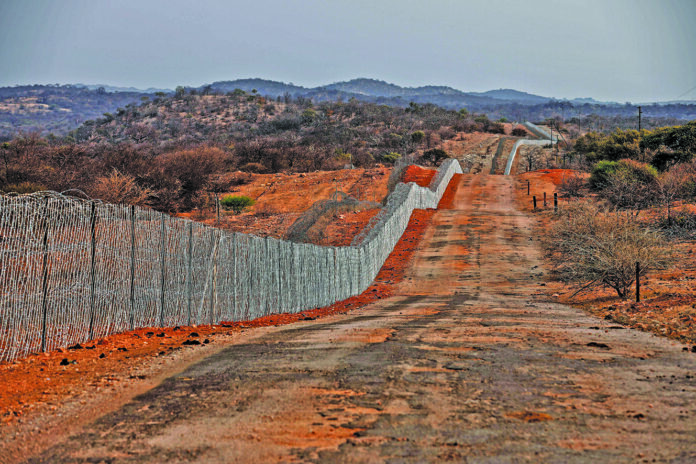
The point is, most people that make their way into South Africa illegally do not do so under the clandestine cover of darkness, through the peril of wading through the crocodile-infested Limpopo River or by cutting through or hopping over a border fence. They gain entry into the country by bribing the very state-employed individuals who are meant to protect us from people who enter the country unlawfully.
According to Africa Check, the 2022 census revealed that there were about 2.4 million international migrants in South Africa, constituting approximately 3.9% of the total population.
It would be unfair to generalise and say that all, many or the majority are here without the necessary documentation. However, it can be assumed that a significant number obtained entry into the country illegally.
Illicit feeding trough
I argue, however, that this “problem” is far less lucrative to solve for those in power and a hell of a lot more lucrative to perpetuate. In fact, it is so lucrative that you might be able to build your own mansion and build a tar road to your front door.
Another reason why it is far more lucrative for those in power to actively, or through their neglect, allow this “problem” to persist is that it serves as an excellent distraction and scapegoating opportunity against your own systematic failures. Let’s face it, all of our municipalities, but for a few exceptions, are in disarray.
Amid games of musical chairs being played by mayors, including those without matric and accused of wholesale fraud in Soweto, many residents don’t have water and where they have water, it is all too often no different to what you flushed after a visit to the loo.
Crime is escalating, infrastructure is failing and no real economic growth is occurring in most of our municipalities. But these people on very nice posters want your vote as councilor or mayor, and many of them were in charge as things continued to decline. They need to make recycled promises, but this is not good enough, they need a convenient problem to point to and so we have the “foreigner scourge”.
This is to be expected in a country with the latest unemployment figure sitting at 31.4% and cities crumbling beneath our feet, while corrupt leaders are perpetually exposed in the media, a soft target to share in the blame for our ongoing malaise is very convenient.
Please don’t misunderstand the argument, immigration, and everything that comes with it, needs to be regulated and regularised in South Africa, like any other country in the world. In other words, people need to enter the country legally, through official means and in turn comply with all the laws that govern their stay in South Africa while they tour, work and study here.
Foreign scourge political tool
So, in a country where many of these people own businesses and have jobs that many unemployed South Africans can argue they should have occupied, it is easy to convince people that much of their problems, such as crime, unemployment and poverty, can be blamed on a notable proportion of the population.
A low-hanging fruit, on the tree that is campaign promises, is therefore, the effective dealing with the “foreign scourge”.
Don’t be fooled though, like the rest of the repeating shopping list of campaign promises, the “foreign scourge” will only be seen to be acted on from now until the elections. The reality is this: scapegoating is a convenient distraction from their past failures or a distraction from real conversations about what policies realistically need to be implemented at the local government to improve people’s lives.
Visit SW YouTube Channel for our video content


