


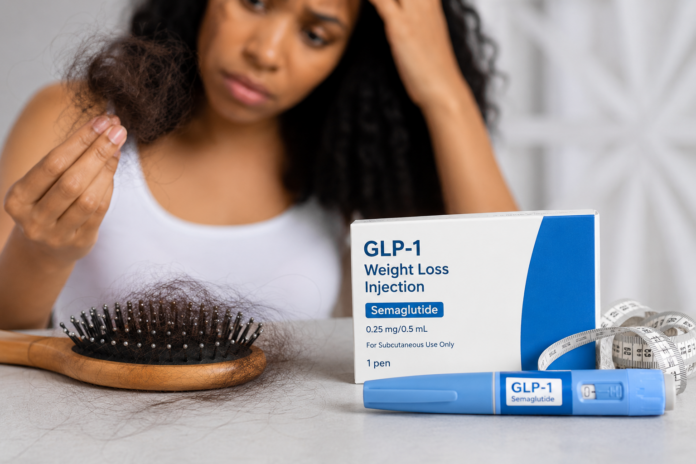
As more South Africans turn to popular GLP-1 weight-loss medications to shed excess kilos, a growing number are reporting an unexpected side effect, noticeable hair loss.
But before blaming the medication, a leading hair restoration expert says the real culprit may be rapid weight loss itself rather than the treatment.
Dr Kashmal Kalan, medical director at Alvi Armani, says many patients assume their medication is directly responsible when they begin losing hair weeks or months after starting treatment. However, the body’s response to sudden weight loss often tells a different story.
“Hair shedding during treatment isn’t always caused by the medicine itself,” Kalan explained. “In many cases, it is the body’s response to losing weight too quickly. The body reacts as though food is scarce and decides that hair is not essential, so it redirects energy to more vital functions.”
‘Think of hair like a houseplant’
According to Kalan, temporary hair shedding can occur after any form of rapid weight loss, whether it results from GLP-1 medication, bariatric surgery, very low-calorie diets or even serious illness.
“When people dramatically reduce how much they eat, they may also miss out on nutrients that healthy hair depends on,” he said. “Think of hair like a houseplant. If you don’t water it with the right nutrients, it won’t thrive. It doesn’t necessarily die permanently – it simply pauses its growth.”
The issue is becoming increasingly relevant as demand for weight-loss medication rises across South Africa.
The latest Discovery Bank and Visa SpendTrend report found that 14% of surveyed higher-income South Africans are using prescribed weight-management medication. Clinical research has also shown that GLP-1 medicines can reduce calorie intake by almost a quarter, making balanced nutrition even more important when appetite declines.
At Alvi Armani, Kalan says consultations with patients experiencing hair loss focus on far more than the medication itself.
“We establish when the shedding started, how much weight the patient has lost, how quickly they lost it, what changes have been made to their diet and whether another medical condition could be responsible.”
Blood tests, he says, are essential before reaching for supplements.
Among the key tests doctors recommend are vitamin D, vitamin B12, ferritin and thyroid function.
“Ferritin, which stores iron, is one of the markers I monitor closely,” Kalan said. “Levels below 30 ng/mL can be enough to trigger hair shedding, even if laboratory reports still classify them as normal. Many patients feel perfectly healthy otherwise, so the deficiency often goes unnoticed until their hair starts falling out.”
Warning on gut health supplements
He also cautioned against assuming gut health supplements are the solution.
While some people take probiotics hoping to restore their hair, Kalan said current evidence remains limited, and these products are only likely to help if an underlying digestive condition is affecting nutrient absorption.
“I would rather see patients undergo the correct tests to identify what is actually missing than spend money on supplements without a clear indication.”
Kalan advises anyone taking GLP-1 medication to seek medical advice if hair shedding continues for more than three months, becomes significantly worse or is accompanied by fatigue or other unexplained symptoms.
“These medications are changing lives for many people,” he said. “If your healthcare professional believes the treatment should continue, don’t stop it out of fear. Just make sure your body is getting the nutrients it needs along the way.”
- Many South Africans using GLP-1 weight-loss medications report hair loss, but experts attribute this mainly to rapid weight loss rather than the medication itself.
- Dr. Kashmal Kalan explains that the body reacts to sudden weight loss by diverting energy from hair growth to vital functions, causing temporary hair shedding.
- Rapid weight loss from any cause, including surgery or strict diets, can lead to nutrient deficiencies affecting hair health; balanced nutrition is crucial.
- Before taking supplements, patients should undergo tests for vitamin D, B12, ferritin, and thyroid function to identify nutrient deficiencies linked to hair loss.
- Continuous or severe hair shedding after starting GLP-1 meds should prompt medical consultation, but treatment should not be stopped without professional advice.



Hi,
Great point in this article it’s important not to assume GLP-1 medications are always the direct cause of hair thinning. I experienced something similar, and this guide on saving money with treatment while learning more was really helpful for me: https://rolandmedicalweightloss.com/glp-1-pills-price-discount-codes/. Thanks for sharing such a balanced perspective!