


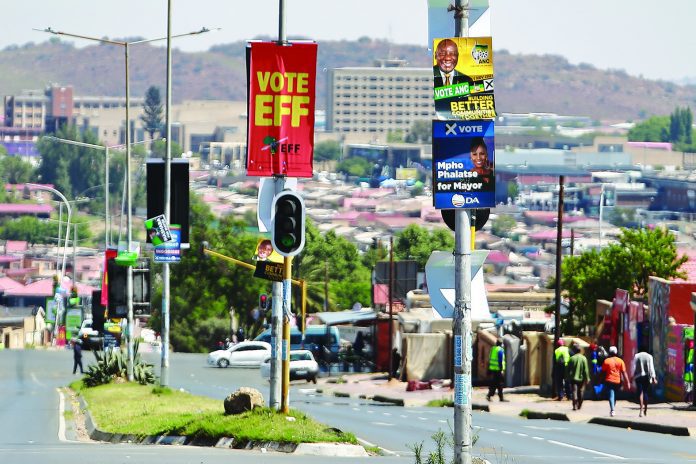
In the 2024 elections, out of the 27.67-million registered voters, 17.7% were voters below the age of 30 and yet voter turnout among this demographic is at an all-time low.
This is an indication that we are not optimally using one of the major tools we have as citizens – showing up to the polls. This is unsurprising given the startling low levels of trust people have in political parties. In their 2026 survey, the Human Research Science Council found that political parties enjoyed trust among only 11% of South Africans, and individual politicians only enjoyed 9% trust.
This means that even if people are registered, the hard work is in fact getting people to vote when the ballot is filled with people and institutions they feel let down with and distant from.
This may surprise people, but political parties and politicians would prefer that the majority of voters stay away from the polls on November 4, 2026. Political parties are not punished when voters choose not to vote; they benefit from it.
Low turnout benefits political parties
In a climate of low trust in politicians and high levels of societal discontent, the political class that is socially distant and whose promises ring hollow know that if the majority of unregistered voters and voters opting not to participate actually showed up, their votes would not make the election outcome less predictable and would particularly not favour incumbent parties.
Politicians will say “Register to vote” but with a particular qualification. They want only people they believe will vote for their party to register. The Democratic Alliance in the City of Johannesburg is an unapologetic example of this, saying in the Frank Dialogue Podcast with JJ Tabane that she is only calling on DA voters to register, not all voters in general.
They, and all parties, are doing the math. If their voters show up and people who may not support them do not show up, they will win more seats even if the number of people who do not support them is in reality higher than those who do. Parties know that elections are not won by public sentiments on social media or community meetings; they are won at the ballot.
Registration alone is not enough
At the most recent voter registration weekend, the IEC reported that they registered 477 174 new voters, and 379 767 of those are young people. Will this, however, result in a higher voter turnout on November 4th? Not unless we as communities, citizens and voters organise ourselves to be drivers of change.
In order for us to translate these registered potential voters into actual voters, we have to not only mobilise but also organise.
Mobilising vs organising
‘Mobilising’ refers to garnering mass support for a specific action, a march, for example, whereas ‘organising’ refers to building long-term sustained movements that centre people’s power. Organising requires that we build cells in our communities who do the work of civics as well as solution building for the issues that affect that specific community. Organising requires us to find each other as activists and citizens and build relationships that allow us to take ownership of our communities.
An example of this that shows up in one of the most recent democracy builders held in Kensington Ward 118 and Ward 67, where community leaders share their experiences on being trained in the municipal bylaws in order to be able to reprimand and hold accountable people who are dumping waste anywhere and everywhere or damaging the environment and infrastructure in the parks. This democracy connects those who are already doing this work and those who had no idea that this is a possibility for them as citizens but want to participate and take ownership of their communities. Connecting and creating a platform for these activists and community leaders is a form of organising.
Building communities that shape elections
While this might seem like it is simply focused on solutions built at a local level, it in fact has everything to do with the upcoming LGE. It is this platform that councillors could potentially be elected on. It is this platform where they can choose a candidate (even from existing parties) that makes the most sense for the issues that they face. It is this platform that continues to do civic education programmes while still doing community development work. It is this platform that simply brings citizens together to think collectively about the society we want to live in.
Politicians thrive on division and chaos. Organising weeds out division and chaos.
- Tessa Dooms is a sociologist, development practitioner and political analyst.
- In the 2024 elections, 17.7% of 27.67-million registered voters were under 30, but youth voter turnout is at an all-time low.
- Political parties have very low trust levels among South Africans, with only 11% trusting parties and 9% trusting individual politicians according to a 2026 HSRC survey.
- Political parties benefit from low voter turnout and prefer that many voters stay away from the polls, as higher turnout could reduce their chances of winning.
- During a recent IEC registration weekend, 477,174 new voters were registered, including 379,767 young people, but higher registration may not lead to higher turnout without community mobilisation and organising.
- Sustained community organising, such as local democracy-building initiatives, is needed to transform registered voters into actual voters and create platforms for citizens to influence elections and local governance.


