


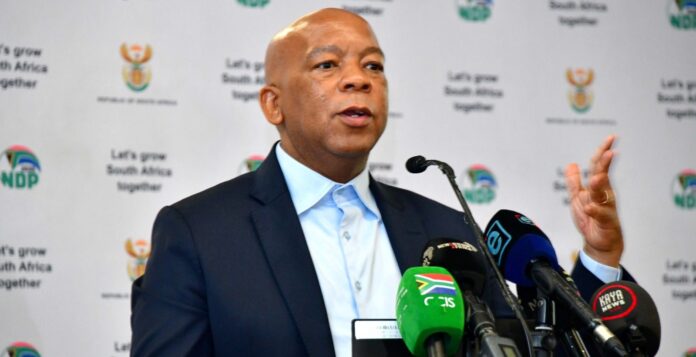
Minister of Electricity and Energy, Dr Kgosientsho Ramokgopa, has formally approved Eskom’s revised unbundling plan, clearing the way for a structural transformation that has been years in the making.
While unbundling has long been framed as a technical restructuring exercise, this latest milestone signals the start of an electricity market designed to be competitive, investment-ready, and aligned with the country’s long-term decarbonisation trajectory.
At its core, the ministerial approval confirms Eskom’s shift from a vertically integrated
utility to a holding company overseeing a suite of independent entities. These include
the legally separated National Transmission Company of South Africa (NTCSA), the
soon-to-be carved-out GenerationCo (GxCo), a future National Electricity Distribution
Company of South Africa (NEDCSA), and a new renewable-focused arm called
Eskom Green.
Transmission System Operator
In parallel, government is advancing a fully independent Transmission System
Operator (TSO) that will sit outside Eskom. It will be responsible for system operation, market platform governance, and ensuring open, non-discriminatory grid access.
The Electricity Regulation Amendment Act laid the legal foundation for South Africa’s transition to a competitive electricity market. It was signed into law earlier this year.
The act formally establishes a multi-buyer, multi-seller model. It creates a transmission
system operator separate from asset ownership. And it gives independent power
producers (IPPs) a clearer, rules-based pathway to grid access.
The Minister’s approval of Eskom’s unbundling roadmap now operationalises that
vision. Unbundling is not privatisation. Rather, it is a structural separation designed
to remove conflicts of interest. To also reduce procurement opacity, strengthen regulatory
confidence, and encourage investment into both grid infrastructure and new generation capacity.
For decades, South Africa’s system was constrained by a single buyer model that
discouraged competition. And it created bottlenecks in planning and procurement.
SA’s most urgent energy bottleneck
Independent entities, with defined mandates, separate boards, and clearer financial
reporting, can help reverse this. Transmission is widely acknowledged as South Africa’s most urgent energy bottleneck.
Grid capacity constraints have already delayed or downsized thousands of megawatts of wind and solar projects. This particularly in the resource-rich Western, Northern, and Eastern Cape. A truly independent TSO, licensed and regulated under Nersa, will be the real catalyst for change.
A TSO is essential for implementing a competitive electricity market. This is where IPPs, municipalities, traders, and large customers can transact freely. It also brings investor certainty and transparent planning. And it does so by ensuring grid access approvals are not influenced by internal competition.
Eskom Green, meanwhile, is expected to accelerate utility-scale renewable energy
investments. Potentially developing its own projects while enabling joint ventures with
private partners.
This aligns directly with South Africa’s decarbonisation commitments. And it gives Eskom a clearer role in the energy transition.
Distribution reform challenges
While progress at the transmission level is advancing, distribution reform remains
politically complex. Municipalities owe Eskom over R78-billion in overdue debt,
undermining the feasibility of integrating municipal and Eskom distribution networks
into a single national distributor.
NEDCSA, the future distribution company, is vital for standardising tariffs. Also for improving reliability, and modernising infrastructure. But it cannot be fully implemented until the municipal debt crisis is addressed.
Nonetheless, a consolidated distribution structure is essential for a competitive
market to function effectively. And for rooftop solar, wheeling, energy trading, and
embedded generation to scale.
The combination of unbundling, market reform, and targeted investment in grid
expansion positions South Africa to unlock significantly higher renewable energy
investment. Grid-enabled renewables can contribute not just to climate goals. But
also energy security, local content commitments, green industrialisation, and
economic competitiveness.
Roadmap for structural reforms
Eskom’s roadmap anticipates a phased transition through to 2030. With sequencing
aligned to regulatory approvals, debt restructuring, and system stability requirements. But with ministerial approval now secured, the momentum toward a modernised electricity system is accelerating.
South Africa’s electricity transition has often been characterised by policy inertia and
implementation gaps. But the approval of Eskom’s next unbundling milestone is one
of the clearest signals yet that the structural reforms underpinning an efficient,
transparent, and investment-ready electricity market are taking shape.


