


ANC MP and former #FeesMustFall activist Fasiha Hassan pressed for urgent action on youth unemployment, faster mineral beneficiation and cheaper energy during parliament’s debate on President Cyril Ramaphosa’s State of the Nation Address (SONA), warning that South Africa risks missing a “once-in-a-generation” economic opportunity if it continues exporting raw resources without building local industry.
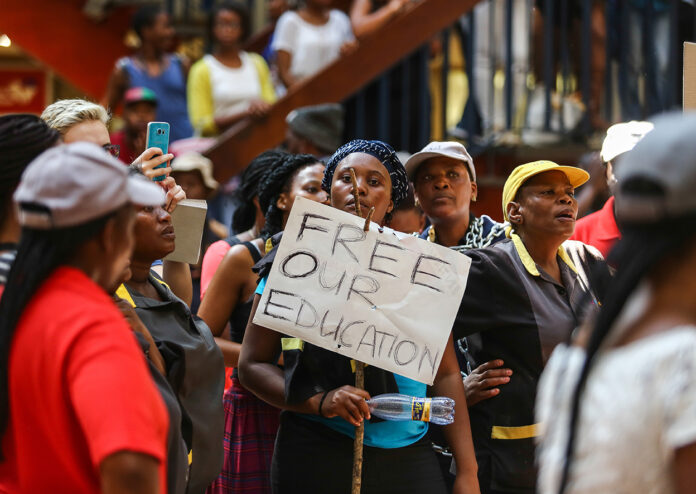
Addressing the House this week, Hassan framed the moment against key milestones in the country’s democratic journey, including the 1976 student uprising and a decade since the Fees Must Fall protests, arguing that political freedom remained incomplete without economic inclusion.
“Thirty years into our democracy, I am living proof that a non-racial, non-sexist society is possible,” Hassan said.
SA legacy of student activism
“But democracy cannot end at the ballot box. It must reach mine gates, the factory floor and the household meter.”
Referencing the legacy of student activism, she said the struggle for access to higher education and economic opportunity continued for young South Africans.
“Ten years after Fees Must Fall, the struggle continues as students at this very moment are fighting for access to institutions of higher learning,” she said. “Our generation must build a united and prosperous South Africa with jobs and opportunities for youth.”
Central to Hassan’s address was a call for South Africa to move beyond exporting raw minerals. It must instead build a diversified, industrialised economy rooted in beneficiation and green energy opportunities.
“If we remain trapped in extracting and exporting raw minerals, we are not building a democratic economy. We are managing a colonial one,” she said.
“As the world shifts to green energy and cleantech, South Africa holds many of the critical minerals needed for this transition. It is a once-in-a-generation opportunity for us to reindustrialise.”
Youth must be part of economic transformation
She said South Africa possessed “88% of global platinum group metals, 70% of chromium and 32% of manganese”. And she argued that beneficiation could transform mining communities through job creation and local industrial development.
“There can be no license without beneficiation. No tenders without youth jobs. And no incentives without training and decent work,” Hassan said.
“Beneficiation is when a country stops exporting its future and starts building dignity.”
Hassan broadly welcomed the government’s economic direction. But she urged the faster implementation of reforms to unlock investment in mining and downstream industries. These include modernising the mining cadastral system and expanding geological exploration.
She also highlighted improvements in the energy sector, noting Eskom’s rising energy availability factor. But she warned that affordability had become the next major challenge for households and small businesses.
Poverty alleviation
“Our energy availability factor has risen to over 65% from an all-time low of 48%,” she said. “But we must be honest about the next fight — affordability. Energy prices are too high for many township and rural households.”
Hassan called for an expansion of free basic electricity allocations. A wider rollout of off-grid energy solutions and reforms, to introduce competition and investment in a diversified energy mix.
Turning to youth employment, she acknowledged programmes such as the Presidential Employment Stimulus and youth initiatives. But said they were insufficient given the scale of unemployment.
“Youth unemployment must be treated like a national emergency,” she said.
Job creation
“You cannot feed a generation with patience. We are done begging for a place in an economy that was built on our exclusion.”
She urged the government to adopt what she described as a “wartime approach” to job creation. Mobilising all sectors of the state and private economy around clear targets and timelines.
“To the young people of South Africa, we are not asking for charity. We are demanding justice,” Hassan said. “Let us be remembered as the generation that turned our mineral riches into a diverse economy and our freedom into economic dignity.”
- ANC MP and former #FeesMustFall activist Fasiha Hassan pressed for urgent action on youth unemployment, faster mineral beneficiation and cheaper energy during parliament’s debate on President Cyril Ramaphosa’s State of the Nation Address (SONA), warning that South Africa risks missing a “once-in-a-generation” economic opportunity if it continues exporting raw resources without building local industry.
- Addressing the House this week, Hassan framed the moment against key milestones in the country’s democratic journey, including the 1976 student uprising and a decade since the Fees Must Fall protests, arguing that political freedom remained incomplete without economic inclusion.
- “Thirty years into our democracy, I am living proof that a non-racial, non-sexist society is possible,” Hassan said.
- SA legacy of student activism “But democracy cannot end at the ballot box.
- It must reach mine gates, the factory floor and the household meter.” Referencing the legacy of student activism, she said the struggle for access to higher education and economic opportunity continued for young South Africans.


