
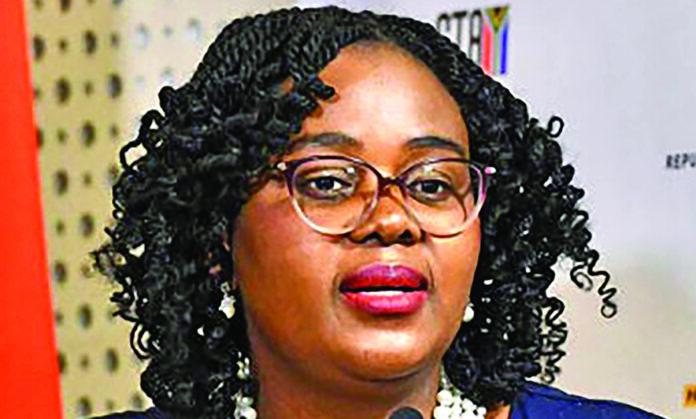
The breast that fed the nation has fallen. The voice that shouted the loudest in places where silence was a betrayal has been silenced. The pride of women’s leadership has diminished. Death, be not proud.
As we mark 30 years of democracy this year, we do so with heavy hearts as we mourn the passing of one of the strong pillars in the struggle for women’s emancipation, Hosi Dr Tinyiko Lwandlamuni Phyllia N’wamitwa II.
Part of historic Codesa negotiations
As an active participant in the Convention for a Democratic South Africa (Codesa), the historic multiparty negotiations that ushered in the new democratic dispensation in 1994, Her Majesty the Queen claimed her place as a woman warrior in the great army of Africans who fought, and continue to fight, for the betterment of all.
By breaking long-standing cultural and societal barriers to women’s traditional leadership, Her Majesty forged a new path through which women can now claim their rightful place in the corridors of power within rural leadership structures.
In her challenge against patriarchy, she stretched the minds of constitutional interpreters to embrace what the founders of our democracy and the drafters of our Constitution envisaged: total emancipation and substantive equality for all.
She fought all the way to the Constitutional Court, which not only spoke about her, but affirmed the right of a daughter in a royal family to inherit a leadership role. This landmark judgment opened doors for many who today continue in pursuit of their right to inherit the leadership of the royal house by blood.
Advocacy for education in rural communities
We will remember Her Majesty for her advocacy for education in rural communities and her relentless fight against gender-based violence and femicide.
Under her leadership, the Valoyi royal house became a North Star for the empowerment of rural women and a demonstration that African traditional leadership can coexist in complementary harmony with our constitutional democracy.
She championed rural development and the protection of the VaTsonga/Machangane culture and language through Royal Unity Leadership, which she diligently served as chairperson. She also played an active role as an elder in uniting and advocating for the support of traditional leaders in the district and across Limpopo Province.
Ndabezitha did not hesitate to pick up the phone when she saw injustices against the most vulnerable in our society, especially women and children, and to demand justice and accountability from public representatives.
Hosi Dr N’wamitwa II served as a Member of Parliament from 1994, forming part of the first cohort of women public representatives in our democratic parliament who laid the foundation for the laws and policies whose benefits we enjoy today.
Adoption of the Constitution
She was among the Members of Parliament present at the sitting of May 8 1996 who adopted the Constitution, which this year marks its 30th anniversary.
As we pay tribute to this fallen gallant fighter for women’s rights, justice, and a humane society, let us commit to picking up where she left off.
May her soul rest in peace, knowing that her efforts were not in vain. And that there are people who will continue the struggle for a better life for all.
Ethela hi kurhula Ntombi ya Valoyi, VaKhalanga, Varozwi, Nwina vakudyela hehla, Dr N’wamitwa II.
May her soul rest in peace.
Mmamoloko Kubayi is the Minister of Justice and Constitutional Development, member of the ANC NEC and the party’s NWC
Justice Minioster Mmamoloko Kubayi pays a moving tribute to the late royal and struggle icon, Hosi N’wamitwa II.
- The breast that fed the nation has fallen.
- The voice that shouted the loudest in places where silence was a betrayal has been silenced.
- The pride of women’s leadership has diminished.
- Death, be not proud.
- As we mark 30 years of democracy this year, we do so with heavy hearts as we mourn the passing of one of the strong pillars in the struggle for women’s emancipation, Hosi Dr Tinyiko Lwandlamuni Phyllia N’wamitwa II.