
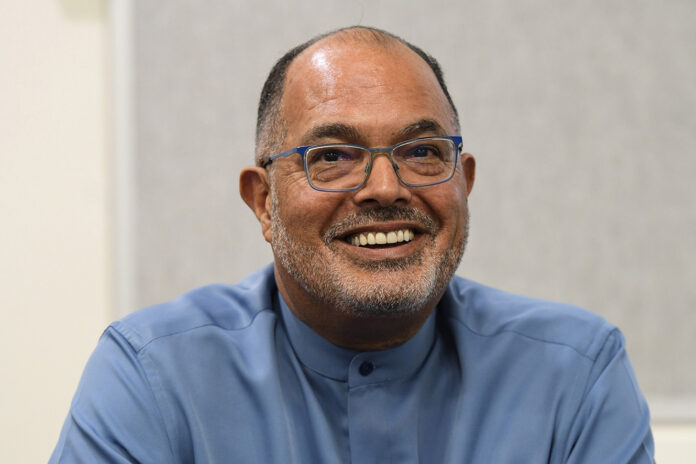
Former South African Revenue Service (SARS) commissioner Edward Kieswetter wants law enforcement agencies to be judged on whether they dismantle criminal networks and bring their financial backers and facilitators to account, rather than how many cases they investigate.
Kieswetter, who continued his testimony before the Madlanga Commission of Inquiry on Thursday, said South Africa needed to move beyond isolated arrests and seizures and measure success by the extent to which organised criminal networks were weakened.
He outlined a five-year vision for the country in which criminal syndicates would lose their financial support, legitimate businesses would reclaim market share and public confidence in state institutions would improve.
“By year five and beyond, that agencies take on hard cases instead of avoiding them, and that facilitators are held to account, legitimate businesses regain market share and create more jobs, I might add, and public trust rises,” he told the commission.
But he warned that such progress would require agencies to confront difficult investigations instead of pursuing cases that are easier to conclude.
READ: Tax practitioner arrested for allegedly defrauding SARS of more than R9m
His proposed timeline sets out what he believes should be achieved at different stages of the country’s response to organised crime.
Within the first year, he wants an agreed working dataset, the deployment of the first disruption teams, a shared case identifier across major agencies and the publication of baseline measurements.
By the third year, several criminal networks should have been disrupted or dismantled, including their financial operations and facilitators, while the illicit share of priority value chains should begin to decline.
He said progress should also be measured against the findings of the 2027 Financial Action Task Force (FATF) mutual evaluation.
South Africa’s next mutual evaluation is scheduled to take place from March 2 to 19 next year.
Kieswetter said the country’s response to the illicit economy would also demonstrate whether it was serious about positioning itself as a destination of high integrity.
Criminal networks must lose their financial lifelines
The former SARS boss’s proposed measures come amid concerns about the state’s ability to keep pace with organised criminal networks, which operate across multiple sectors and rely on financial backers, facilitators and compromised institutions.
In his earlier evidence, Kieswetter highlighted the disconnect between SARS investigations and the prosecution of alleged criminal networks.
READ MORE: Edward Kieswetter honoured with doctorate, reflects on journey from apprentice to SARS boss
He told the commission that SARS had handed more than 80 illicit tobacco cases to the National Prosecuting Authority (NPA), but had no progress updates on the matters.
He said this illustrated how one institution could complete its part of an investigation without knowing what happened once the case was handed to another agency.
Kieswetter has argued that criminal networks should be targeted as interconnected enterprises, with investigators following their money and identifying the people who enable them to operate.
His concern is that disrupting individual consignments or arresting suspects does not necessarily dismantle the wider criminal operation.
The challenge, he said, is to ensure that criminal networks lose the resources and relationships that allow them to rebuild.
Permanent coordination structure
As part of his proposed solution, Kieswetter asked the commission to recommend the establishment of a permanent national structure, initially led by the President, Cyril Ramaphosa, to coordinate the country’s response to organised crime and the illicit economy.
He said the structure should be established through the appropriate constitutional, legislative and institutional processes once the necessary legal frameworks were in place.
He added:
“South Africa should keep its separate, independently mandated institutions and redesign the links between them so that they work together as an ecosystem.”
Kieswetter said his intention was not to identify institutional failures but to understand how the system had become vulnerable and how it could be redesigned to withstand criminal infiltration.
“My aim is not to identify what has failed. It is rather to understand why the system was able to fail,” he told the commission.
Why Kieswetter is before the commission
Kieswetter served as SARS commissioner from May 2019 until his retirement at the end of April 2026.
He was called to testify because of his experience leading a major state institution and his assessment of the weaknesses affecting the country’s response to the illicit economy and organised crime.
READ: ‘Mkhwanazi was right’ says Mbalula while lobbying for Madlanga inquiry extension
The Madlanga Commission was established following explosive allegations by KwaZulu-Natal police commissioner Lieutenant-General Nhlanhla Mkhwanazi in July 2025 that criminal syndicates had infiltrated parts of the criminal justice system.
The inquiry is examining the alleged criminal infiltration, corruption and political interference within law enforcement and related institutions.
Subscribe To Our Newsletter or get the news delivered to your phone via our WhatsApp Channel.
- Edward Kieswetter, former SARS commissioner, advocates for law enforcement success to be measured by dismantling criminal networks and holding their financial backers accountable, rather than case quantity.
- Kieswetter outlined a five-year vision in which criminal syndicates lose financial support, legitimate businesses reclaim market share, and public confidence in state institutions improves.
- He proposes a timeline including data sharing and disruption teams in the first year, with several criminal networks disrupted by year three, and progress assessed by the 2027 FATF evaluation.
- Kieswetter called for a permanent national structure, initially led by President Cyril Ramaphosa, to coordinate South Africa’s response to organised crime and the illicit economy.
- The Madlanga Commission of Inquiry was established after allegations by Lieutenant-General Nhlanhla Mkhwanazi that criminal syndicates infiltrated law enforcement and is investigating corruption and political interference.