
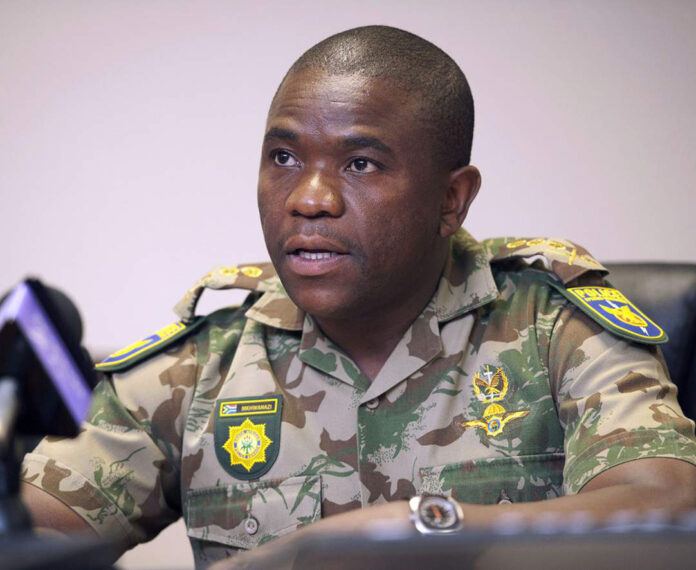
There is no more uncertainty over KwaZulu-Natal’s top cop, Lt-Gen Nhlanhla Mkhwanazi’s position.
He will remain in his post for another five years after his contract was renewed.
KwaZulu-Natal Premier Thamsanqa Ntuli announced on Saturday that all required approvals had been secured to extend Mkhwanazi’s tenure as provincial commissioner.
Mkhwanazi’s first term was due to end in March
“It has been renewed; the national commissioner has written to me, and I’ve also given a concurrence formally and officially, so I don’t think there is an issue with that,” Ntuli said during a crime-fighting engagement in Pietermaritzburg.
Mkhwanazi’s first term was due to end in March, sparking speculation about whether he would continue in the role, particularly amid heightened tensions within the South African Police Service (SAPS) leadership, and broader political scrutiny of policing structures.
Aggressive, intelligence-driven approach to crime
His reappointment signals continuity in a province long regarded as one of the country’s most volatile crime hotspots, where political killings, organised crime and violent robberies have persisted.
Mkhwanazi has built a reputation for an aggressive, intelligence-driven approach to crime, overseeing high-profile crackdowns on syndicates linked to murder, cash-in-transit heists, drug trafficking and extortion networks.
Central to that strategy was the controversial Political Killings Task Team (PKTT). The specialised unit investigated the targeted assassinations of politicians and traditional leaders in KwaZulu-Natal. The unit has been widely credited with securing arrests and stabilising parts of the province plagued by politically motivated violence.
Mkhwanazi’s tenure has been controversial
However, Mkhwanazi’s tenure has not been without controversy.
In July 2025, he made explosive public allegations about political interference in policing. The claims triggered significant fallout and led to the establishment of the Madlanga Commission of Inquiry, and scrutiny by Parliament’s ad hoc structures. The matter remains a focal point in ongoing debates about the independence of law enforcement agencies in South Africa.
Despite this, Ntuli’s confirmation suggests that both provincial and national leaders have opted for stability over disruption at a critical time for crime-fighting efforts.
The renewal also comes against the backdrop of broader uncertainty within SAPS leadership, where questions persist around governance, accountability and political pressure.