


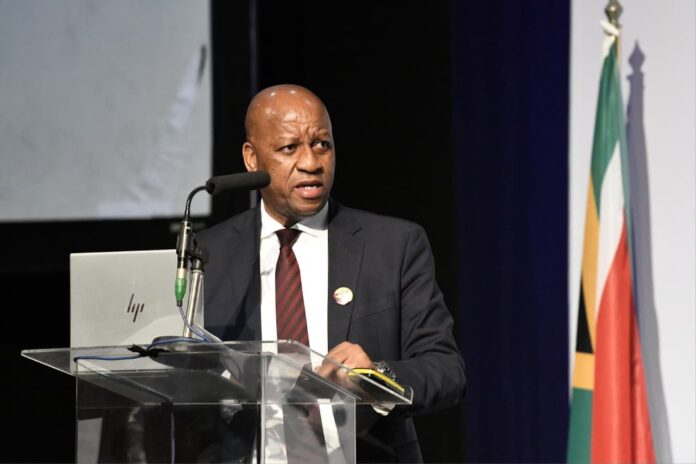
Agriculture and rural development took centre stage in KwaZulu-Natal’s economic agenda as Premier Thamsanqa Ntuli outlined wide-ranging interventions aimed at revitalising rural economies, improving food security and expanding employment opportunities.
Delivering the State of the Province Address (SOPA) in Pietermaritzburg on Friday, Ntuli said agriculture remains fundamental to both the economic and social fabric of KwaZulu-Natal.
“Beyond its contribution to GDP [Gross Domestic Product], the agricultural sector underpins the rural political economy. This by creating livelihoods, sustaining communities, and promoting inclusive economic growth. The interlinkages between agriculture, rural development, and food security are clear,” he said.
Government-owned farms
He said a key focus of the provincial government has been the identification and revitalisation of government-owned farms that have remained fallow.
“In the past year, our administration committed to prioritising the identification and revitalisation of all government-owned farms that have remained fallow. This initiative is guided by a carefully developed concept. And we are in the final stages of formulating a detailed implementation plan,” he said.
He said a trial pilot project will be launched at a Department of Agriculture and Rural Development farm in the Amajuba District. And will serve as a model for scaling up interventions across the province. This to ensure idle land is returned to productive use.
Support for land reform
The department is also intensifying support production for land reform farms across KwaZulu-Natal.
“In Ugu District, for example, kwaNodumo and Njoli farms, which were previously underutilised, have each received R1.9-million in support. These interventions include critical inputs, infrastructure development, and technical assistance. They are enabling farmers to generate sustainable yields and strengthen local food systems.
“Similarly, in the uThukela District, Amafu Farming and Mpembe Consulting have each received R2-million for infrastructure improvements and breeding stock. These investments are designed to enhance farm productivity. To also promote agribusiness development, and create employment opportunities in rural communities,” he said.
By strengthening these farms, the provincial government is not only boosting agricultural output. It is also stimulating the broader rural economy, he added.
In the Zululand District, Amandla Power has been supported to establish 50 saw units. Operations are now fully underway. The initiative reflects a shift towards value-added agricultural activities and diversified rural livelihoods. And this is fostering economic resilience beyond primary production.
Smallholder farmers
Smallholder development is another pillar of the province’s rural strategy.
The Jozini Small-holder Farmer Programme, launched in April 2025, supports about 100 smallholder farmers. It does this through training, mechanisation and infrastructure. This includes drying tunnels, with a focus on herbs and spices, building skills and access to markets.
Ntuli noted that the programme emphasises youth and women participation.
He said thousands of subsistence and smallholder farmers were supported in planting and mechanisation. This was in the form of back-yard gardens and food security initiatives.
The Department of Agriculture and Rural Development purchased 24 new tractors last year. These were meant to service the communities, and it added another 24 this year to increase the hectares producing food in the province.
New jobs for youth, artisans
Artisans have been appointed in district municipalities to ensure ongoing maintenance and to minimise downtime.
“Youth in agriculture programmes are active — with funding allocated to train and upskill young farmers and expand agricultural participation. This includes bursaries, learnerships, and practical farm experience to position youth for long-term agricultural success.
“It is vital that we continue to implement skills development and market access programmes to support employment growth in rural areas. The public-private partnerships will be supported to promote formal market access for smallholder produce. This will lift incomes and reduces rural poverty,” the Premier said.
Foot and mouth disease
The Premier also addressed the province’s response to foot and mouth disease (FMD). The epidemic which poses a significant risk to the livestock sector.
He reported that KwaZulu-Natal has received 200, 000 vaccine doses from a national batch of 1 million. This is the largest share allocated to any province.
The vaccination roll-out is being intensified as part of efforts to contain the disease.
“We are expecting same or more quantities every week until our herd population is covered. We are working with farmers, both commercial and communal, to mitigate the risk of FMD,” Ntuli said.
- SAnews.gov.za


