


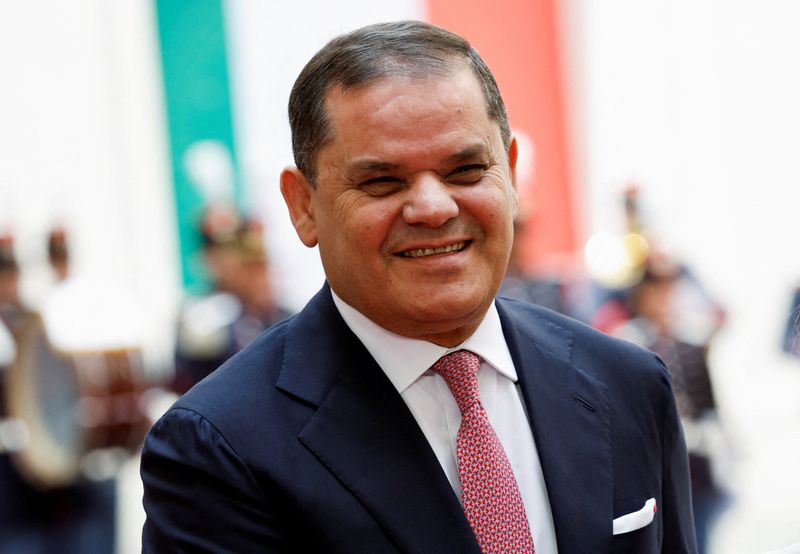
The prime minister of Libya’s UN-recognised Government of National Unity told Egypt’s intelligence chief his government was ready to address Cairo’s concerns over Mediterranean maritime boundaries and economic waters, his office said on Saturday.
• Prime Minister Abdulhamid Dbeibah and the intelligence chief Hassan Rashad discussed bilateral relations and coordination on matters of mutual interest during a phone call, the statement said.
• Egypt rejected on Wednesday a maritime boundaries agreement ratified by Libya’s eastern-based parliament involving Türkiye, saying the deal was null and void and would have no legal effect on Egypt.
• The Libya-Türkiye maritime deal was originally agreed in 2019 by Libya’s internationally recognised government in Tripoli.
• The rival eastern administration, under military commander Khalifa Haftar, withheld its approval for years.
• The agreement is part of a long-running dispute over maritime claims and energy exploration rights in the eastern Mediterranean.
• Greece, Egypt and Cyprus have opposed the Libya-Türkiye accord, saying it infringes their own maritime claims.
• Libya has been divided between Dbeibah’s UN-recognised government in Tripoli and eastern authorities aligned with Haftar.
• Egypt and Libya, which share a land border, have long-standing security and economic ties.
- The prime minister of Libya’s UN-recognised Government of National Unity told Egypt’s intelligence chief his government was ready to address Cairo’s concerns over Mediterranean maritime boundaries and economic waters, his office said on Saturday.
- Prime Minister Abdulhamid Dbeibah and the intelligence chief Hassan Rashad discussed bilateral relations and coordination on matters of mutual interest during a phone call, the statement said.
- Egypt rejected on Wednesday a maritime boundaries agreement ratified by Libya’s eastern-based parliament involving Türkiye, saying the deal was null and void and would have no legal effect on Egypt.
- The Libya-Türkiye maritime deal was originally agreed in 2019 by Libya’s internationally recognised government in Tripoli.
- The rival eastern administration, under military commander Khalifa Haftar, withheld its approval for years.


