


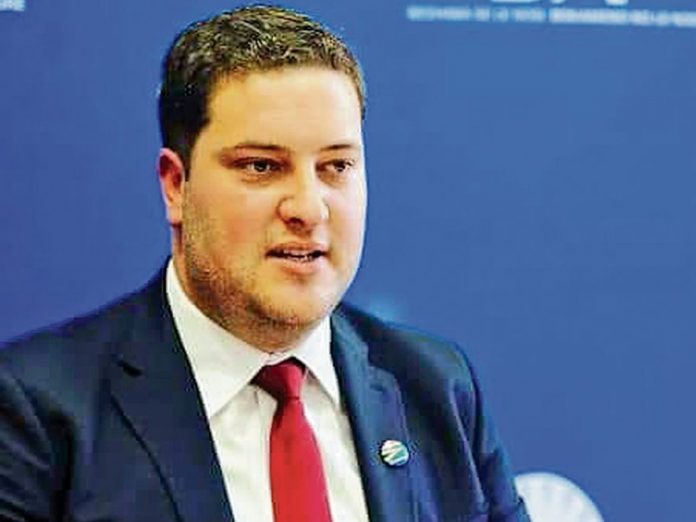
Cape Town Mayor Geordin Hill-Lewis has criticised the national electricity regulator, warning that a proposed recalculation of Eskom tariffs could unleash a near-100% electricity price increase shock on Capetonians already living in one of South Africa’s most expensive cities.
In a detailed submission to the National Energy Regulator of South Africa (Nersa), Hill-Lewis accused the regulator of pursuing a narrow, technical correction that risks punishing consumers for Eskom’s historic errors while undermining affordability, economic recovery, and public trust in the regulatory system.
At the centre of the dispute is Nersa’s consultation on the re-determination of Eskom’s regulated asset base (RAB) under its sixth multi-year price determination (MYPD6), following court-confirmed calculation errors in the original tariff decision.
While acknowledging that regulatory mistakes must be corrected, Hill-Lewis warned that the manner in which those corrections are implemented is critical.
“The cumulative effect in outer years could approach a 100% increase relative to originally approved tariff trajectories, which is wholly inconsistent with the objective of tariff stability and predictability underpinning the MYPD framework,” he wrote.
Eskom generating substantial profits
The city warned that what is being presented as a technical recalculation risks triggering severe consequences for consumers.
“Allowing a simple correction, without a broader re-determination, will be catastrophic for end-customers who, for the first time in many years, have been anticipating tariff increases closer to inflation,” Hill-Lewis wrote.
Cape Town’s submission argues that a limited correction of Eskom’s asset base, without re-examining the underlying assumptions, would unfairly shift the burden of past regulatory failures onto households and businesses.
The mayor also questioned why Eskom should be allowed to recover additional revenue when interim financial results show the utility has already been generating substantial profits under the lower, originally approved tariffs.
“Interim Eskom financial results indicate that Eskom has been able to generate substantial profits even under the lower, originally approved tariffs,” the submission states.
According to the city, such profits can only reasonably be explained by improved cost containment, operational efficiencies, or higher-than-forecast electricity sales volumes—factors that should be tested before any further revenue recovery is allowed.
Hill-Lewis took direct aim at what he described as a mechanical approach to correcting the RAB, warning that the scale of the error demands more than a narrow fix.
“A calculation error of this magnitude cannot reasonably be remedied through a limited mechanical adjustment,” he said.
Issue is about protecting households
The city insists that any recalculation must form part of a full re-evaluation of Eskom’s MYPD6 tariff determination, including reassessing cost prudency, testing projected sales volumes against actual performance, and factoring in demonstrated operational efficiencies.
Timing has also emerged as a major concern. Hill-Lewis warned that municipalities are legally required to be informed of Eskom’s approved tariffs for the 2026/27 financial year by January 31—a deadline confirmed by the courts.
Proceeding with a rushed recalculation under a compressed consultation process, he cautioned, would leave municipalities unable to plan budgets responsibly while exposing residents to sudden tariff shocks.
As a result, Cape Town has formally urged Nersa to ensure that any redetermined Eskom tariff only takes effect from the 2027/28 financial year, allowing time for a full reassessment based on actual performance data rather than modelling assumptions.
The city maintains that the issue is no longer simply about Eskom’s balance sheet but about protecting households, businesses, and municipal finances from a regulatory decision that could make electricity significantly more expensive overnight.
- Cape Town Mayor Geordin Hill-Lewis has criticised the national electricity regulator, warning that a proposed recalculation of Eskom tariffs could unleash a near-100% electricity price increase shock on Capetonians already living in one of South Africa’s most expensive cities.
- In a detailed submission to the National Energy Regulator of South Africa (Nersa), Hill-Lewis accused the regulator of pursuing a narrow, technical correction that risks punishing consumers for Eskom’s historic errors while undermining affordability, economic recovery, and public trust in the regulatory system.
- At the centre of the dispute is Nersa’s consultation on the re-determination of Eskom’s regulated asset base (RAB) under its sixth multi-year price determination (MYPD6), following court-confirmed calculation errors in the original tariff decision.
- While acknowledging that regulatory mistakes must be corrected, Hill-Lewis warned that the manner in which those corrections are implemented is critical.
- “The cumulative effect in outer years could approach a 100% increase relative to originally approved tariff trajectories, which is wholly inconsistent with the objective of tariff stability and predictability underpinning the MYPD framework,” he wrote.


