



The Gauteng government will spend R549.3-billion over the next three years for competing priorities with most of the money going to health, education and social services.
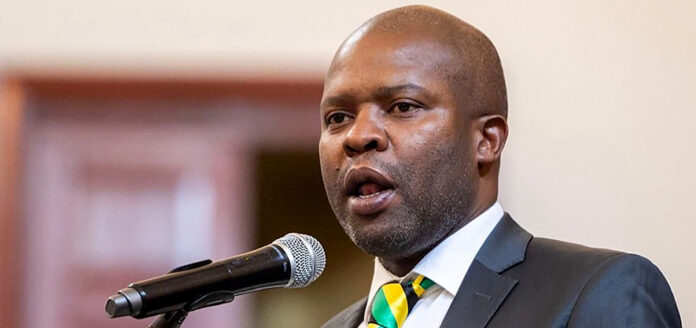
Gauteng Finance MEC Lebogang Maile announced on Tuesday that of this amount,
R179.2-billion is allocated for 2026/27, followed by R182.4-billion in 2027/28, and a further R188.2-billion in 2028/29.
R179.2-billion is allocated for 2026/27, followed by R182.4-billion in 2027/28, and a further R188.2-billion in 2028/29.
“The budget that we are presenting today increases by R3.6-billion from 2025/2026 to 2026/2027, representing growth of 2% year on year, while over the 2026 Medium Term Expenditure Framework (MTEF) it grows by 5.2%,” Maile said.
Most of the province’s spending will continue to go to the social sector, particularly health, education and social development programmes, which account for 83% of the total budget.
Education gets R70.9bn
The Gauteng Department of Education receives the largest share, with R70.9-billion allocated for the 2026/27 financial year and R221.8-billion over the three-year MTEF period.
The funding will support early childhood development, learner performance programmes, school safety initiatives, nutrition programmes and scholar transport.
Health gets R70.3bn
The health department is allocated R70.3-billion in 2026/27, rising to R218.6-billion over the MTEF to strengthen the public health system, expand access and improve the quality of care.
Meanwhile, the Department of Social Development will receive R5.6-billion in 2026/27, increasing to R17.2-billion over the MTEF. The funding will support food security programmes, homelessness interventions, child and youth care centres and substance abuse treatment.
Maile said the Department of Roads and Transport will receive R10.2-billion in 2026/27 and R27.8-billion over the MTEF to improve transport infrastructure, upgrade strategic roads and support access to special economic zones.
Department of Human Settlements is allocated R5.5-billion in 2026/27 and R16.6-billion over the MTEF to upgrade informal settlements, provide interim sanitation and deliver housing projects.
Maile said additional funding is also allocated to departments responsible for economic development, infrastructure delivery, municipal support and community safety.
Financial pressures
Despite the spending plans, Maile warned that the province faces financial pressures due to existing obligations, including debt linked to the e-toll system.
“We must be honest about our fiscal reality and the nature of obligations that significantly narrow our room to manoeuvre,” he said.
Maile said the province has already paid R9.3 billion towards the principal e-toll debt of
R20-billion, with R4.6-billion required for the next instalment in June 2026. R6.2-billion more is yet to be paid.
R20-billion, with R4.6-billion required for the next instalment in June 2026. R6.2-billion more is yet to be paid.
Despite these pressures, he said the provincial government would continue prioritising services that directly affect residents.
“We must protect front-line services, but we must also demand better performance from every rand through targeted and responsible savings as an ongoing feature as we strive to close leakages and root out inefficiencies.
“This budget is sensitive to the lived realities of our constituencies, it is a budget of uplifting human dignity, the restoration of law and order; and to protect the most vulnerable in our society,” said Maile.
- The Gauteng government will spend R549.3-billion over the next three years for competing priorities with most of the money going to health, education and social services.
- Gauteng Finance MEC Lebogang Maile announced on Tuesday that of this amount, R179.2-billion is allocated for 2026/27, followed by R182.4-billion in 2027/28, and a further R188.2-billion in 2028/29.
- “The budget that we are presenting today increases by R3.6-billion from 2025/2026 to 2026/2027, representing growth of 2% year on year, while over the 2026 Medium Term Expenditure Framework (MTEF) it grows by 5.2%,” Maile said.
- Most of the province’s spending will continue to go to the social sector, particularly health, education and social development programmes, which account for 83% of the total budget.
- Education gets R70.9bn The Gauteng Department of Education receives the largest share, with R70.9-billion allocated for the 2026/27 financial year and R221.8-billion over the three-year MTEF period.


