


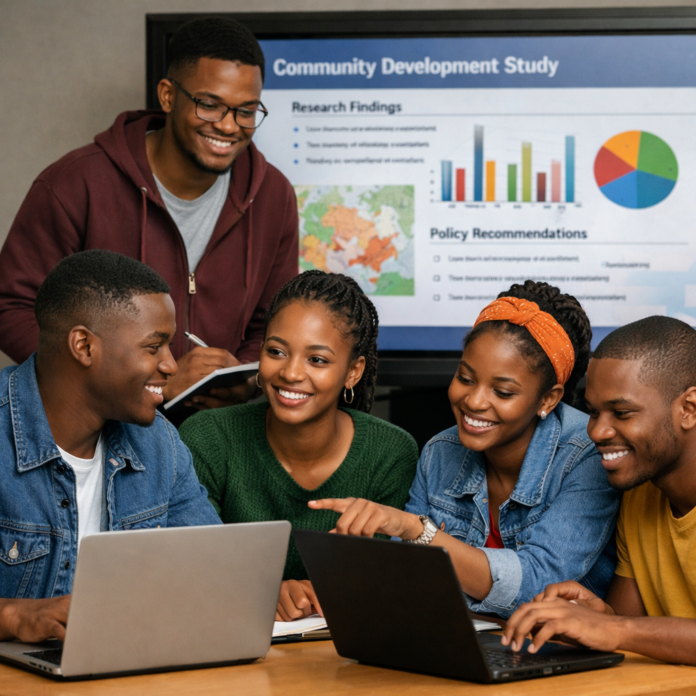
Young people in Mpumalanga seeking skills, work experience and research-linked career pathways are set to benefit from a new partnership between the Human Sciences Research Council (HSRC) and the University of Mpumalanga (UMP), aimed at turning academic research into practical solutions that support employment creation and poverty reduction.
The two institutions recently signed a Memorandum of Understanding (MoU) in Mbombela to formalise collaboration in applied research, capacity-building and knowledge-sharing, with a strong emphasis on ensuring that research directly responds to community needs.
Development, innovation partnership
HSRC chief executive officer Sarah Mosoetsa said the agreement marks a strategic step towards partnerships that drive development and innovation at a time when South Africa faces deep socio-economic challenges.
“It is also not just a ceremonial signing of an MOU. It is… but a partnership of like-minded institutions with an aligned vision of development, capacity building, and innovation. These are the key drivers that inform the HSRC decision to embark on this journey with UMP,” Mosoetsa said.
For the public, the partnership is expected to translate into expanded internship opportunities. Also mentorship programmes, postgraduate co-supervision and training workshops aimed at strengthening research, writing and policy communication skills.
These initiatives are designed to better prepare students and young graduates for employment. The jobs referred to are in academia, government, development agencies and the private sector.
Jobs, poverty alleviation, social cohesion
UMP vice-chancellor Thenjiwe Meyiwa said the focus of the collaboration is on research that produces real-world impact.
“By partnering with a research giant such as the HSRC, we are ensuring that our solutions are grounded in evidence-based research and shaped by people with lived experiences. So that we do not produce white-elephant solutions but meaningful, practical interventions,” Meyiwa said.
Beyond skills development, the MoU provides for joint applied research projects that address community and development challenges. Also cooperation with government departments on initiatives aimed at job creation, poverty alleviation and social cohesion.
The two institutions will also jointly host the Africa Young Graduates and Scholars Conference. This will offer pre-conference training and post-conference engagement to strengthen the research capacity of emerging scholars.
Broader benefit for province
Officials said the collaboration is expected to improve the quality of research used to inform public policy, helping government design programmes that are more responsive, cost-effective and evidence-driven.
The partnership is further expected to enhance research output in Mpumalanga, positioning the province as a growing hub for socially responsive scholarship and innovation.
In practical terms, the institutions say the agreement creates a pathway where young people gain skills. They also gain researchers influence policy, and communities ultimately benefit from better-designed development interventions.
The MoU takes immediate effect. And it will guide joint planning and implementation of projects between the two entities.
- Young people in Mpumalanga seeking skills, work experience and research-linked career pathways are set to benefit from a new partnership between the Human Sciences Research Council (HSRC) and the University of Mpumalanga (UMP), aimed at turning academic research into practical solutions that support employment creation and poverty reduction.
- The two institutions recently signed a Memorandum of Understanding (MoU) in Mbombela to formalise collaboration in applied research, capacity-building and knowledge-sharing, with a strong emphasis on ensuring that research directly responds to community needs.
- Development, innovation partnership HSRC chief executive officer Sarah Mosoetsa said the agreement marks a strategic step towards partnerships that drive development and innovation at a time when South Africa faces deep socio-economic challenges.
- “It is also not just a ceremonial signing of an MOU.
- It is… but a partnership of like-minded institutions with an aligned vision of development, capacity building, and innovation.


