


The ANC has placed the blame for the deterioration of governance and service delivery in South Africa’s metropolitan municipalities on coalition governments that took power after the 2016 local government elections.
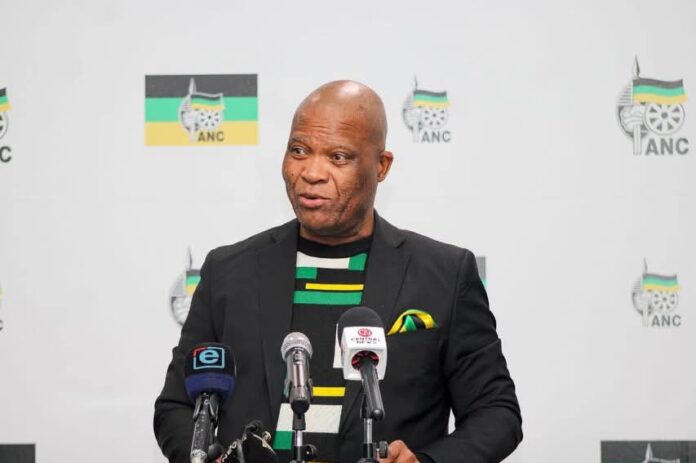
Addressing the media at the party’s headquarters on Pixley ka Isaka Seme Street in Johannesburg, members of the ANC’s Local Government Intervention Task Team argued that many of the country’s metros functioned effectively under ANC leadership before voters deprived the party of outright majorities.
Task team member Dickson Masemola said the decline in service delivery coincided with the rise of coalition administrations in key cities such as Johannesburg, Tshwane and Nelson Mandela Bay.
Nostalgic look back at ANC-led cities
Masemola painted a picture of ANC-run municipalities as well-managed and efficient, citing former Johannesburg mayor Amos Masondo, former Tshwane mayor Smangaliso Mkhatshwa and former eThekwini mayor Obed Mlaba as examples of leadership that delivered results.
“The records speak for themselves,” Masemola said.
“If you look at Johannesburg when comrade Amos Masondo was executive mayor of this place, and the progress that the ANC did. You look at Tshwane when Father Smangaliso Mkhatshwa was mayor, the performance of that place was extraordinary.
“If you look at eThekwini when Obed Mlaba was mayor of that city, Durban was extraordinary.”
According to Masemola, the weakening of the ANC’s hold on metropolitan governments marked the beginning of growing governance challenges and declining service delivery.
Coalition governments under fire
The ANC contends that coalition governments have struggled to provide stable leadership, resulting in poor governance and worsening municipal services.
Masemola pointed to issues such as pothole-riddled roads, malfunctioning traffic lights, irregular refuse collection, and recurring water and electricity outages as evidence of the shortcomings of coalition administrations.
He argued that many voters believed alternative political arrangements would improve performance in municipalities, but claimed the opposite had occurred.
“There could have been an understanding that once the ANC is weakened and the coalitions take over, the situation would improve much better, and unfortunately the converse is what we are experiencing at the moment,” he said.
Critics may question ANC’s position
The ANC’s assessment is likely to draw scrutiny from critics who point out that the party currently governs both Johannesburg and Ekurhuleni, albeit through coalition arrangements and with the support of smaller parties.
Opponents may also question whether all of the challenges facing municipalities can be attributed solely to coalition politics, given that many of the structural problems confronting local government today emerged over several years.
Nevertheless, the party maintains that coalition instability has played a significant role in weakening governance systems across major municipalities.
ANC appeals for outright majorities
With local government elections on the horizon, Masemola used the briefing to make a direct appeal to voters, arguing that the ANC needs decisive electoral mandates to restore municipalities to their former standing.
He said fragmented voting patterns had produced coalition administrations characterised by competing political agendas and ideological differences, making effective governance difficult.
“With greatest sense of respect and humility, we are coming to the voters of this country to say for the past 10 years from 2016, you have seen how coalition governments and their mismanagement, interplay of different and diverging ideological expressions represented by these parties in municipalities would have impacted negatively on governance, financial administration and service delivery,” he said.
Leadership at the centre of ANC’s argument
At the heart of the ANC’s message is the belief that leadership remains the defining factor behind municipal performance.
Masemola argued that the coalition era has produced unstable leadership structures that have entrenched governance and service delivery failures across the country’s municipalities.
“The main cause of all these issues is poor leadership. Everything stands and falls on leadership,” he said.
“The leadership characterised by coalition dynamics in these big cities and other municipalities unavoidably have brought us everything we are going through now, which has become permanent systemic problems that were not there before 2016.”
The ANC’s intervention task team says restoring strong and stable governance in municipalities will require voters to return the party to outright control of key metros, a message likely to become a central feature of its local government election campaign.
- The ANC blames the decline in governance and service delivery in South African metropolitan municipalities on coalition governments that came to power after the 2016 local elections.
- ANC task team member Dickson Masemola cited the effective management of metros under ANC mayors like Amos Masondo (Johannesburg), Smangaliso Mkhatshwa (Tshwane), and Obed Mlaba (eThekwini) before 2016.
- Masemola highlighted problems under coalition administrations, such as pothole-ridden roads, damaged traffic lights, irregular refuse collection, and frequent water and electricity outages.
- The ANC acknowledges that it currently governs Johannesburg and Ekurhuleni through coalitions but maintains that coalition instability has weakened municipal governance.
- Ahead of upcoming local elections, the ANC urges voters to grant it outright majorities to restore stable and effective leadership in municipalities.



Sies, what a lame excuse that is!