


Since the early 1990s, 46 largely politically connected individuals secured 60% of all the black economic empowerment (BEE) value in mining, becoming billionaires or multimillionaires overnight.
This is according to a 2015 research report completed for the Chamber of Mines. The report was not publicly released but compiled by a respected audit firm and a leading bank as a background document for the chamber’s mining charter discussions. The report was certainly not “shoddy”.
Since the early 1990s, broader mining industry data analysed by the authoritative mining analyst Peter Major showed that over 500 000 mining jobs were lost. This was because of a combination of mineral resources department incompetence, corruption, deteriorating state infrastructure, nationalisation threats, and flawed mining black economic empowerment (BEE).
The respected Bureau for Economic Research, using narrower government data, shows there has been a loss of over 500 000 mining jobs since the early 1990s. Neither the Bureau for Economic Research nor Major’s mining job loss data can be said to be “shoddy”.
To enrich 46 politically connected individuals, who are linked to the ANC or the state, while 500 000 ordinary miners, mostly black, lose their jobs is unacceptable, and is a perfect example of the misallocation of capital that could have generated bigger societal development impact by investing it in public infrastructure, world-class education, technology, SMEs or assets, such as homes for the poor.
BEE tycoons in many BEE transactions, including mining BEE deals, often say they represent thousands of ordinary black beneficiaries, whether as community groups or as trade union members. However, the benefits of these BEE deals never trickle down to the ordinary “beneficiaries” but largely go to the leading BEE tycoons, as the Chamber of Mines shows.
Individual trade union leaders, both black and white, who lead these BEE trade union investment companies have become super rich.
Even in cases where BEE deals successfully transfer shares to previously disadvantaged communities, who are not politically connected, these are rarely financially rewarding.
BEE shares are often locked for years; shareholders often do not get dividends, and the black shareholders do not have full shareholder rights, like voting rights, and when they do get BEE dividend payments, these are heavily taxed.
There are at least three major forms of BEE.
In the private sector, it involves transferring shares in white-owned private companies. In the public sector, national, provincial and municipal governments and state-owned entities compel white firms contracting with the state to have BEE shareholding. In the privatisation of state-owned companies, BEE is a key requirement for privatisation sales.
In all of these different forms, the reality is that BEE has largely benefited a small group of well-connected black and white individuals, whether ANC leaders or ANC-aligned trade union leaders or companies, trusts and entities linked to them.
The ANC as a political party, through its investment arms and trusts, has also richly benefited from BEE. Intermediaries, whether the law firms or transaction brokers and financiers structuring BEE deals, have also richly benefitted. Some white-owned companies have also benefited from striking repeat BEE deals with the same politically connected black partners.
According to the Treasury, South Africa now spends almost R1-trillion on public procurement annually. These are not “shoddy” statistics.
Let say, conservatively, at least 30% of this R1-trillion annual public procurement budget is spend on BEE. This means that conservatively at least R300-billion a year would go to BEE through public procurement.
Testifying at the Zondo commission, National Treasury’s then acting chief procurement officer Willie Mathebula said, as an example, in the 2017 financial year, the national procurement bill was R800-billion.
Mathebula told the commission that more than 50% of the government’s annual procurement budget was lost due to “intentional abuse of the system”, which included manipulation of BEE rules for personal benefit.
State entities, such as the Public Investment Corporation, provide significant BEE funding. The PIC, in its 2023-2026 corporate plan, envisaged it would allocate over 70% of its approved funds to BEE managers. One of the PIC’s funds, the Isibaya Fund, with over R170-billion in assets, holds unlisted investments and funds BEE, such as the Daybreak Foods Farm, in which the PIC has invested at least R1.7-billion since 2015.
Finance Minister Enoch Godongwana last year announced a new enquiry into allegations of misconduct into the PIC’s unlisted funds.
BEE political capitalists who set up companies to get a specific government tender, even if they have no experience, capacity or finances to do so, are partially responsible for endemic public service delivery failures.
Swifambo Rail Leasing was established as a BEE company specifically to serve as a local front for Spanish railway company Vossloh Espana, to secure a 2012 Prasa contract worth R3.5-billion for locomotives.
State-owned infrastructure entities, such as Eskom and Transnet, were key sites of state capture, which happened through public procurement BEE.
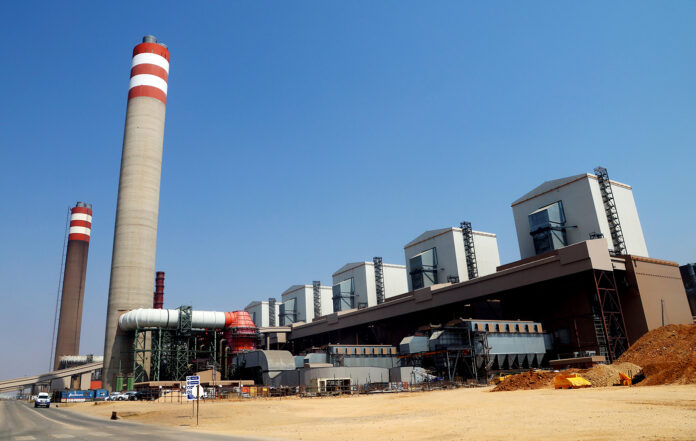
Hitachi Power Africa, of which the ANC’s investment arm, Chancellor House, owned 25%, secured around R38-billion to build boilers for Medupi and Kusile power stations. The ever-rising costs of building the two stations increased Eskom’s debt, from R40-billion in 2007, to over R400-billion in 2024. The fiscus has bailed out Eskom to close to half a trillion rand between 2008 and 2026.
The South African Reserve Bank said that Eskom’s load shedding, as a result of failures caused by patronage BEE, cadre deployment linked mismanagement and corruption, costs the South African economy R1-billion a day.
The failure of South Africa’s state rail and port entity, Transnet, in 2023 cost the economy R353-billion, the equivalent of 4.9% of GDP in 2023, also costing the economy around R1-billion per day in lost economic output.
Manipulation of BEE has also been a key reason for the lack of service delivery in the health sector. At Tembisa Hospital, BEE tenderpreneurs secured R4-billion in contracts, corruptly, and delivered very little.
In the 2005 privatisation of Telkom, the Elephant BEE consortium acquired an estimated R9-billion stake in Telkom. Key figures in the Elephant Consortium, led by politically connected individuals such as former communications department director-general Andile Ngcaba and former head in the ANC Presidency Smuts Ngonyama, pocketed more than R3-billion from the sale of BEE shares in Telkom and Vodacom and another R1.4-billion in dividends.
BEE, which has focused on giving slices of white companies to connected non-whites has collapsed black and white legitimate businesses that are not politically connected, which have lost out on new or existing contracts as instant political capitalist companies take their state contracts or licences. It has stifled black entrepreneurship.
Effective empowerment strategies historically in successful countries have focused on supporting existing entrepreneurs; not turning politicians into entrepreneurs; supporting SMEs; creating new industries; providing world class science, technology, engineering and mathematics education; and developing manufacturing products to export to foreign markets.
- Prof Gumede is the author of the best-selling Restless Nation: Making Sense of Troubled Times (Tafelberg).
- Since the 1990s, 46 politically connected individuals secured 60% of black economic empowerment (BEE) value in mining, becoming billionaires while 500,000 mining jobs were lost due to corruption, mismanagement, and flawed BEE policies.
- BEE deals mainly benefit a small elite linked to the ANC and trade unions, with limited or no financial gains trickling down to ordinary black beneficiaries or communities.
- Public procurement, with an annual budget of nearly R1-trillion, heavily funds BEE, but over 50% is lost to abuse and manipulation, contributing to widespread service delivery failures and state capture in entities like Eskom and Transnet.
- Large contracts awarded to politically connected BEE firms have inflated costs and poor service outcomes, devastating the economy (e.g., Eskom's R400-billion debt, R353-billion losses from Transnet's failure, and failed healthcare contracts).
- BEE has stifled genuine black entrepreneurship by favoring politically linked individuals, highlighting the need for empowerment strategies focused on supporting SMEs, science and technology education, manufacturing, and new industries instead of political capitalism.


