


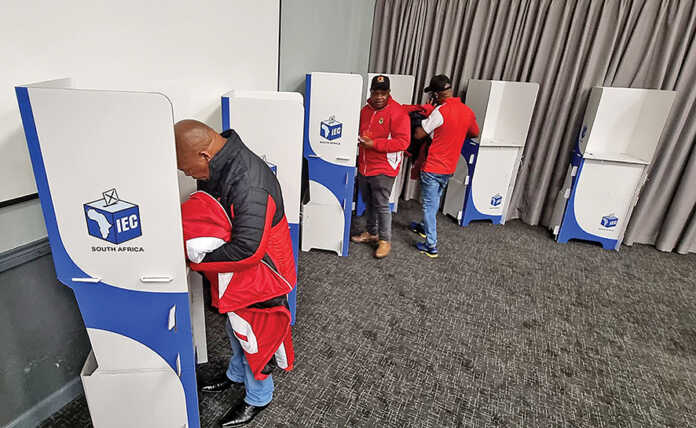
On Wednesday November 4, South Africans across the country headed to the polls to decide who they want to lead their municipalities for the next five years. For many, the decision came down to something quite simple: who do they believe can make their communities work better?
It may be the state of the roads, the reliability of water and electricity, the piles of rubbish that have not been collected, the condition of public spaces or the general feeling that their neighbourhood has been neglected. These are the things people live with every day. They are also the things that shape how residents experience local government.
As the sphere closest to the people, local government is expected to be most visible, and it is where the consequences of poor decisions are often felt first. A broken water pipe, an overflowing drain or an uncollected refuse bin is not an abstract governance issue to the family living with it. It is an everyday frustration, and often a reflection of whether the municipality is doing its job.
Democracy beyond election day
Yet we sometimes place too much emphasis on election day itself and not so much on what happens afterwards. Although the casting of a vote is important, it is only the beginning of a much bigger responsibility. The real test of local democracy is what happens after the election, when the campaign posters come down, political leaders settle into office, and communities begin asking when the promises they were made will be fulfilled.
South Africa’s democratic project placed enormous responsibility on local government. Municipalities were meant to help undo the spatial and economic inequalities inherited from apartheid, bring services closer to communities and create conditions in which people could build better lives. That responsibility remains as important today as it was at the dawn of democracy 32 years ago.
The Gauteng service delivery challenge
The question is whether our municipalities are living up to it. In Gauteng, this question carries weight. The province is the country’s economic centre, attracting people from across South Africa and beyond in search of work, education and opportunities. Its cities and towns continue to grow, placing increasing demands on infrastructure, housing, roads, public transport, water and sanitation.
But economic activity and development do not always translate into better living conditions for everyone.
There are communities surrounded by commercial activity and new investment where residents still struggle with unreliable basic services. There are townships where roads are deteriorating, illegal dumping has become a persistent problem and ageing infrastructure is under increasing pressure. In parts of our cities, the condition of public spaces tells its own story.
For someone living in these communities, the debate about local government is rarely complicated. They want to know why the water is off again, when the road will be repaired, why refuse has not been collected and who is going to take responsibility.
These are not small matters. They are the everyday realities against which the performance of local government is judged.
Building municipalities that can deliver
At the heart of the problem is the need for municipalities that are properly managed and capable of delivering. Political leadership matters, but so does the quality and stability of the administration. Municipalities need people who understand their responsibilities, financial systems that work, credible plans and the ability to turn allocated budgets into actual services.
The Auditor-General’s 2024/25 local government findings, released in 2026, should give political parties and prospective councillors reason to reflect. Persistent weaknesses in financial management and accountability have consequences beyond audit reports. They affect whether infrastructure is maintained, whether projects are completed and whether communities receive the services they are entitled to expect. A municipality cannot claim to be working for its residents while public money is poorly managed and basic responsibilities remain unattended.
Accountability starts at community level
Another issue that deserves attention is the relationship between councillors and the communities they represent.
Too often, residents see their elected representatives more frequently during election campaigns than they do once those campaigns are over. Yet a councillor’s work should not be measured by how visible they are when votes are being sought. It should be measured by whether they remain accessible, whether they understand the concerns of their communities and whether they follow through when problems are brought to their attention.
Community participation must also become more meaningful. Municipal meetings and Integrated Development Plan consultations should not be treated as exercises in compliance. Residents should have a genuine opportunity to influence decisions about their neighbourhoods; understand how municipal budgets are being spent and receive feedback on the issues they raise.
People should not have to resort to protests, road blockades or confrontations with municipal officials simply to get a response to a problem they have reported repeatedly.
Shared responsibility for functional communities
Of course, the responsibility for building functional communities does not rest with government alone. Residents also have a role to play. Paying for services where they can afford to, protecting public infrastructure, reporting service failures and participating in community processes all contribute to the kind of municipalities we want. There must be a stronger sense that public infrastructure belongs to all of us and that its protection is a shared responsibility.
As voters make their choice, we should remember that democracy requires more from us than turning up at the polls every five years. We must remain interested in what happens in our municipalities long after the elections. We must ask questions, attend public meetings, scrutinise decisions and hold our elected representatives accountable.
The standard by which municipalities must be judged
The real measure of this election will not be the number of votes a political party receives, the political arrangements that follow or the promises made from campaign platforms. But by whether the lives of ordinary people improve because of the people they elected. That is the responsibility that comes with the vote, and the standard against which every municipality should be judged.
Ntshangase is a communicator in the Gauteng Office of the Premier
- On Wednesday November 4, South Africans across the country headed to the polls to decide who they want to lead their municipalities for the next five years.
- For many, the decision came down to something quite simple: who do they believe can make their communities work better?
- It may be the state of the roads, the reliability of water and electricity, the piles of rubbish that have not been collected, the condition of public spaces or the general feeling that their neighbourhood has been neglected.
- These are the things people live with every day.
- They are also the things that shape how residents experience local government.


