


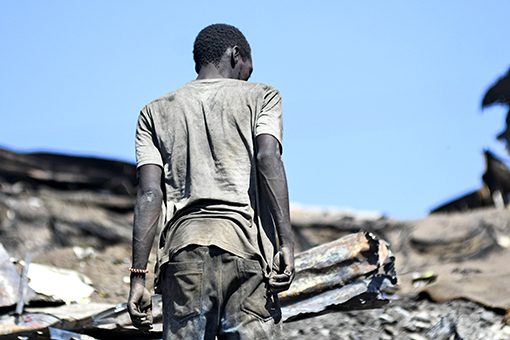
For many of us, home represents safety, comfort and belonging. Yet, for thousands of people across Gauteng, having a place to call home remains an everyday struggle.
Homelessness is often misunderstood. Behind every person living on the streets is a story that may involve unemployment, poverty, family breakdown, substance abuse or mental health challenges.
Addressing homelessness therefore requires more than providing temporary accommodation. It requires interventions that restore dignity and give people an opportunity to rebuild their lives.
As we reflect on World Homeless Day, observed annually on October 10, we must recognise that responding to homelessness is not a once-off activity, but a continuous responsibility shared by government, municipalities, civil society and communities.
A coordinated response to homelessness
In Gauteng, the Department of Social Development leads the provincial homelessness programme, guided by the Gauteng City Region Strategy to Deal with Adult Street Homelessness, approved by the Gauteng Executive Council in 2021.
The strategy promotes a coordinated approach to preventing and addressing homelessness, with the broader vision of ensuring that everyone has a safe place to call home.
Taking services to the streets
A critical component of Gauteng’s response to homelessness is proactive outreach. Many people experiencing homelessness are disconnected from support systems and may not voluntarily access available services.
Through dedicated outreach teams comprising social workers, social auxiliary workers and partner organisations, the department engages directly with people living on the streets, in parks, under bridges and in other public spaces.
These outreach efforts are often the first step in building trust, assessing individual needs, facilitating access to shelters and linking vulnerable individuals to healthcare, psychosocial support, identity documentation and other essential services.
Restoring dignity through innovation
Complementing these interventions is the department’s Mobile Wash Bus programme, which restores dignity by providing people experiencing homelessness with access to showers and basic hygiene services.
Beyond meeting immediate hygiene needs, the Mobile Wash Bus serves as an important point of engagement between outreach teams and beneficiaries, creating opportunities to provide information, conduct assessments and encourage individuals to access a broader range of social development services.
Through this innovative intervention, the department demonstrates that restoring dignity is a fundamental step towards social inclusion and long-term reintegration.
More than just a shelter
During the current financial year, the department is funding 18 shelters across Gauteng, accommodating approximately 2 188 beneficiaries. Notably, the support provided goes beyond offering a roof over someone’s head.
Through these funded facilities, beneficiaries receive meals, basic healthcare, counselling, therapy and psychosocial support.
Social workers also assist individuals with family reunification, obtaining identity documents, accessing social grants and connecting them to other essential government services.
Where specialised care is required, beneficiaries are referred to appropriate services, including substance abuse treatment, mental health support, and services for older persons and Persons with Disabilities.
These interventions recognise that people experience homelessness for different reasons and require support that responds to their individual circumstances.
Creating pathways to independence
While providing shelter addresses immediate needs, helping beneficiaries regain independence is equally important.
Through its funded Schools of Excellence, the department provides accredited skills development programmes aimed at improving beneficiaries’ employment prospects and economic participation.
During the current financial year, 1 024 beneficiaries graduated from accredited skills programmes, 258 people experiencing homelessness were placed in temporary or permanent employment, while 49 were successfully reunited with their families.
Behind these figures are individuals who have been given another opportunity to earn a living, reconnect with loved ones and work towards a more stable future.
A shared responsibility
Government cannot address homelessness alone. Communities, businesses and civil society organisations have an important role to play in supporting vulnerable people and creating opportunities for their reintegration into society.
Rather than stigmatising or ignoring people living on the streets, communities are encouraged to connect them with available support services.
People experiencing homelessness, their families and concerned community members can approach their nearest Gauteng Department of Social Development office or local social worker for assistance with shelter referrals, counselling, family reunification, social grants, skills development and other relevant support services.
From awareness to action
As we observe Social Development Month, our commitment must extend beyond awareness campaigns and commemorative events. Homelessness requires sustained action that addresses both immediate needs and the underlying circumstances that leave people vulnerable.
The Gauteng Department of Social Development continues to work with its partners to provide care, protection and opportunities for people experiencing homelessness.
Ultimately, homelessness should never define a person’s worth or determine their future. With the right support, dignity and opportunity, lives can be rebuilt. As we march on, we believe that homelessness should never mean hopelessness.
• Kheswa works for the Gauteng department of social development.
- The Gauteng Department of Social Development leads a provincial homelessness programme guided by the Gauteng City Region Strategy to Deal with Adult Street Homelessness, approved in 2021.
- Outreach teams including social workers and partner organisations engage directly with people living on the streets to provide access to shelters, healthcare, psychosocial support, and essential services.
- The Mobile Wash Bus programme offers showers and hygiene services to people experiencing homelessness, serving as a point of engagement for broader social development support.
- During the current financial year, 18 shelters funded by the department accommodate around 2,188 beneficiaries, providing meals, healthcare, counselling, identity document assistance, and referrals for specialized care.
- The department's Schools of Excellence offer accredited skills development programmes, resulting in 1,024 graduates and helping 258 people find employment and 49 reunite with their families this year.


